
Applying to a university in Germany can seem complicated because there is no single admission system used by every institution.
Depending on the university, degree, nationality, and previous academic qualification, an international student may have to apply:
Directly to the university
Through uni-assist
Through uni-assist for a VPD and then separately to the university
Through Hochschulstart for selected admission-restricted programs
Through a combination of university and external application portals
Students from India may also need an APS certificate, while selected Master’s applicants will additionally be affected by the new Digital Master Test, or dMAT, requirements from Summer Semester 2027 onward.
The complete process can involve:
Choosing a degree
Checking university eligibility
Confirming academic recognition
Meeting language requirements
Completing APS where applicable
Preparing documents
Applying through the correct platform
Receiving admission
Arranging finances
Applying for a German student visa
Enrolling at the university
Moving to Germany
The most important rule is simple:
Always check the requirements of the exact degree program, not just the general requirements of the university.
German universities can set different academic, language, credit, grade, and application requirements for different programs.
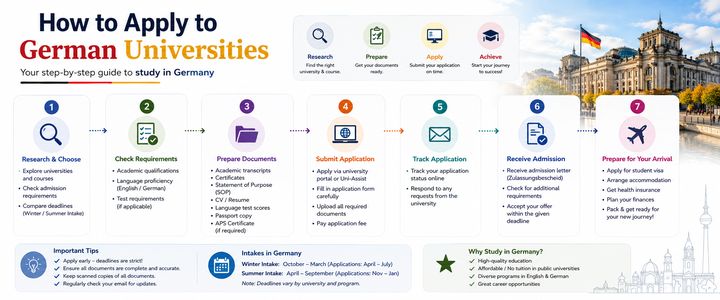
Germany University Admission Process at a Glance
| Step | What You Need to Do |
|---|---|
| 1 | Choose your degree and university |
| 2 | Check academic eligibility |
| 3 | Check whether Studienkolleg is required |
| 4 | Check language requirements |
| 5 | Complete APS if applicable |
| 6 | Check whether dMAT applies |
| 7 | Prepare academic documents |
| 8 | Identify the application platform |
| 9 | Apply before the deadline |
| 10 | Track the application |
| 11 | Receive admission offer |
| 12 | Arrange financial proof |
| 13 | Apply for student visa |
| 14 | Arrange accommodation and insurance |
| 15 | Complete university enrollment |
| 16 | Travel to Germany |
Step 1: Decide What You Want to Study
Before starting applications, identify:
Degree level
Subject
Preferred teaching language
Public or private university
Research university or university of applied sciences
Budget
Preferred cities
Career goal
International students can apply for:
Bachelor’s degrees
Master’s degrees
State Examination programs
Dual study
Preparatory programs
Studienkolleg
Doctoral study
Your application requirements depend heavily on the degree level.
Step 2: Shortlist German Universities
Germany has different types of higher-education institutions.
Universities
Traditional universities focus strongly on:
Academic theory
Research
Scientific education
Master’s programs
Doctoral study
Examples include:
Heidelberg University
LMU Munich
University of Bonn
University of Hamburg
University of Cologne
Technical Universities
Technical universities specialize heavily in:
Engineering
Computer Science
Technology
Natural Sciences
Mathematics
Examples include:
Technical University of Munich
RWTH Aachen
TU Berlin
TU Dresden
TU Darmstadt
Universities of Applied Sciences
Universities of Applied Sciences emphasize:
Practical learning
Projects
Industry collaboration
Internships
Employment-oriented education
They are particularly useful for students seeking practical careers.
Private Universities
Private institutions may provide:
Smaller classes
More English-taught programs
Career services
Specialized business or technology education
However, tuition can be significantly higher.
Step 3: Check Whether Your Qualification Is Recognized
Before applying, determine whether your academic qualification allows you to study in Germany.
The German university entrance qualification is called the:
Hochschulzugangsberechtigung — HZB
International school certificates are assessed to determine whether they are equivalent to the German qualification needed for university entry. Applicants may qualify for direct admission, subject-restricted admission, or may first need to attend a Studienkolleg.
Bachelor’s Admission
Bachelor’s applicants generally need a recognized school-leaving qualification.
Possible outcomes include:
Direct General Admission
The student may apply to any eligible academic field.
Direct Subject-Restricted Admission
The student may study only in certain subjects related to previous education.
Studienkolleg Required
The student must first complete a preparatory program before entering university.
What Is Studienkolleg?
Studienkolleg is a preparatory academic program for international students whose school qualification does not provide direct university admission.
It usually lasts around one academic year.
Students study subjects relevant to their future degree.
Common Studienkolleg tracks include:
T-Kurs
For:
Engineering
Mathematics
Natural Sciences
Computer Science
M-Kurs
For:
Medicine
Biology
Pharmacy
Health Sciences
W-Kurs
For:
Business
Economics
Social Sciences
G-Kurs
For:
Humanities
German Studies
S-Kurs
For:
Languages
After Studienkolleg, students usually take the:
Feststellungsprüfung — FSP
Passing the FSP can provide eligibility to apply for the relevant university subjects.
Important 2026 Rule for Indian Bachelor’s Applicants
A major eligibility change applies to Indian undergraduate applicants beginning with Winter Semester 2026/27.
Indian applicants now generally need at least 70% overall in Class 12 for the relevant undergraduate admission pathways.
From Winter Semester 2026/27:
Class 12 + APS
Students with at least 70% in Class 12 may qualify for subject-restricted admission through Studienkolleg.
Class 12 + APS + One Successful Bachelor’s Year
Students may qualify for direct subject-restricted admission when:
Class 12 marks are at least 70%, and
At least one successful academic year has been completed in a recognized Bachelor’s program
The direct admission is normally related to the previous field of study and closely connected subjects.
This 70% threshold applies regardless of the Indian examining board.
Students should still check the exact eligibility of their qualification because university admission remains the responsibility of the German university.
Step 4: Check Master’s Admission Requirements
Master’s admission is usually more program-specific than bachelor’s admission.
Students commonly need:
Recognized bachelor’s degree
Relevant academic background
Minimum number of academic credits
Required subject modules
Competitive grades
Language proficiency
A university may evaluate whether your previous degree included enough credits in subjects such as:
Mathematics
Programming
Statistics
Economics
Finance
Mechanical Engineering
Algorithms
Research Methods
Business Administration
A student can therefore have a valid bachelor’s degree and still be rejected because the previous curriculum does not match the Master’s requirements.
Typical Master’s Requirements
Applications may require:
Bachelor’s certificate
Academic transcript
Grading system
Module descriptions
Curriculum vitae
Motivation letter
English-language certificate
German-language certificate
Recommendation letters
GRE
GMAT
Work experience
Portfolio
Requirements vary by program.
Minimum GPA for Germany
Germany does not have one universal minimum GPA.
Programs may specify requirements such as:
Minimum German-equivalent grade
Minimum percentage
Minimum CGPA
Minimum ECTS credits
Ranking within graduating class
Highly competitive English-taught programs may admit applicants with academic records significantly stronger than the published minimum.
Meeting the minimum requirement does not guarantee admission.
Step 5: Check Language Requirements
Students must normally prove proficiency in the language in which the course is taught.
German-Taught Programs
Commonly accepted German qualifications include:
TestDaF
DSH
Goethe certificates
telc Deutsch C1 Hochschule
Other recognized certificates
Typical levels include:
B2
C1
DSH-2
TestDaF scores required by the university
German-taught bachelor’s programs commonly require advanced German.
English-Taught Programs
Possible English tests include:
IELTS Academic
TOEFL
Cambridge English
Typical requirements may be around:
IELTS 6.0
IELTS 6.5
IELTS 7.0
Equivalent TOEFL score
Requirements vary significantly.
Some universities accept previous English-medium education.
Others specifically require IELTS or TOEFL.
Never assume that a Medium of Instruction certificate will automatically be accepted.
Step 6: Complete APS for Indian Students
APS stands for:
Academic Evaluation Centre
APS verifies the authenticity and formal eligibility of academic documents issued by Indian educational institutions.
APS itself does not decide whether a German university admits the student.
For Indian applicants, the APS certificate is generally required as part of the German student visa documentation and may also be requested during university applications.
Students should begin APS preparation early.
Typical APS Documents
Depending on the applicant category, documents may include:
Passport
Class 10 certificate
Class 12 certificate
Bachelor’s marksheets
Bachelor’s degree certificate
Master’s documents
University transcripts
Proof of language ability
Application form
Payment evidence
Requirements depend on the APS procedure used.
APS Fee
The APS verification fee for the standard procedure for Bachelor’s/Master’s graduates is currently INR 18,000.
The fee is generally non-refundable once paid.
New dMAT Requirement for Selected Indian Master’s Applicants
A major change was introduced in June 2026.
The Digital Master Test — dMAT is being introduced for selected Master’s applicants from India.
It applies to previous degrees in areas including:
Engineering
Commerce
Accounting
Finance
Economics
Business
Management
The requirement applies to relevant applicants for Summer Semester 2027 and later intakes, unless an exemption or transitional provision applies.
The first test is scheduled for 26 September 2026.
Who Does Not Currently Need dMAT?
Current exemptions include certain:
Bachelor’s applicants
PhD applicants
Exchange students
Double-degree students
Partnership-program participants
Applicants whose previous degree is outside the affected subject categories
Applicants who had already completed the relevant APS registration or document submission before the specified transition date may also fall under transitional exemptions.
Students should check the latest APS classification of their degree before applying.
Does dMAT Replace APS?
No.
The dMAT is an additional part of the APS procedure for affected applicants.
It does not replace:
APS verification
Degree recognition
anabin recognition
University admission requirements
Step 7: Prepare Your Application Documents
A typical German university application may require:
Passport
Passport photograph
Class 10 certificate
Class 12 certificate
Bachelor’s degree
Master’s degree where relevant
Academic transcripts
Grading scale
APS certificate
Language certificate
Curriculum vitae
Motivation letter
Recommendation letters
Work-experience certificates
Portfolio
GRE or GMAT results
Module descriptions
Officially certified copies or translations may be required depending on the application procedure.
Curriculum Vitae
A German university CV should generally include:
Education
Work experience
Internships
Research
Projects
Publications
Technical skills
Language skills
Academic achievements
Keep it structured and factual.
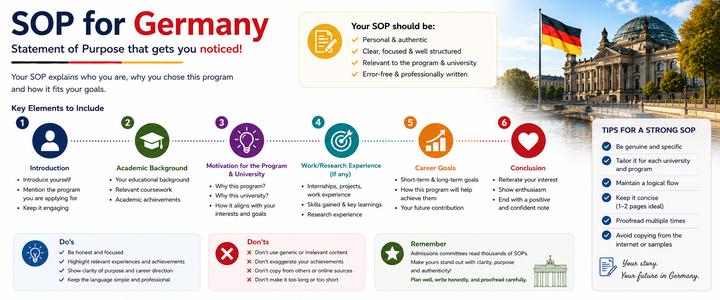
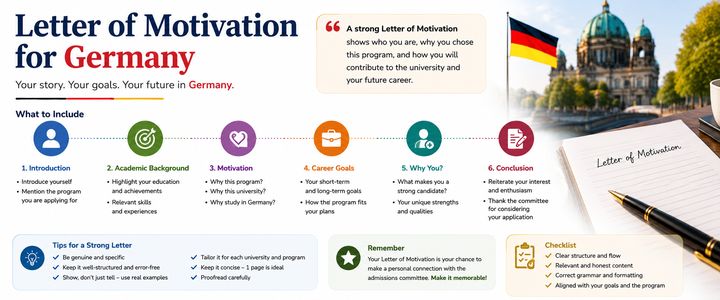
Motivation Letter
A strong motivation letter should explain:
Academic background
Why the course fits your previous education
Why you selected the program
Relevant projects
Career goals
Research interests
Why Germany suits your academic objective
Avoid generic statements such as:
“Germany has world-class education.”
Instead explain the specific connection between your academic background and the chosen curriculum.
Recommendation Letters
Some programs request:
One academic recommendation
Two academic recommendations
Professional recommendation
Research supervisor recommendation
Choose recommenders who can discuss your:
Academic performance
Research ability
Technical skills
Work quality
Leadership
Suitability for advanced study
Step 8: Determine Where to Apply
International applicants may apply through one of several routes.
German universities decide which application route applies.
Possible routes include:
Direct university application
uni-assist
uni-assist VPD
Hochschulstart
DAAD confirms that the correct route depends on the applicant’s qualification, nationality, subject, and university.
Route 1: Direct University Application
Some universities evaluate international applications themselves.
Students create an account on the university portal and upload:
Academic documents
Language certificate
CV
Motivation letter
Other required files
The university then handles the evaluation.
Route 2: Application Through uni-assist
uni-assist evaluates international academic documents for participating German universities.
It can:
Check certificates
Evaluate university eligibility
Convert grades
Check selected university requirements
Forward eligible applications
uni-assist currently processes applications for around 150 German universities.
uni-assist Application Process
The standard process includes:
Research the requirements.
Plan the application.
Prepare documents.
Register in My assist.
Upload documents.
Submit the application.
Pay the handling fee.
Track the application.
uni-assist Application Fees
Current standard handling fees are:
First chosen course in a semester: €75
Each additional course in the same semester: €30
Some universities cover the fee for applicants.
Route 3: VPD Application
Some German universities do not ask uni-assist to forward the final application.
Instead, uni-assist issues a:
Vorprüfungsdokumentation — VPD
The VPD shows:
Submitted qualifications
uni-assist's evaluation
German-equivalent grade
Type of university admission possible
The student then submits the VPD directly to the university.
The VPD itself is not a university application.
You must still complete the university’s application process before its deadline.
Apply for VPD Early
uni-assist processing can take several weeks.
As of July 2026, uni-assist reports typical evaluation times of around four to six weeks, with current regional processing periods potentially around six to seven weeks.
Students requiring a VPD should therefore apply well before the final university deadline.
Route 4: Hochschulstart
Hochschulstart coordinates admissions for selected restricted programs.
Applications for nationally restricted programs such as:
Human Medicine
Dentistry
Veterinary Medicine
Pharmacy
are handled through Hochschulstart under the applicable admission rules.
Other programs may also participate in the coordinated DoSV admission procedure.
International applicants should still check the individual university because some non-EU applicant categories may follow university-specific or uni-assist procedures.
Step 9: Understand NC and Admission Restrictions
Some German degree programs are:
Zulassungsfrei
meaning admission is not restricted by a fixed number of places.
Others are:
Zulassungsbeschränkt
meaning admission is restricted.
What Is Numerus Clausus?
Numerus Clausus, or NC, refers to an admission restriction caused by limited study places.
Competitive subjects can include:
Medicine
Psychology
Business
Economics
Computer Science
Architecture
Data Science
The required grade can change from semester to semester.
NC is not always a permanently fixed cutoff announced years in advance.
It may reflect competition among applicants for available seats.
Step 10: Check Application Deadlines
Germany has two major academic intakes.
Winter Semester
Usually begins:
September or October
At many universities:
Applications open around May
Common deadline: 15 July
Summer Semester
Usually begins:
March or April
At many universities:
Applications open around December
Common deadline: 15 January
These are general patterns only.
Individual programs can have significantly earlier deadlines.
Some Master’s programs close applications in:
November
December
March
April
May
June
DAAD notes that at many institutions the typical deadlines are 15 July for winter admission and 15 January for summer admission, but universities and programs can set different dates.
Best Time to Start
Students should ideally begin preparation:
8–12 months before the intended semester.
This gives enough time for:
IELTS
TOEFL
German tests
APS
dMAT where applicable
Certified translations
uni-assist
VPD
Recommendation letters
Visa preparation
Step 11: Submit the Application
Before clicking submit, check:
Correct program
Correct semester
Complete documents
Required certification
Correct translations
APS
Language certificate
VPD
Application fee
Motivation letter
Required tests
An incomplete application can be rejected without academic evaluation.
Step 12: Track the Application
After submitting, monitor:
University application portal
My assist
Email
Applicant notifications
The university may request:
Missing documents
Updated transcript
Certified copy
Additional language evidence
Interview
Aptitude test
Respond before the stated deadline.
Step 13: Receive the Admission Decision
Applicants may receive:
Unconditional Admission
You meet the admission requirements.
Conditional Admission
You are admitted subject to completing a requirement such as:
Degree completion
Language certificate
Final transcript
Specific academic document
Rejection
Common reasons include:
Insufficient grades
Missing academic credits
Wrong previous subject
Incomplete documents
Missing language requirement
Unrecognized qualification
Missed deadline
Limited places
Step 14: Accept the Admission Offer
Admission procedures vary.
You may need to:
Accept the offer online
Submit enrollment documents
Pay semester contribution
Provide insurance confirmation
Upload passport copy
Submit original or certified academic documents
Do not assume that receiving an admission letter automatically enrolls you.
Admission and enrollment are separate steps.
Step 15: Arrange Financial Proof
International students requiring a study visa must demonstrate sufficient financial resources.
Germany currently requires students to show the applicable minimum amount through approved funding methods.
Common methods include:
Blocked account
Scholarship
Declaration of commitment
Other officially accepted financial evidence
For visa planning, students should always verify the latest amount before transferring funds because financial thresholds can change.
Step 16: Arrange Health Insurance
Health insurance is compulsory for students in Germany.
Students may need insurance confirmation for:
Visa
University enrollment
Residence permit
Depending on age and circumstances, students may use:
Public student health insurance
Approved private health insurance
Step 17: Apply for a German Student Visa
After receiving admission and arranging financial proof, non-EU students can begin the student visa process.
Typical documents may include:
Passport
Admission letter
APS certificate for Indian applicants
Academic certificates
Language certificate
Financial proof
Health insurance
Visa application
Motivation documents
Exact requirements depend on the German mission responsible for your application.
Admission Visa vs Study Visa
Germany also provides a route for eligible students who have not yet obtained final university admission but are seeking a study place.
For 2026, applicants using the study-place-seeking route need to demonstrate sufficient monthly financial resources under the applicable visa rules.
Students who already hold university admission normally follow the standard study residence route.
Step 18: Arrange Accommodation
Do not wait until the visa is issued before beginning your housing search.
Options include:
Student residence
Shared apartment
Private room
Private apartment
Housing can be particularly difficult in:
Munich
Berlin
Frankfurt
Hamburg
Stuttgart
Apply for student residences early.
Step 19: Complete Enrollment
Enrollment is known as:
Immatrikulation
The university may request:
Admission letter
Passport
Academic certificates
Health-insurance confirmation
Proof of semester contribution
Enrollment form
Passport photo
After successful enrollment, students receive:
Student identification
University account
Access to course registration
Library access
Student services
Step 20: Travel to Germany
After receiving the appropriate visa and completing required preparations, students can plan travel.
Bring original copies of important documents.
These may include:
Passport
Admission letter
APS
Degree certificates
Transcripts
Insurance
Financial documents
Accommodation confirmation
After Reaching Germany
Students generally need to complete several administrative steps.
These may include:
Address Registration
Register your address with the local authority.
Residence Permit
Students who need a residence permit complete the process with the immigration authority.
Bank Account
A German account can simplify:
Rent
Insurance
Salary
Daily expenses
University Registration
Complete remaining enrollment or orientation formalities.
Germany Admission Process for Indian Bachelor’s Students
A typical pathway is:
Complete Class 12.
Check the new 70% eligibility requirement.
Determine whether Studienkolleg or direct subject-restricted admission applies.
Obtain APS.
Meet German or English requirements.
Apply via university or uni-assist.
Complete Studienkolleg/FSP where required.
Receive admission.
Arrange financial proof.
Apply for visa.
Enroll.
Germany Admission Process for Indian Master’s Students
A typical Master’s pathway is:
Complete or approach completion of a recognized bachelor’s degree.
Check subject-credit requirements.
Check anabin recognition.
Prepare IELTS/TOEFL or German test.
Complete APS.
Determine whether dMAT applies for Summer Semester 2027 or later.
Prepare CV, SOP, transcripts and module descriptions.
Apply through the required platform.
Complete VPD if necessary.
Receive admission.
Arrange finances and insurance.
Apply for visa.
Enroll.
Recommended Timeline
12 Months Before
Choose degree
Research universities
Check academic eligibility
Begin language preparation
9–12 Months Before
Take IELTS/TOEFL/TestDaF
Start APS
Check dMAT requirements
Prepare academic documents
6–9 Months Before
Prepare CV
Write motivation letter
Request recommendation letters
Obtain translations
Request VPD if necessary
4–6 Months Before
Submit applications
Pay application fees
Track uni-assist
2–4 Months Before
Receive admission
Arrange blocked account
Arrange insurance
Apply for visa
Search for housing
Before Departure
Complete enrollment
Pay semester contribution
Prepare original documents
Book travel
Common Reasons for Rejection
Understanding why applications fail can dramatically improve admission chances.
1. Insufficient Subject Credits
A common Master’s rejection reason.
Example:
A student applies for MSc Computer Science but does not have sufficient credits in:
Algorithms
Programming
Mathematics
Theoretical Computer Science
2. Wrong Academic Background
A program may require a closely related bachelor’s degree.
3. Low Grades
Competitive programs may receive applicants much stronger than the minimum eligibility threshold.
4. Missing Documents
Even academically strong students can be rejected for an incomplete application.
5. Language Requirement Not Met
Universities may reject:
Insufficient IELTS
Insufficient German
Unaccepted MOI certificate
6. Missed Deadline
German universities generally enforce application deadlines strictly.
7. Recognition Problems
An unrecognized institution or qualification can cause problems with:
APS
uni-assist
University admission
8. Weak Motivation Letter
Generic statements do not demonstrate academic fit.
How to Improve Your Admission Chances
Apply to Multiple Universities
Build three categories:
Ambitious
Highly competitive programs.
Target
Programs where your profile aligns well.
Safer
Programs with broader admission criteria.
Do not apply only to famous institutions.
Match Your Previous Curriculum
For Master’s applications, prioritize universities where your undergraduate modules clearly match the required academic credits.
Apply Early
Early preparation protects against:
APS delays
uni-assist delays
Language-test delays
VPD delays
Missing documentation
Include Smaller Cities
Strong universities exist outside:
Munich
Berlin
Frankfurt
Hamburg
Smaller cities may provide:
Lower living costs
Less housing pressure
Strong universities
Excellent research
Common Mistakes
Applying without checking eligibility
Assuming Class 12 automatically provides direct Bachelor’s admission
Ignoring the new 70% Indian undergraduate rule
Missing APS
Ignoring dMAT for affected future Master’s applications
Applying to unrelated Master’s courses
Checking only university rankings
Applying only to TUM or RWTH
Assuming every university uses uni-assist
Confusing VPD with a university application
Applying for VPD too late
Missing program-specific deadlines
Assuming MOI always replaces IELTS
Ignoring module-credit requirements
Waiting for admission before starting financial planning
Searching for accommodation too late
Frequently Asked Questions
How do I apply to a university in Germany?
Depending on the institution, you may apply directly to the university, through uni-assist, through the VPD procedure, or through Hochschulstart.
Is uni-assist mandatory?
No. Only universities participating in the relevant uni-assist procedure require it.
What is a VPD?
A VPD is a preliminary academic evaluation issued by uni-assist. Students then submit it directly to universities that require the VPD procedure.
How much does uni-assist cost?
The standard fee is €75 for the first chosen course in a semester and €30 for every additional course.
What are the main admission intakes?
Winter Semester and Summer Semester.
What is the usual winter application deadline?
Many programs use 15 July, although individual deadlines vary.
What is the usual summer deadline?
Many universities use 15 January, but program-specific deadlines can differ.
Is APS compulsory for Indian students?
APS is generally required for Indian students as part of the German student visa process and may also be required during university applications.
What is dMAT?
dMAT is a new standardized academic aptitude test being introduced for selected Indian Master’s applicants in Engineering, Commerce, Accounting, Finance, Economics, Business, and Management.
Does dMAT apply for Winter Semester 2026/27?
Under the current rollout, the new requirement applies to relevant applicants beginning with Summer Semester 2027 and later, subject to transitional exemptions.
Can I apply after Class 12 from India?
Yes, but the admission pathway depends on your academic profile. From Winter Semester 2026/27, the updated Indian undergraduate criteria generally require at least 70% in Class 12 for the relevant Studienkolleg or direct subject-restricted pathways.
Is IELTS mandatory?
Not always. The requirement depends on the exact program.
Do German universities accept MOI?
Some do, while others require IELTS or TOEFL.
Is a motivation letter compulsory?
Only when the program requires one.
Do all Master’s programs require GRE?
No.
Can I apply to several universities?
Yes, and doing so is generally advisable.
Does admission guarantee a student visa?
No. University admission and visa approval are separate processes.
Is admission the same as enrollment?
No. Admission means the university offers you a place. Enrollment formally registers you as a student.
Final Admission Checklist
Before submitting your application, confirm:
Degree eligibility
University recognition
Subject requirements
Minimum grades
Language requirement
APS requirement
dMAT requirement
uni-assist requirement
VPD requirement
Hochschulstart requirement
Certified documents
Academic transcript
CV
Motivation letter
Recommendation letters
Test scores
Application fee
Final deadline
Final Verdict
The German university admission process becomes much easier when students approach it in the correct order.
The most effective process is:
Select the degree.
Check whether your previous qualification is recognized.
Confirm whether direct admission or Studienkolleg is required.
Check subject-specific requirements.
Meet the required language level.
Complete APS where applicable.
Check dMAT requirements if applying from India for selected Master’s fields.
Prepare all academic documents.
Determine whether to apply directly, through uni-assist, through VPD, or through Hochschulstart.
Apply well before the deadline.
Track the application carefully.
Accept the admission offer.
Arrange finances and health insurance.
Complete the student visa process.
Enroll and prepare for Germany.
The biggest mistake international students make is searching for a single “Germany admission requirement.”
There is no universal admission formula.
Every application is a combination of:
your qualification + your subject + your university + your chosen program + your language + your nationality.
Students who check these factors early, prepare documents carefully, and apply to a balanced selection of universities have a much stronger chance of successfully beginning their studies in Germany.