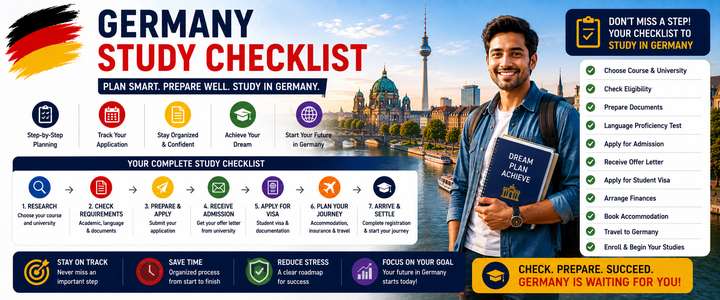
Germany’s education system is often viewed as practical, affordable and academically strong. But it can be confusing for international students, because children can take different school paths, vocational education is a respected alternative to university and education rules differ across Germany’s 16 federal states. Unlike countries with a single national school system, Germany places considerable responsibility in its federal states, called Länder. Each state has jurisdiction over such important areas as school organization, curricula, teacher education, examinations, and higher education law.
School names, grade structures and specific rules can therefore differ depending on whether a student lives in Bavaria, Berlin, North Rhine-Westphalia, Saxony or elsewhere. Despite these regional differences, the overall structure follows a recognizable path: Pre-school EducationElementary School. Junior Secondary.Senior secondary schoolhigher education or vocational training.Postgraduate Education and Continuing EducationGermany is different in that it does not regard university as the only successful way. Students who meet the requirements can obtain the Abitur and go to university, earn a school qualification with a vocational orientation, begin an Ausbildung, study in a dual study program, or switch between educational pathways. This guide explains the main stages of the German education system: types of school, qualifications, vocational training, types of university, degrees, grading, admissions and practical differences that are important for international students to know.
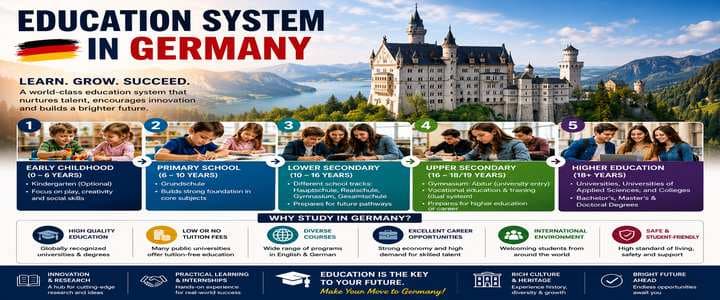
German Education System at a Glance
| Education Stage | Common German Term | Typical Age or Level | Main Purpose |
|---|---|---|---|
| Early childhood education | Kindertagesstätte or Kindergarten | Under 6 | Care, social development, and early learning |
| Primary education | Grundschule | Approximately 6–10 or 6–12 | Foundational school education |
| Lower secondary education | Sekundarstufe I | Approximately grades 5–9 or 10 | General, intermediate, or academic preparation |
| Upper secondary education | Sekundarstufe II | Usually grades 10–12 or 13 | Abitur, vocational education, or professional preparation |
| Vocational training | Ausbildung | After compulsory schooling | Occupational training through school and workplace learning |
| Higher education | Hochschule or Universität | After an eligible school qualification | Bachelor’s, master’s, State Examination, and doctorate |
| Continuing education | Weiterbildung | Any professional stage | Skill development, retraining, or specialization |
Who Controls Education in Germany?
Germany is a federal country made up of 16 states.
Education is primarily the responsibility of these states rather than being controlled entirely by one national education ministry. State education ministries determine many of the rules governing schools and universities within their jurisdiction.
The Standing Conference of the Ministers of Education and Cultural Affairs, known as the Kultusministerkonferenz or KMK, helps coordinate education policies across the states.
This coordination is important because Germany needs school and university qualifications to remain broadly comparable even when states use different:
School names
Curricula
examination procedures
Academic calendars
Teacher-training structures
Grade configurations
Admission policies
For students and families, the federal structure means that a rule applying in one state may not work in exactly the same way elsewhere.
International applicants should therefore check both:
General German education requirements
Rules of the specific state, school, or university
Early Childhood Education
Early childhood education in Germany includes facilities such as:
Kinderkrippe
Kindergarten
Kindertagesstätte, commonly called Kita
Childcare centers
Preschool groups
Kinderkrippe
A Kinderkrippe generally provides care for babies and children below the typical kindergarten age.
Kindergarten
Kindergarten usually serves children in the years before compulsory primary school.
The original concept of kindergarten developed in Germany, although modern facilities combine childcare, social development, language learning, play, and basic preparation for school.
Is Kindergarten Compulsory?
Kindergarten is generally not the same as compulsory formal schooling.
Children typically begin compulsory school around age six, although the exact starting date and enrollment rules depend on the federal state.
Early childhood institutions help children develop:
Communication skills
Independence
Social behavior
Motor skills
Creativity
Basic language and numerical awareness
For children from international or immigrant families, early childhood education can also provide important exposure to the German language before primary school.
Primary Education: Grundschule
Primary education is provided mainly through the Grundschule.
In most German states, Grundschule covers grades 1 to 4. In Berlin and Brandenburg, primary education generally continues through grade 6.
During primary school, students usually study:
German
Mathematics
General studies
Art
Music
Physical education
Religious education or an alternative subject
A foreign language at an appropriate stage
The purpose of Grundschule is to give all children a shared foundation before they move into more differentiated secondary pathways.
What Happens After Grundschule?
Near the end of primary school, students move into secondary education.
The recommended or available pathway may depend on:
Academic performance
Teacher recommendations
Parental choice
State regulations
School capacity
Individual student development
Germany’s early division into different secondary tracks is one of the system’s most debated features.
Supporters argue that it allows education to match students’ academic and professional needs. Critics argue that important educational decisions may be made too early and can be influenced by social background.
Germany has introduced greater flexibility between pathways, and students can often change tracks or earn higher qualifications later. The KMK emphasizes that movement between lower-secondary school types and tracks is possible.
Lower Secondary Education: Sekundarstufe I
Lower secondary education generally begins after Grundschule and continues through grade 9 or 10, depending on the school and state.
The three traditional educational tracks are:
Hauptschule track
Realschule track
Gymnasium track
These tracks may exist in separate schools or be combined within comprehensive or multi-track institutions.
Hauptschule
The Hauptschule pathway traditionally focuses on general education combined with practical preparation for vocational training.
Students commonly complete this route after grade 9 or 10 and may earn the:
Erster Schulabschluss
Hauptschulabschluss
Another state-specific equivalent
Graduates may continue into:
Dual vocational training
Vocational schools
Pre-vocational programs
Further school education leading to a higher qualification
The role and name of the Hauptschule vary by state, and some states have merged it with other school forms.
Realschule
The Realschule provides a broader intermediate education.
It commonly ends after grade 10 with the:
Mittlerer Schulabschluss
Realschulabschluss
Another equivalent intermediate certificate
Graduates may enter:
Vocational training
Technical or commercial schools
Fachoberschule
Upper-secondary academic education where eligible
Other pathways leading toward higher education
The Realschule is often viewed as a bridge between highly practical and strongly academic education.
Gymnasium
The Gymnasium is the most academically oriented traditional secondary pathway.
It prepares students for upper-secondary study and the Abitur, Germany’s general higher education entrance qualification.
Students typically study subjects such as:
German
Mathematics
Foreign languages
Natural sciences
Social sciences
Humanities
Arts
Physical education
The complete school period leading to the Abitur generally lasts 12 or 13 years, depending on the state and school structure.
Gesamtschule and Combined School Types
A Gesamtschule combines several academic pathways within one institution.
Depending on the state and school model, students may study together for selected subjects while being grouped by performance in others.
Comprehensive schools can offer qualifications associated with the:
Hauptschule track
Realschule track
Gymnasium track
Upper-secondary Abitur pathway
Other states use school types such as:
Gemeinschaftsschule
Oberschule
Sekundarschule
Regelschule
Mittelschule
The names vary, but these institutions often combine two or more traditional tracks.
School-Leaving Qualifications
Students can earn different qualifications depending on their education level and performance.
First School-Leaving Certificate
The first school-leaving certificate is generally earned after lower secondary education and can support entry into selected vocational routes.
Its name varies between states.
Intermediate School-Leaving Certificate
The Mittlerer Schulabschluss is usually obtained after grade 10.
It can provide access to:
Vocational training
Vocational upper-secondary schools
Fachoberschule
Selected professional programs
Gymnasiale Oberstufe, when performance requirements are met
Abitur
The Allgemeine Hochschulreife, commonly called the Abitur, is the general higher education entrance qualification.
It allows holders to apply broadly to German universities, although specific programs may still impose:
Grade cutoffs
Numerus Clausus restrictions
Aptitude tests
Language conditions
Subject requirements
Students usually earn the Abitur after completing the Gymnasiale Oberstufe and passing final examinations.
Fachhochschulreife
The Fachhochschulreife provides access mainly to universities of applied sciences.
Depending on the route and state, it usually combines:
A school-based academic component
A practical or professional component
It does not always provide the same unrestricted access as the general Abitur.
Fachgebundene Hochschulreife
The subject-restricted higher education entrance qualification allows students to enter university programs within particular academic fields.
It is broader than the Fachhochschulreife in some respects but more limited than the general Abitur.
Upper Secondary Education
Upper secondary education is known as Sekundarstufe II.
It includes both academic and vocational pathways.
Gymnasiale Oberstufe
The Gymnasiale Oberstufe is the upper-secondary academic stage leading to the Abitur.
According to the KMK, it commonly includes:
A one-year introductory phase
A two-year qualification phase
Compulsory and elective subjects
Different academic subject areas
Final Abitur examinations
Students generally study across several subject groups, including:
Languages and literature
Social sciences
Mathematics and natural sciences
The Abitur grade is based on performance during the qualification phase and the final examinations.
Vocational Upper Secondary Schools
Germany has several vocational school types, including:
Berufsschule
Berufsfachschule
Fachoberschule
Berufliches Gymnasium
Berufskolleg
Fachschule
The exact structure varies by state.
These schools may prepare students for:
Vocational qualifications
Apprenticeships
Technical careers
Commercial careers
Healthcare professions
Higher education entrance qualifications
Further professional advancement
Ausbildung: Germany’s Vocational Training System
One of the most important parts of the German education system is Ausbildung, or vocational education and training.
Germany does not treat vocational education merely as a backup for students who do not attend university.
Ausbildung is a major professional pathway that prepares learners for recognized occupations across areas such as:
Engineering trades
Mechatronics
Electronics
Logistics
Banking
Retail
Hospitality
Healthcare
Information technology
Manufacturing
Administration
Automotive services
Dual Vocational Training
The dual system combines:
Practical training at a company
Theoretical education at a vocational school
The trainee normally signs a contract with a company and receives training pay.
During the program, learners may spend certain days at the company and others at the Berufsschule, or alternate between longer training blocks.
The model helps students learn:
Job-specific technical skills
Workplace procedures
Professional responsibility
Safety requirements
Relevant theoretical knowledge
Germany’s official skilled-worker portal describes both dual and school-based vocational training as major vocational routes.
School-Based Vocational Training
Some occupations are learned mainly through a vocational school, such as a Berufsfachschule or Berufskolleg.
School-based training is common in selected:
Healthcare
Social care
Education
Technical
Creative professions
Practical placements may be included alongside classroom instruction.
Duration of Ausbildung
Vocational programs often last approximately two to three and a half years, depending on the profession and training regulations.
Strong performance or relevant previous education may sometimes allow the duration to be shortened.
Final Qualification
At the end of the program, learners usually complete examinations overseen by the relevant chamber or professional authority.
These may include organizations such as:
Chamber of Industry and Commerce
Chamber of Crafts
Professional chambers for regulated occupations
Why Ausbildung Is Important
The system helps connect education directly with labor-market demand.
Employers participate in training future workers, while students gain real workplace experience before qualification.
Many trainees receive employment offers from the companies where they completed their training.
Dual Study Programs
A duales Studium, or dual study program, combines higher education with substantial workplace training.
Students are generally enrolled at a university, university of applied sciences, or dual institution while also working with a partner company.
The format may combine:
Academic semesters and company phases
Weekly university and workplace schedules
Vocational qualification and bachelor’s study
Paid company employment and university education
A dual study program can be attractive because students may receive:
Work experience
Financial support or salary
Employer networking
A recognized academic degree
Strong employment prospects
However, the workload can be demanding because students must meet both academic and company expectations.
Higher Education in Germany
Germany’s higher education landscape includes around 400 state-funded and state-recognized institutions.
The main types are:
Universities and equivalent institutions
Universities of applied sciences
Colleges of art and music
There are also specialized institutions for:
Public administration
Theology
Teacher education
Dual study
Professional education
Traditional Universities
Universities focus strongly on:
Academic theory
Research
Scientific methodology
Independent study
Doctoral education
They offer programs across fields such as:
Humanities
Natural sciences
Engineering
Law
Medicine
Economics
Social sciences
Universities generally have the right to award doctorates.
Technical Universities
Technical universities are research universities with strong expertise in:
Engineering
Computer science
Natural sciences
Architecture
Technology
Applied research
Many also offer business, economics, and social science programs.
Universities of Applied Sciences
Universities of applied sciences emphasize:
Practical education
Professional application
Industry projects
Internships
Laboratory work
Employer partnerships
Germany has around 200 universities of applied sciences, along with additional institutions specializing in public administration.
They are particularly strong in areas such as:
Engineering
Business
Design
Social work
Computer science
Media
Healthcare management
Universities of applied sciences traditionally had limited doctoral-awarding authority, although regulations and collaborative doctoral routes have developed across states.
Colleges of Art and Music
These institutions specialize in:
Fine art
Music
Acting
Film
Design
Dance
Performing arts
Admission may depend heavily on:
Portfolio
Audition
Artistic examination
Interview
Demonstrated talent
Public and Private Institutions
Most German students attend public institutions.
Germany also has private and church-run universities that are officially state-recognized. Private institutions are particularly common among universities of applied sciences and often emphasize industry links and international orientation. Some charge substantial tuition.
Degrees Offered in Germany
Germany participates in the European Higher Education Area, which supports the comparability of degrees across participating countries.
The main academic qualifications are:
Bachelor’s degree
Master’s degree
State Examination
Doctorate
Bachelor’s Degree
A bachelor’s degree is usually the first university qualification.
Programs commonly last:
Six semesters
Seven semesters
Eight semesters
Common titles include:
Bachelor of Arts
Bachelor of Science
Bachelor of Engineering
Bachelor of Laws
Bachelor of Fine Arts
Bachelor of Music
A bachelor’s degree usually includes:
Core modules
Electives
Examinations
Projects
Internships in selected courses
A bachelor’s thesis
Master’s Degree
A master’s degree follows a related undergraduate qualification.
It commonly lasts two to four semesters.
Common titles include:
Master of Arts
Master of Science
Master of Engineering
Master of Laws
Master of Education
Master of Business Administration
A consecutive master’s degree develops knowledge from a related bachelor’s program.
Continuing-education master’s programs may require work experience and often charge tuition.
State Examination
Some professional subjects use the Staatsexamen, or State Examination, rather than the standard bachelor’s and master’s structure.
This may apply to fields such as:
Medicine
Dentistry
Pharmacy
Law
Selected teacher-training routes
The program combines university study with examinations regulated or supervised by the state.
Doctorate
A doctorate involves advanced original research.
Germany offers:
Individual doctorates under a professor
Structured doctoral programs
Research-school models
Industry-connected doctorates
The final qualification may be called a:
Doctorate
PhD
Subject-specific doctoral title
ECTS Credit System
German bachelor’s and master’s programs commonly use the European Credit Transfer and Accumulation System, or ECTS.
Credits reflect the expected student workload.
A full academic year normally represents approximately 60 ECTS credits.
A typical bachelor’s degree may require:
180 ECTS
210 ECTS
240 ECTS
A master’s degree commonly requires enough credits to bring the combined bachelor’s and master’s total to the required program level, frequently around 300 ECTS.
ECTS helps students:
Transfer credits
Study abroad
Compare programs
Document academic workload
Participate in exchange programs
However, universities still decide whether particular modules are academically equivalent.
How German University Teaching Works
Students coming from highly structured education systems may find German universities different.
Lectures
Lectures may involve large groups and provide an overview of major concepts.
Seminars
Seminars are smaller and may require:
Discussion
Presentations
Academic reading
Written assignments
Participation
Tutorials
Tutorials help students practice concepts introduced in lectures.
They may be led by academic staff or advanced students.
Laboratory Courses
Laboratory work is common in:
Engineering
Chemistry
Physics
Biology
Computer science
Medical sciences
Practical Projects
Universities of applied sciences frequently include:
Company projects
Case studies
Applied assignments
Internships
Practical semesters
Independent Study
A significant part of German university education happens outside scheduled classes.
Students are expected to:
Read independently
Prepare for examinations
Complete assignments
Organize study groups
Manage registration deadlines
Understand examination regulations
The university may provide support, but students are expected to take responsibility for their progress.
German University Grading System
The grading scale commonly runs from 1.0 to 5.0.
| German Grade | General Interpretation |
|---|---|
| 1.0–1.5 | Very good |
| 1.6–2.5 | Good |
| 2.6–3.5 | Satisfactory |
| 3.6–4.0 | Sufficient or passing |
| Above 4.0 | Usually failing |
The exact wording and scale may vary by institution and program.
A grade of 1.0 is generally the strongest possible result, while 4.0 is commonly the lowest passing grade.
This is the opposite of systems where a higher number means better performance.
Examinations
Assessment may include:
Written examinations
Oral examinations
Presentations
Essays
Laboratory reports
Projects
Portfolios
Thesis work
In some courses, one final examination may determine most or all of the module grade.
Students should read the program’s examination regulations carefully.
University Admission in Germany
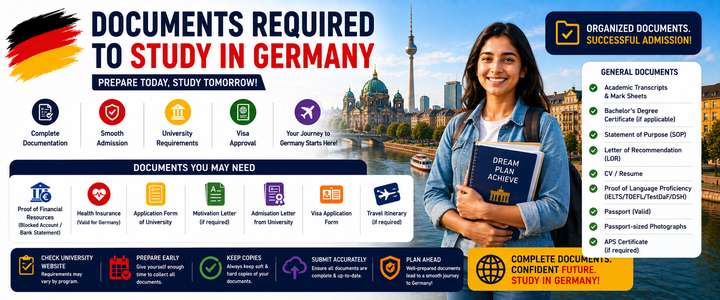
To enter a bachelor’s program, students need a recognized higher education entrance qualification.
International school certificates may be considered equivalent when their learning outcomes are comparable to German qualifications.
Depending on the applicant’s background, admission may require:
Direct university eligibility
Subject-restricted eligibility
Previous university study
Studienkolleg
Feststellungsprüfung
Language certification
Entrance examination
APS verification for selected countries
Studienkolleg
A Studienkolleg is a preparatory course for international applicants whose school qualification does not provide direct university admission.
It generally prepares students for the Feststellungsprüfung.
Preparatory tracks are aligned with intended study areas, such as:
Technical subjects
Medicine and biology
Business and economics
Humanities
Languages
Numerus Clausus
Some university programs have restricted admission, known as Numerus Clausus or NC.
Selection may depend on:
Academic grades
Aptitude tests
Interviews
Additional qualifications
Available seats
High-demand subjects may be especially competitive.
Language of Education
German is the main teaching language in schools and most undergraduate university programs.
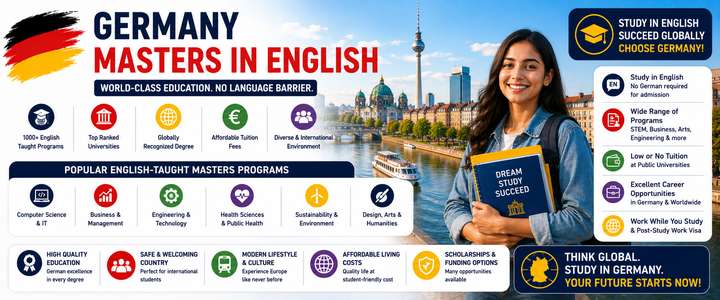
International and English-taught university programs are increasingly available, especially at the master’s level.
The DAAD international program database lists hundreds of bachelor’s programs and more than 1,700 master’s programs designed for an international audience.
German-taught programs may accept qualifications such as:
TestDaF
DSH
telc Deutsch C1 Hochschule
Goethe certificates
Other university-approved evidence
DAAD notes that many higher education institutions require German ability at approximately B2 level or above, although the exact condition depends on the program.
English-taught programs may accept:
IELTS
TOEFL
Cambridge English
Previous English-medium education where explicitly accepted
Students in English-taught programs should still consider learning German for:
Daily life
Administration
Housing
Part-time work
Internships
Graduate employment
Tuition and Education Costs
Public schooling is generally financed through the state.
At the higher education level, most students at public institutions do not pay general tuition for many standard bachelor’s and consecutive master’s programs.
Students may still pay:
Semester contribution
Administrative fees
Student services
Transportation-related charges
Study materials
Living expenses
Exceptions can include:
Private universities
Continuing-education programs
MBA courses
Selected international degrees
Tuition policies applying in particular states or institutions
Pathways Through the German Education System
The German system is not always a straight line.
A student may move through pathways such as:
Academic Route
Grundschule → Gymnasium → Abitur → University → Master’s → Doctorate
Intermediate Academic and Vocational Route
Grundschule → Realschule → Vocational school or Ausbildung → Employment or advanced qualification
Practical Route
Grundschule → Lower secondary qualification → Ausbildung → Skilled employment → Meister or professional advancement
Applied Higher Education Route
Intermediate qualification → Fachoberschule → Fachhochschulreife → University of Applied Sciences
Dual Study Route
Upper-secondary qualification → Company contract → Dual bachelor’s program → Employment
Students may later gain additional qualifications and move into higher education.
This flexibility is known as permeability within the education system.
Continuing Education
Germany places significant importance on continuing education, known as Weiterbildung.
Professionals may complete:
Short courses
Certifications
Technical training
Management education
Retraining
Language study
Advanced vocational qualifications
Meister Qualification
Skilled workers in certain trades may complete a Meister qualification.
This can allow them to:
Manage a business
Train apprentices
Take on advanced technical responsibility
Establish their own skilled-trade enterprise
Access further educational routes
Fachwirt and Professional Qualifications
Professionals in commercial and administrative fields may pursue qualifications such as:
Fachwirt
Betriebswirt
Specialist certifications
Chamber-based professional qualifications
These routes demonstrate that professional advancement in Germany does not depend entirely on obtaining a university degree.
Strengths of the German Education System
Strong Vocational Pathways
Students can enter respected careers without following a traditional university route.
Affordable Public Higher Education
Many students can access universities without extremely high tuition.
Industry Connections
Ausbildung, dual study, applied universities, and company-linked projects connect education with employment.
Research Infrastructure
Germany offers universities and research organizations with strong scientific and technical capabilities.
Multiple Qualifications
Students can earn different school, vocational, academic, and professional qualifications.
International Recognition
German university qualifications are integrated into European degree structures and are widely recognized internationally.
Flexibility
Students may move between academic and vocational pathways when they meet the required conditions.
Challenges and Criticism
Early Academic Tracking
Students may be separated into different secondary pathways at a relatively young age.
Critics argue that early recommendations may influence long-term opportunity.
State-Level Differences
Families moving between German states may encounter different school names, curricula, or grade structures.
Language Barriers
International students may struggle when programs, administration, or professional training require German.
Independent University Learning
Some international students find German universities less structured than expected.
Competitive Housing and Administration
University education may be affordable, but housing and bureaucracy can make student life difficult.
Limited English Bachelor’s Options
Many undergraduate programs remain German-taught.
What International Students Should Understand
International students should not assume that German education works exactly like the system in their home country.
Important differences include:
School qualifications are evaluated individually.
A Class 12 certificate may not always provide direct university admission.
Public university does not always mean completely free.
Universities of applied sciences are not inferior institutions.
Ausbildung is a respected professional route.
German language can influence both education and employment.
Admission may depend on exact academic subjects, not only overall grades.
University students are expected to work independently.
A recognized degree does not automatically guarantee a job.
Final Verdict
The German education system is built around multiple routes rather than one definition of academic success.
Students can pursue:
Academic upper-secondary education
Vocational training
Dual study
Applied higher education
Research university study
Professional advancement
Its greatest strength is the connection between education and real professional pathways.
A student can become a skilled technician through Ausbildung, an engineer through a university of applied sciences, a researcher through a traditional university, or a business leader through a combination of professional and academic qualifications.
For international students, understanding the structure is essential.
The correct route depends on:
Previous qualification
German-language ability
Academic interests
Preferred learning style
Career goals
Financial situation
Germany offers many opportunities, but students benefit most when they choose a pathway based on its actual curriculum and career outcome—not only the word “university.”
Frequently Asked Questions
How does the German education system work?
Germany’s system includes early childhood education, primary school, different secondary-school pathways, vocational education, universities, and continuing professional education.
Is education controlled nationally?
Education is mainly managed by Germany’s 16 federal states, with coordination through the KMK.
At what age do children start school?
Children usually begin compulsory primary school at around age six, although exact rules differ by state.
How long is primary school?
Grundschule usually covers grades 1 to 4. In Berlin and Brandenburg, it generally continues through grade 6.
What are Germany’s main secondary school types?
The traditional pathways are Hauptschule, Realschule, and Gymnasium. Many states also use comprehensive or combined school models.
What is the Abitur?
The Abitur is Germany’s general higher education entrance qualification and provides broad access to university study.
What is the Realschulabschluss?
It is an intermediate school-leaving qualification generally earned after grade 10.
What is Ausbildung?
Ausbildung is vocational training that may combine company-based practical work with vocational-school education.
Are Ausbildung students paid?
In dual vocational training, trainees normally receive training compensation from their employer.
What is a dual study program?
A dual study program combines university education with substantial paid or structured work at a partner company.
What types of universities exist?
The main types are traditional universities, universities of applied sciences, and colleges of art and music.
Are universities of applied sciences recognized?
Yes. State-funded and state-recognized universities of applied sciences award legitimate German higher education degrees.
What degrees are offered?
The main qualifications are bachelor’s degrees, master’s degrees, State Examinations, and doctorates.
What is ECTS?
ECTS is the European credit system used to describe academic workload and support credit recognition.
Is university free in Germany?
Many public programs charge no general tuition, but semester contributions and exceptions apply.
Is German required?
Most school education and many bachelor’s programs are taught in German. Many English-taught master’s programs are also available.
What is Studienkolleg?
Studienkolleg is a preparatory program for international applicants who do not qualify for direct university admission.
Is vocational training considered inferior to university?
No. Vocational training is a major and respected route into skilled professions in Germany.
Can vocational graduates enter university later?
Depending on their qualifications, professional experience, state rules, and additional certificates, vocational graduates may access higher education later.
Is the German education system good for international students?
It can be highly valuable because of its academic quality, vocational pathways, practical learning, and comparatively affordable public universities. Students must understand qualification recognition and language requirements before applying.