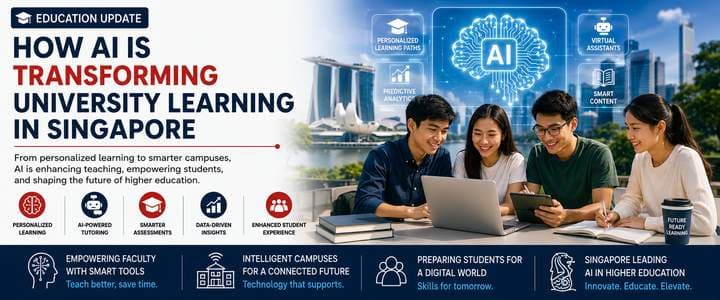
How AI is Transforming University Learning in Singapore
Universities in Singapore are increasingly embracing artificial intelligence (AI) as a powerful tool to enhance learning experiences. Students are actively experimenting with AI technologies to develop new skills, improve research capabilities, and foster creativity. This shift reflects a broader trend where AI is becoming an integral part of higher education, supporting personalized learning and real-time problem solving. As AI tools become more accessible, Singapore’s universities are adapting curricula and teaching methods to prepare students for a future driven by technology.
Key Highlights
- AI tools are being incorporated into university courses to support interactive learning.
- Students use AI for skill development, including coding, data analysis, and creative projects.
- Universities are updating curricula to include AI literacy and ethical considerations.
- AI-powered platforms enable personalized feedback and adaptive learning paths.
- Collaborative projects involving AI encourage innovation and real-world problem solving.
- Faculty members receive training to effectively integrate AI into teaching methodologies.
What Happened?
As AI technology advances rapidly, Singapore’s universities have begun adopting AI-driven tools and platforms to enrich the learning environment. This includes AI-based tutoring systems, automated grading, and virtual assistants that help students manage their studies more efficiently. Students are experimenting with AI applications ranging from natural language processing to machine learning in various disciplines.
These developments mean students can engage with complex concepts more interactively and receive tailored support that addresses their individual learning needs. The use of AI also encourages students to develop critical digital skills that are highly valued in today’s job market.
Additionally, universities are placing emphasis on teaching the ethical use of AI, ensuring students understand the implications of AI technologies in society and industry.
Why This Update Matters
For students and parents, understanding how AI is shaping university education is important for making informed study and career choices. AI integration means that learning is becoming more dynamic and personalized, potentially improving academic outcomes and engagement.
Applicants considering higher education in Singapore should be aware that AI skills and literacy are increasingly embedded in university programs. This can influence preparation strategies and highlight the importance of gaining foundational knowledge in AI-related fields.
Official Status
As per media reports, universities in Singapore are actively incorporating AI into their teaching and learning processes. However, official confirmation and detailed guidelines from individual institutions are awaited. Students and parents are advised to monitor announcements from their respective universities for specific updates.
Official confirmation is awaited, and students should check the official websites of Singapore universities for the latest information.
Important Details
| Particular | Details |
|---|---|
| Topic | Impact of AI on university learning in Singapore |
| Country | Singapore |
| Category | University education news |
| Status | Likely ongoing with official confirmation awaited |
| Applicable For | University students, parents, applicants, educators |
| Official Website | Official confirmation awaited |
| Next Step | Monitor university announcements and prepare for AI-integrated learning |
How Students Can Track The Announcement
Students interested in AI integration in their courses should regularly check official university communication channels and websites for updates on curriculum and learning tools.
- Visit the official websites of your university regularly.
- Subscribe to newsletters or student portals for announcements.
- Attend orientation sessions or workshops about AI tools offered by your institution.
- Engage with faculty or academic advisors to understand AI-related course changes.
- Participate in AI-related student clubs or projects to gain practical experience.
Documents Or Details Students May Need
- Student ID and university login credentials for accessing AI platforms.
- Course syllabi or curriculum outlines mentioning AI components.
- Access to devices compatible with AI learning tools (laptops, tablets).
- Notes or materials from AI-related workshops or training sessions.
What Students Should Do Next
- Familiarize yourself with basic AI concepts and tools relevant to your field.
- Explore online resources and tutorials to supplement university learning.
- Engage actively in AI-driven assignments and projects to build skills.
- Seek guidance from instructors on ethical and effective AI use.
- Stay informed about updates to course content involving AI integration.
- Collaborate with peers to share knowledge and experiences with AI applications.
Important Links
| Link Type | Website / Status |
|---|
FAQs
How is AI currently used in Singapore universities?
AI is used to support personalized learning, automate routine tasks, provide virtual tutoring, and assist in research and data analysis.
Do students need prior AI knowledge to benefit from these changes?
While prior knowledge helps, universities are incorporating AI literacy into curricula to ensure all students can engage effectively.
Are there ethical concerns addressed in AI education?
Yes, universities emphasize ethical AI use, teaching students about privacy, bias, and responsible technology deployment.
Will AI replace traditional teaching methods?
AI is intended to complement, not replace, human instructors by enhancing interactivity and personalized support.
How can students prepare for AI-integrated learning?
Students can explore basic AI concepts, participate in workshops, and stay updated on course changes involving AI tools.
Where can students find official updates on AI in their universities?
Official updates are typically shared through university websites, student portals, and academic advisories.