University of Siegen Summary
The University of Siegen (German: Universität Siegen) is a public research university in Siegen, North Rhine-Westphalia. It was founded as a modern university in 1972. Its leading idea, often expressed through the phrase “Shaping a Humane Future”, gives the university a clear academic personality: research and education should not only promote knowledge, but also contribute to the development of society in a more responsible, inclusive and human-centered direction. Students wishing to study in Germany will find a modern academic environment in Siegen with strengths in engineering, natural sciences, social sciences, education, economics, humanities, media, architecture, arts and interdisciplinary research. The University of Siegen is especially attractive for students who want a university that links technology with society. Its academic structure consists of schools and faculties in the fields of arts and humanities, education, architecture, arts, economic disciplines and natural sciences and engineering. This allows students to study technical subjects alongside issues of design, culture, learning, economics, media and social change. That mixture gives Siegen a more diverse identity than a technical university alone. The university is heavily focused on engineering and the applied sciences. An environment of research related to basic and applied research can be beneficial for students interested in mechanical engineering, electrical engineering, civil engineering, computer science, sensors, materials, production systems and digital technologies. The university’s research profile is characterized by globally recognized scholarship addressing society’s pressing issues, and support for both basic and applied research. Its regional setting also shapes Siegen’s academic identity. The city is situated in a historically industrialized region with strengths in manufacturing, medium-sized companies, engineering and applied technology. This provides students with hands-on experience in the types of industries in which German innovation is often strongest: not only large corporations but also specialist companies, technical suppliers and regional research partners. Such a link between university education and real production environment can be useful for students in engineering, economics, business, computer science and applied sciences. The university is also getting more international. The recent Indo-German collaboration with IIT Bhilai on sensor technologies exemplifies Siegen’s interest in global academic partnerships, applied innovation and cross-border research collaboration. This type of activity shows for international students, Siegen is not isolated, it is building academic relationships linking German research with global technology needs. One of the benefits of Siegen is that it is not a typical big university. Its campus and academic culture are defined by a distinctive mission of human-centered progress, interdisciplinary learning and regional relevance. Students can study engineering, media, education, economics, social sciences or humanities in an environment in which the university’s mission is linked to society and change. Compared to Germany's largest cities, Siegen offers a more affordable and manageable student experience. Students enjoy a quieter environment, green surroundings, public transportation and access to the broader academic and industrial region of North Rhine-Westphalia. That makes the university a good choice for students looking for academic seriousness without the distractions or costs of a big city. University of Siegen is a great choice for students who want to study in Germany a modern public university with a human-centered mission, strong applied research and a practical link to technology, education, media, economics and society. Its interdisciplinary structure, links to regional industry and increasing international partnerships give students academic depth and real-world relevance.
About University of Siegen
The University of Siegen is a public research university in North Rhine-Westphalia with a modern academic mission of human-centered progress, applied research and interdisciplinary education. Established as a university in 1972 it has programs in engineering, natural sciences, architecture, arts, humanities, economics, education, social sciences, media and technology. The Siegen is especially valuable to students who wish to connect technology with society. Its programs and research areas support such fields as mechanical engineering, electrical engineering, civil engineering, computer science, materials, sensors, media studies, business, education, social research and design. The university benefits from its regional setting. Siegen is located in an industrially historical region with strong links to the manufacturing, engineering, SME and applied technology sectors. It provides opportunities for internships, research projects and industry-connected learning. “The University of Siegen is a more affordable and manageable environment than Germany’s largest cities for international students. It is a strong choice for students who want to study in Germany at a modern university with practical relevance, interdisciplinary learning and strong connections between technology, education, media and society.”
University of Siegen History
- The University of Siegen became a university in 1972, though higher education in the region has older institutional roots.
- It was developed as a modern public university in North Rhine-Westphalia.
- The university built its academic identity around applied research, education, engineering, humanities, and social responsibility.
- Its mission became strongly linked to shaping a humane and future-oriented society.
- Siegen expanded into engineering, natural sciences, economics, architecture, arts, education, media, and social sciences.
- The region’s industrial background influenced the university’s practical focus in manufacturing, technology, and applied innovation.
- Research grew in sensors, materials, mechanical systems, computer science, media studies, education, and social transformation.
- The university strengthened interdisciplinary links between technology, society, culture, and design.
- International academic partnerships helped expand its global research and teaching connections.
- Today, the University of Siegen is known for applied research, human-centered education, engineering, media, social sciences, and regional industry links.
University of Siegen Highlights
- Became a modern public university in 1972.
- Known for the mission of shaping a humane and future-oriented society.
- Strong programs in engineering, education, media, economics, humanities, and social sciences.
- Located in a region with strong industrial and manufacturing traditions.
- Good choice for students interested in applied technology and social impact.
- Strong academic links between engineering, media, design, education, and society.
- Research areas include sensors, materials, computer science, media studies, and social transformation.
- More affordable and manageable student environment than Germany’s largest cities.
- Supports interdisciplinary learning across technical and human-centered fields.
- Strong option for students seeking practical education with regional industry relevance.
University of Siegen Courses Offered
UG Courses
- Mechanical Engineering
- Electrical Engineering
- Civil Engineering
- Industrial Engineering
- Computer Science
- Digital Media and Technology-related pathways
- Mathematics
- Physics
- Chemistry
- Architecture
- Urban Planning-related study pathways
- Business Administration
- Economics
- Social Sciences
- Education / Teacher Training
- Psychology
- Media Studies
- Communication Studies
- German Studies
- English Studies
- History
- Philosophy
- Art
- Music
- Design-related study pathways
PG Courses
- Mechanical Engineering
- Electrical Engineering
- Computer Science
- Mechatronics
- Civil Engineering
- Industrial Engineering
- Materials Science-related pathways
- Embedded Systems-related programs
- Human-Computer Interaction
- Media and Society
- Roads to Democracies
- Economic Policy
- Management and Markets
- Accounting, Auditing and Taxation
- Education Science
- Psychology
- Architecture
- Urban Planning-related programs
- German Literature
- English Studies
- History
- Philosophy
- Social Sciences
PhD Courses
- Doctoral Research in Engineering
- Doctoral Research in Mechanical Engineering
- Doctoral Research in Electrical Engineering
- Doctoral Research in Computer Science
- Doctoral Research in Civil Engineering
- Doctoral Research in Natural Sciences
- Doctoral Research in Economics and Business
- Doctoral Research in Education
- Doctoral Research in Media, Social Sciences, and Humanities
- Doctoral Research in Architecture, Arts, and Cultural Studies
University of Siegen Specializations Offered
UG Specializations
- Mechanical Engineering
- Electrical Engineering
- Civil Engineering
- Computer Science
- Architecture
- Business Administration
- Economics
- Media Studies
- Education
- Social Sciences
PG Specializations
- Mechatronics
- Embedded Systems
- Human-Computer Interaction
- Materials Science
- Media and Society
- Economic Policy
- Management and Markets
- Roads to Democracies
- Architecture
- Education Science
PhD Specializations
- Mechanical Engineering
- Electrical Engineering
- Computer Science
- Civil Engineering
- Natural Sciences
- Economics
- Business
- Education
- Media Studies
- Social Sciences and Humanities
University of Siegen Admission Process
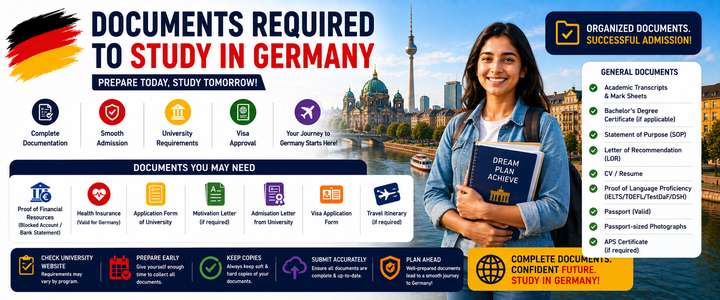
Admission to the University of Siegen is based on the chosen degree program, academic background, nationality, and language requirement. Undergraduate applicants must hold a recognized higher education entrance qualification. Programs in engineering, computer science, architecture, business, education, media studies, psychology, and social sciences may have specific entry requirements or admission limits.
For master’s programs, applicants usually need a relevant bachelor’s degree with required subject credits. Programs in mechatronics, embedded systems, human-computer interaction, materials science, economic policy, management, media and society, architecture, education science, and social sciences may review academic records, grades, language ability, and motivation documents. Doctoral admission is handled through faculties or research groups.
Admission Details
- Applications must be submitted before the official deadline.
- International applicants must provide recognized academic documents.
- German language proof is required for German-taught programs.
- English language proof is required for English-taught or international programs.
- Some programs may have restricted admission or aptitude review.
- Master’s applicants may need transcripts, CV, motivation letter, and module descriptions.
- Engineering and technical programs may require specific mathematics or science credits.
- Doctoral applicants need faculty approval and usually a confirmed supervisor.
- Enrollment requires complete documents, health insurance verification, and semester fee payment.
- Applicants should check program-level admission rules before applying.
University of Siegen Eligibility Criteria
UG Eligibility
- Applicants must possess a recognized higher secondary qualification equivalent to the German university entrance qualification.
- International applicants must satisfy German higher education admission standards.
- German language proficiency is required for most undergraduate programs.
- English language proficiency may be required for selected international programs.
- Engineering, architecture, media, business, and computer science applicants should meet subject-specific academic requirements.
- Technical applicants should have strong preparation in mathematics and science.
- Official academic certificates and transcripts must be submitted before the application deadline.
- International applicants must comply with German university admission regulations.
- Non-EU applicants must fulfill student visa requirements before enrollment.
- Final admission depends on successful verification of academic qualifications.
PG Eligibility
- Applicants must hold a recognized bachelor's degree in a relevant discipline.
- The previous qualification must satisfy the academic requirements of the selected master's program.
- English language proficiency is required for English-taught graduate programs.
- German language proficiency is required for German-taught master's programs.
- Engineering, computer science, architecture, economics, and media programs may require subject-specific academic credits.
- Some master's programs may require minimum grades or aptitude assessment.
- A CV, motivation letter, or recommendation letters may be required.
- International applicants must submit officially recognized academic documents.
- Additional program-specific eligibility requirements may apply.
- Final admission is granted after faculty evaluation.
PhD Eligibility
- Applicants must possess a recognized master's degree or equivalent qualification.
- The previous degree should be relevant to the proposed doctoral research area.
- Applicants generally need an approved academic supervisor.
- A research proposal may be required during the admission process.
- Strong academic performance and research capability are expected.
- English proficiency is generally required for international doctoral candidates.
- German language requirements vary depending on the faculty.
- Official academic documents must be submitted for review.
- Additional doctoral regulations may apply depending on the department.
- Final admission requires approval by the doctoral faculty.
University of Siegen Courses Fees
University of Siegen follows the German public university fee model. Regular degree students are not charged tuition fees. Students must pay the semester fee, which includes the Germany semester ticket, student services contribution, solidarity contribution, and student body fee.
UG Fees
- (Details admission start and fees in local currency)
- Standard bachelor's / undergraduate tuition fee: €0 per year
- Semester fee: Approximately €394 per semester
- Minimum annual university-linked payable amount: Approximately €788 per year
- Germany semester ticket contribution included in semester fee: €226.80 per semester
- Student services contribution included in semester fee: €140 per semester
- Solidarity contribution included in semester fee: €7 per semester
- AStA fee included in semester fee: €20 per semester
- Additional fee for international students in the German language course: €500, where applicable
- Living expenses, visa, insurance, books, food, transport, housing, and personal costs are separate.
PG Fees
- (Details admission start and fees in local currency)
- Standard consecutive master's tuition fee: €0 per year
- Semester fee: Approximately €394 per semester
- Minimum annual university-linked payable amount: Approximately €788 per year
- German language course fee for international students, where applicable: €500
- Professional, continuing education, executive, guest study, and special postgraduate routes may have separate fee structures.
- Study materials, software, lab costs, insurance, visa, housing, food, transport, and personal costs are separate.
PhD Fees
- Standard doctoral tuition fee: Usually no tuition fee
- Semester fee, where enrollment is required: Approximately €394 per semester
- Minimum annual university-linked payable amount: Approximately €788 per year
- Doctoral admission requires supervisor approval, faculty registration, enrollment where applicable, and semester fee payment.
- Additional language or administrative fees may apply depending on applicant status.
- Research travel, housing, insurance, books, food, transport, visa, and personal expenses are separate.
University of Siegen Scholarships
- UG Scholarships
- Deutschlandstipendium may support academically strong undergraduate students at the University of Siegen.
- International students may explore DAAD scholarship opportunities where eligible.
- Students in engineering, computer science, architecture, media, education, economics, and social sciences may seek subject-related funding.
- German foundations may support students based on academic merit, need, or social engagement.
- North Rhine-Westphalia-based scholarship options may be available for selected students.
- Country-specific scholarships may support eligible international applicants.
- Student assistant roles may help students manage study-related expenses.
- Scholarship eligibility depends on grades, nationality, personal profile, and funding rules.
- PG Scholarships
- DAAD scholarships may support eligible international master’s students.
- Deutschlandstipendium may be available for selected postgraduate students.
- Students in mechatronics, embedded systems, human-computer interaction, materials science, media studies, economics, and education may explore field-specific funding.
- Research-linked funding may be available through engineering, technology, media, education, and social research projects.
- German academic foundations may support strong master’s applicants.
- Some programs may provide guidance on external scholarships or assistantships.
- Research assistant roles may be available in departments, institutes, and project groups.
- Funding depends on academic record, motivation, program fit, and available scholarship resources.
- PhD Scholarships
- Doctoral candidates may receive funding through research assistant contracts.
- DAAD doctoral scholarships may support eligible international researchers.
- Engineering, computer science, media studies, education, economics, and social science projects may include funded doctoral roles.
- Graduate schools, research groups, and faculty projects may provide structured doctoral funding.
- External foundations may support doctoral research in technology, humanities, social sciences, and education.
- International candidates may explore bilateral or home-country doctoral grants.
- Doctoral funding usually requires supervisor approval and a strong research proposal.
- Funding depends on research area, faculty approval, academic merit, and project availability.
University of Siegen Career Outcomes
UG Career Outcomes Engineering graduates may work in manufacturing, automation, machinery, electronics, construction, and industrial technology. Computer Science graduates may pursue careers in software development, IT consulting, cybersecurity, data analytics, or digital systems. Architecture graduates may work in architectural firms, planning offices, construction companies, or urban development organizations. Business and Economics graduates may enter consulting, finance, management, marketing, analytics, or regional industry roles. Media and Communication graduates may work in journalism, digital media, corporate communication, content strategy, or research. Education graduates may pursue teaching, training, curriculum development, or educational administration. Social Science and Humanities graduates may work in public service, NGOs, research, media, education, or cultural organizations. Career outcomes depend on internships, language skills, applied projects, technical ability, and specialization. PG Career Outcomes Mechatronics and Engineering graduates may work in automation, robotics, manufacturing, industrial systems, or applied research. Embedded Systems graduates may pursue roles in electronics, automotive technology, smart devices, software engineering, or industrial IT. Human-Computer Interaction graduates may work in UX research, interface design, digital product development, or technology consulting. Materials Science graduates may enter industrial R&D, manufacturing, quality control, or advanced technology sectors. Media and Society graduates may work in media research, communication strategy, NGOs, public institutions, or academic research. Economic Policy and Management graduates may work in consulting, policy analysis, finance, management, or public administration. Siegen’s regional industry links support applied learning and career opportunities. Career outcomes depend on project work, internships, research exposure, and German language ability. PhD Career Outcomes Doctoral graduates may pursue academic research, postdoctoral roles, university teaching, or advanced industry positions. Engineering PhD graduates may work in industrial R&D, automation, manufacturing, materials, and technology development. Computer science doctoral graduates may pursue careers in software research, AI, cybersecurity, embedded systems, or universities. Media and communication researchers may work in academia, media research, digital communication, policy, or cultural institutions. Economics and business PhD graduates may work in consulting, policy research, corporate strategy, or academic careers. Education and social science doctoral graduates may enter research, public institutions, NGOs, training, or higher education. Regional industry cooperation can strengthen applied doctoral career pathways. Career outcomes depend on publications, research quality, supervisor support, and project relevance.
University of Siegen FAQs
Q1. Is the University of Siegen a public university?
Yes. The University of Siegen is a public research university in North Rhine-Westphalia, Germany.
Q2. What is the University of Siegen known for?
It is known for engineering, computer science, media studies, education, social sciences, economics, architecture, and applied research.
Q3. Does the University of Siegen charge tuition fees?
Regular degree programs generally do not charge tuition fees, but students must pay semester contributions.
Q4. Are English-taught programs available at the University of Siegen?
Yes. Selected master's and doctoral programs are available in English.
Q5. Is the University of Siegen good for Engineering?
Yes. It offers strong programs in mechanical engineering, electrical engineering, civil engineering, computer science, and applied technology.
Q6. Can international students apply to the University of Siegen?
Yes. International students can apply if they meet academic, language, and program-specific admission requirements.
Q7. What are career options after the University of Siegen?
Graduates work in engineering, software development, media, education, architecture, consulting, public administration, research, and business.
Q8. Where is the University of Siegen located?
It is located in Siegen, North Rhine-Westphalia, Germany.
Q9. Does the University of Siegen offer PhD programs?
Yes. Doctoral research is available in engineering, computer science, natural sciences, economics, education, media, humanities, and social sciences.
Q10. Is Siegen a good city for students?
Yes. Siegen offers a manageable student environment, lower living pressure than major metro cities, and access to regional industry networks.