🔍
logo

University of Duisburg-Essen Admission 2026, Courses, Fees, Placement & Ranking

University of Duisburg-Essen

University of Duisburg-Essen

Duisburg / Essen, North Rhine-Westphalia, Germany

Established 2003

University of Duisburg-Essen Summary

The University of Duisburg-Essen (UDE) is a large public research university located in the two major cities of Duisburg and Essen in Germany's North Rhine-Westphalia region. The modern university was founded in 2003 through the merger of the University of Duisburg and the University of Essen, but its academic roots go much further back in time through earlier institutions with links to the region. The UDE today is defined by a learning situation that is open, diverse, urban and research-oriented. It is one of the most important universities in the Ruhr area and serves a large student body. UDE has a broad academic portfolio in disciplines such as engineering, medicine, social sciences, economics, business, humanities, education, natural sciences, mathematics, computer science, biology, chemistry and urban studies. The two-campus set-up allows students to leverage the diverse academic strengths available: Duisburg is closely linked with engineering, technology, logistics and industrial systems, while Essen excels in medicine, humanities, social sciences, education and health-related fields. The university is particularly relevant because it is situated in the Ruhr metropolitan region, one of the most important areas of industrial and urban transformation in Europe. This gives UDE a certain identity. It is not only a university for classroom learning, but also a place where students and researchers study real-world issues such as urban development, migration, digital transformation, sustainable industry, healthcare, social change, energy systems and education reform. The research at the UDE is characterized by interdisciplinary cooperation. The university specializes in nanosciences, biomedical sciences, urban systems and water research, empirical education research, artificial intelligence and social transformation. Its links to the University Alliance Ruhr improve academic cooperation in the region and give students more opportunities for research and networking. UDE attracts international students with its hands-on academic environment, a diverse student body, the low-cost German public university model, and strong ties to industry and research networks. The university’s city location also makes it ideal for students who want access to part-time work opportunities, public transport, cultural diversity and career exposure in one of Germany’s most populated economic areas. If you are looking for a modern German public university that offers you a broad academic education, practical research, close ties to the regional industry and social diversity. Its identity is especially useful to students interested in engineering, medicine, business, social sciences, urban systems, education and applied research related to modern society.
About University of Duisburg-Essen

The University of Duisburg-Essen (UDE) is a large, public research university in the Ruhr area of North Rhine-Westphalia. UDE was created in 2003 through the merger of the University of Duisburg and the University of Essen and has since become one of Germany’s most diverse and socially relevant universities. The two-campus structure gives it a strong urban identity and allows students to study in one of Europe’s most important regions for industrial transformation, logistics, healthcare, education and social change. UDE offers programs in engineering, medicine, natural sciences, computer science, business, economics, social sciences, humanities, education, mathematics, chemistry, biology and urban systems. The Duisburg campus is closely linked with engineering, logistics, technology and industrial systems, while the Essen campus is of particular importance for medicine, education, humanities, social sciences and health-related subjects. The university’s academic profile is strongly connected to the Ruhr region. This region has moved from heavy industry to technology, services, research, health, culture and sustainable urban development. At UDE students enjoy the advantage of studying in a living laboratory for economic, environmental and social transformation. This makes the university particularly relevant for students interested in urban studies, migration, industrial change, education, public health, engineering and social sciences. Research at UDE is interdisciplinary and application-oriented. The university operates in the fields of nanoscience, biomedical research, water systems, urban transformation, artificial intelligence, empirical research in education, logistics and social inequality. Students can explore real-world problems that link technology, society, health and the environment. UDE is a multicultural environment for international students, with the affordability of a public university and access to one of the largest job markets in Germany. It’s a strong option for students seeking academic diversity, city involvement, industry connections and a campus culture defined by diversity, research and social relevance.”

University of Duisburg-Essen History

  • The University of Duisburg-Essen was officially formed in 2003 through the merger of the University of Duisburg and the University of Essen.
  • The Duisburg academic tradition has older roots connected to higher education and regional development in the Lower Rhine area.
  • The Essen side developed with strong connections to education, medicine, humanities, and social sciences.
  • The merger created one of Germany’s large modern public universities in the Ruhr region.
  • Duisburg became strongly associated with engineering, logistics, technology, and industrial systems.
  • Essen became especially important for medicine, health sciences, education, humanities, and social sciences.
  • The university grew alongside the Ruhr region’s transformation from heavy industry to research, services, healthcare, and technology.
  • UDE became a member of the University Alliance Ruhr, strengthening cooperation with other major universities in the region.
  • The university expanded research in nanoscience, water systems, biomedical sciences, urban transformation, AI, and education research.
  • Today, UDE is known as a diverse, urban, research-oriented university shaped by social change, industry, and regional transformation.

University of Duisburg-Essen Highlights

  • One of Germany's largest public universities by student enrollment.
  • Created in 2003 through the merger of the Universities of Duisburg and Essen.
  • Two major campuses located in Duisburg and Essen.
  • Member of the University Alliance Ruhr, promoting collaborative research.
  • Strong programs in engineering, medicine, business, education, and social sciences.
  • Research excellence in nanotechnology, biomedical sciences, water research, and urban systems.
  • Located in Germany's largest metropolitan and industrial region.
  • Highly diverse international student population.
  • Strong connections with regional industries, hospitals, and research centers.
  • Excellent opportunities for applied research, internships, and professional development.

University of Duisburg-Essen Courses Offered

UG Courses

  • Medicine
  • Applied Computer Science
  • Business Administration
  • Economics
  • Business Information Systems
  • Mechanical Engineering
  • Electrical Engineering and Information Technology
  • Civil Engineering
  • Industrial Engineering
  • NanoEngineering
  • Logistics Engineering
  • Social Sciences
  • Political Science
  • Communication Studies
  • Psychology
  • Education / Teacher Training
  • Mathematics
  • Physics
  • Chemistry
  • Biology
  • German Studies
  • English and American Studies
  • East Asian Studies

PG Courses

  • Automotive Engineering and Mobility Management
  • Civil Engineering
  • Electrical Engineering and Information Technology
  • Mechanical Engineering
  • Industrial Engineering
  • Logistics Engineering
  • Medical Engineering
  • NanoEngineering
  • Computer Engineering
  • Software Engineering
  • Artificial Intelligence-related study pathways
  • Business Administration
  • Economics
  • Health Economics
  • Development and Governance
  • Urban Culture, Society and Space
  • Water Science
  • Chemistry
  • Biology
  • Physics
  • Mathematics
  • Education and Social Science-related master’s programs

PhD Courses

  • Doctoral Research in Engineering
  • Doctoral Research in Medicine
  • Doctoral Research in Computer Science
  • Doctoral Research in Natural Sciences
  • Doctoral Research in Nanoscience
  • Doctoral Research in Water Systems
  • Doctoral Research in Biomedical Sciences
  • Doctoral Research in Economics and Business
  • Doctoral Research in Social Sciences
  • Doctoral Research in Humanities and Education

University of Duisburg-Essen Specializations Offered

UG Specializations

  • Mechanical Engineering
  • Electrical Engineering
  • Civil Engineering
  • Computer Science
  • Business Administration
  • Economics
  • Medicine
  • Social Sciences
  • Education
  • NanoEngineering

PG Specializations

  • Automotive Engineering
  • Logistics Engineering
  • Medical Engineering
  • Software Engineering
  • NanoEngineering
  • Water Science
  • Urban Systems
  • Health Economics
  • Development and Governance
  • Artificial Intelligence-related Fields

PhD Specializations

  • Nanoscience
  • Biomedical Sciences
  • Engineering Systems
  • Computer Science
  • Water Research
  • Urban Transformation
  • Medicine
  • Social Sciences
  • Education Research
  • Business and Economics

University of Duisburg-Essen Admission Process

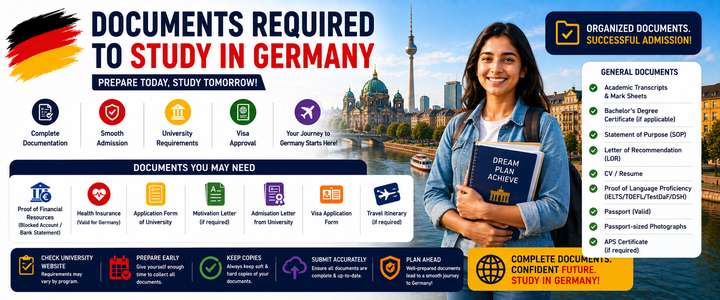
Admission to the University of Duisburg-Essen (UDE) depends on the degree level, program type, applicant nationality, and whether the course has admission restrictions. Undergraduate applicants must hold a school qualification recognized as equivalent to the German higher education entrance qualification. Some programs may be open admission, while others may be restricted due to limited seats, especially medicine, psychology, teacher education combinations, and high-demand subjects.

For master’s programs, applicants normally need a relevant bachelor’s degree with subject-specific academic credits. Engineering, computer science, business, social science, and health-related programs may require minimum grades, language proof, or additional documents. Doctoral applicants must hold a suitable graduate degree and apply through the relevant faculty, research group, or doctoral pathway.

Admission Details

  • Applications must follow the official deadline for the selected intake.
  • International applicants must submit recognized academic records and transcripts.
  • Some undergraduate programs may use restricted admission based on academic ranking.
  • German language proof is required for German-taught programs.
  • English language proof is required for English-taught master’s programs.
  • Master’s applicants may need proof of subject-specific credits.
  • Some programs may ask for a CV, motivation letter, module handbook, or recommendation letters.
  • Medicine and other restricted programs may have separate selection rules.
  • Doctoral applicants need faculty approval and usually a confirmed supervisor.
  • Enrollment requires admission approval, health insurance, semester contribution, and complete documents.

University of Duisburg-Essen Eligibility Criteria

UG Eligibility

  • Applicants must have a recognized higher secondary qualification equivalent to the German university entrance qualification.
  • International qualifications must meet German higher education admission standards.
  • German language proficiency is required for most undergraduate programs.
  • Applicants must satisfy any program-specific academic requirements.
  • Restricted programs may have higher admission standards due to limited seats.
  • Engineering and science applicants should have a strong academic background in mathematics and science.
  • Academic transcripts and supporting documents must be submitted before the deadline.
  • International applicants must comply with German admission regulations.
  • Non-EU applicants must obtain the appropriate student visa before enrollment.
  • Final admission depends on verification of all submitted documents.

PG Eligibility

  • Applicants must hold a recognized bachelor's degree in a relevant discipline.
  • The previous degree must satisfy the academic requirements of the selected master's program.
  • English language proficiency is required for English-taught programs.
  • German language proficiency is required for German-taught master's programs.
  • Certain programs may require subject-specific academic credits.
  • Some programs may require a motivation letter or CV.
  • Technical and engineering programs may require a strong quantitative background.
  • International applicants must submit officially recognized academic documents.
  • Additional admission requirements may apply depending on the program.
  • Final admission is subject to faculty approval.

PhD Eligibility

  • Applicants must possess a recognized master's degree or equivalent qualification.
  • The academic background should align with the intended research field.
  • Applicants are generally expected to secure an academic supervisor.
  • A research proposal may be required before admission.
  • Strong academic performance is expected for doctoral applicants.
  • English proficiency is generally required for international research candidates.
  • German language requirements vary by faculty.
  • Official academic documents must be submitted for evaluation.
  • Additional faculty-specific doctoral regulations may apply.
  • Admission is confirmed after approval by the doctoral committee.

University of Duisburg-Essen Courses Fees

University of Duisburg-Essen follows the German public university fee model. The university does not charge regular tuition fees for degree programs, but all students must pay the social and student body contribution each semester. The fee includes the mobility contribution, Studierendenwerk social contribution, and student body contribution.

UG Fees

  • (Details admission start and fees in local currency)
  • Standard bachelor’s / undergraduate tuition fee: €0 per year
  • Summer semester 2026 social and student body contribution: €349.80
  • Winter semester 2026/27 social and student body contribution: €367.80
  • Approximate annual university-linked payable amount using 2026 semester fees: €717.60
  • Approximate total for 3-year bachelor’s program: around €2,152.80
  • Approximate total for 4-year undergraduate route: around €2,870.40
  • Guest study, continuing education, secondary study, and special routes may have separate fees.
  • Living expenses, visa, insurance, books, housing, food, transport, and personal expenses are separate.

PG Fees

  • (Details admission start and fees in local currency)
  • Standard master’s tuition fee: €0 per year
  • Summer semester 2026 social and student body contribution: €349.80
  • Winter semester 2026/27 social and student body contribution: €367.80
  • Approximate annual university-linked payable amount using 2026 semester fees: €717.60
  • Approximate total for 2-year master’s program: around €1,435.20
  • Continuing education, special professional programs, and guest study routes may charge separate fees.
  • Living expenses, visa, insurance, books, food, housing, transport, and personal expenses are separate.

PhD Fees

  • Standard doctoral tuition fee: usually €0 per year
  • Doctoral students may need to pay the semester contribution if formally enrolled.
  • Summer semester 2026 contribution: €349.80
  • Winter semester 2026/27 contribution: €367.80
  • Approximate annual university-linked payable amount using 2026 semester fees: €717.60
  • Approximate 3-year doctoral registration-linked total: around €2,152.80
  • Doctoral admission requires supervisor approval, faculty registration, and doctoral enrollment rules where applicable.
  • Research travel, insurance, housing, books, visa, food, transport, and personal expenses are separate.

University of Duisburg-Essen Scholarships

  • UG Scholarships
  • Deutschlandstipendium may support academically strong students at UDE.
  • International students may apply for DAAD funding where eligible.
  • Need-based support may be available through student services and external organizations.
  • Students in engineering, education, medicine, and social sciences may explore subject-specific scholarships.
  • Regional foundations in North Rhine-Westphalia may support selected students.
  • Country-specific scholarships may be available for international applicants.
  • Students may explore part-time campus work or student assistant opportunities.
  • Scholarship eligibility depends on grades, financial need, background, and program rules.
  • PG Scholarships
  • DAAD scholarships may support international master’s students.
  • Deutschlandstipendium may be available for selected postgraduate students.
  • UDE students may explore scholarships from German political, social, and academic foundations.
  • Engineering, nanoscience, water research, and biomedical programs may have project-linked funding options.
  • Social science and education students may explore foundation-based support.
  • International students may seek emergency or need-based financial aid where available.
  • Student assistant roles may support master’s students financially.
  • Funding depends on academic record, program type, nationality, and application strength.
  • PhD Scholarships
  • Doctoral candidates may receive funding through research assistant contracts.
  • DAAD doctoral research scholarships may support eligible international candidates.
  • Research training groups may offer funded doctoral positions.
  • UDE’s research areas in nanoscience, water systems, biomedical science, and urban studies may include project funding.
  • External foundations may support doctoral work in science, engineering, medicine, and social research.
  • International candidates may apply for bilateral or home-country research grants.
  • Doctoral funding usually requires supervisor approval and a strong research proposal.
  • Funding availability depends on faculty, research project, and academic merit.

University of Duisburg-Essen Career Outcomes

UG Career Outcomes Engineering graduates may work in mechanical, electrical, civil, logistics, automotive, industrial, or manufacturing sectors. Computer science graduates may pursue careers in software development, IT services, data analysis, cybersecurity, and digital systems. Business and economics graduates may work in finance, logistics, consulting, management, marketing, or public-sector organizations. Medicine graduates may continue into clinical training, healthcare practice, residency, or medical research. Education graduates may move toward teaching, educational administration, curriculum support, or social education roles. Social science graduates may work in research, public policy, NGOs, urban development, communications, or community organizations. Duisburg-Essen’s Ruhr location supports access to Germany’s largest metropolitan job market. Career outcomes depend on internships, language skills, degree specialization, and professional licensing. PG Career Outcomes Engineering master’s graduates may work in automotive, logistics, energy systems, manufacturing, mobility, and industrial technology. Computer science and AI graduates may enter software engineering, analytics, digital transformation, research, or IT consulting. NanoEngineering and biomedical graduates may work in materials, medical technology, biotechnology, research labs, or doctoral study. Water science and environmental graduates may work in sustainability, water management, environmental consulting, or public agencies. Business, economics, and health economics graduates may work in consulting, management, healthcare administration, analytics, or policy. Social science and governance graduates may work in public administration, NGOs, international development, or urban transformation. UDE’s industry and regional partnerships can support applied learning and project-based experience. Career outcomes depend on field choice, German language ability, practical training, and work authorization. PhD Career Outcomes Doctoral graduates may pursue careers in academia, research institutes, industry R&D, public institutions, or consulting. Engineering PhD graduates may work in industrial research, production systems, logistics, materials, and energy-related fields. Biomedical and nanoscience PhD graduates may pursue careers in biotechnology, medical research, pharmaceuticals, or advanced materials. Water research and environmental doctoral graduates may work in research centers, public agencies, sustainability consulting, or international organizations. Social science and education doctoral graduates may pursue academic, policy, NGO, or public-sector research roles. Doctoral training can lead to postdoctoral research, project management, innovation roles, or specialist consulting. Funding projects and research collaborations may improve employment pathways. Career outcomes depend on publications, research networks, technical skills, and sector demand.

University of Duisburg-Essen FAQs

Q1. Is University of Duisburg-Essen a public university?

Yes. The University of Duisburg-Essen is a public research university in North Rhine-Westphalia, Germany.

Q2. What is University of Duisburg-Essen known for?

It is known for engineering, medicine, nanoscience, water research, logistics, education, social sciences, business, and urban transformation.

Q3. Does University of Duisburg-Essen have two campuses?

Yes. The university has major campuses in Duisburg and Essen.

Q4. Does UDE charge tuition fees?

Regular degree programs generally do not charge tuition fees, but students must pay semester contributions.

Q5. Is UDE good for international students?

Yes. UDE has a diverse student community and offers strong academic options in an international urban region.

Q6. What are popular courses at UDE?

Popular areas include engineering, computer science, medicine, business, economics, education, social sciences, and natural sciences.

Q7. Does UDE offer English-taught programs?

Yes. Some master’s and international programs are offered in English, while many undergraduate programs are taught in German.

Q8. What are career options after UDE?

Graduates can work in engineering, logistics, healthcare, IT, business, education, social research, public policy, and environmental fields.

Q9. Is German required at UDE?

German is required for most German-taught programs. English proof is required for English-taught programs.

Q10. Does UDE offer PhD opportunities?

Yes. UDE offers doctoral research opportunities across engineering, medicine, natural sciences, social sciences, economics, and humanities.

College Facilities

📚

Library

💻

Computer Lab

🏀

Sports Complex

🛏️

Hostel

Cafeteria

🚌

Transport

Find Us Here

University of Duisburg-Essen, located in , , – easily accessible by metro and road.