Germany is one of the few major study destinations where international students can earn a recognized bachelor’s or master’s degree from a public university without paying the high tuition fees commonly associated with studying abroad.
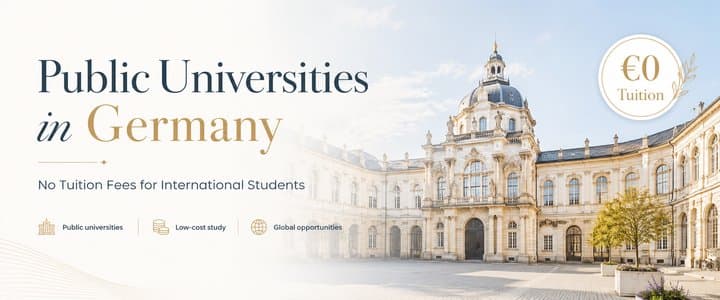
At many German public universities, both domestic and international students pay no general tuition fees for regular bachelor’s programs and consecutive master’s degrees. Students usually pay only a compulsory semester contribution that supports student services, administration, student representation, and, at many institutions, public transportation.
However, the phrase “free education in Germany” can be misleading.
Tuition-free study does not mean that every university, every program, and every international applicant pays nothing. Important exceptions exist in Baden-Württemberg, at the Technical University of Munich, in selected continuing-education programs, and in courses that operate under special fee structures.
This guide explains:
What tuition-free study in Germany actually means
Which public universities do not charge general tuition
Which universities and states charge international tuition
How much the semester contribution costs
Whether English-taught programs are tuition-free
Admission requirements for international students
Living costs, visa funding, scholarships, and student work
How to confirm whether a specific course is genuinely tuition-free
Public Universities with No Tuition Fees: Quick Overview
The following public universities generally do not charge tuition for regular first-degree programs and consecutive master’s degrees. Students must still pay a semester contribution, and individual fee-based programs may be excluded.
| Public University | Location | General Tuition Position |
|---|---|---|
| University of Berlin | Berlin | No general tuition for regular degree programs |
| Humboldt University of Berlin | Berlin | No general tuition for regular degree programs |
| Technical University of Berlin | Berlin | No general tuition |
| University of Bonn | Bonn | No tuition; semester contribution required |
| University of Cologne | Cologne | No general tuition |
| University of Münster | Münster | No tuition for regular degree programs |
| University of Duisburg-Essen | Duisburg and Essen | No general tuition, including for international students |
| Ruhr University Bochum | Bochum | No general tuition |
| University of Potsdam | Potsdam | No general tuition except selected continuing-education programs |
| University of Hamburg | Hamburg | No general tuition for regular programs |
| University of Bremen | Bremen | No tuition; semester contribution required |
| University of Göttingen | Göttingen | No general tuition |
| Leibniz University Hannover | Hannover | No tuition for regular study, subject to special exceptions |
| Leipzig University | Leipzig | No general tuition |
| Friedrich Schiller University Jena | Jena | No general tuition |
| Saarland University | Saarbrücken | No tuition for first degrees and consecutive master’s programs |
| Kiel University | Kiel | No general tuition |
| Otto von Guericke University Magdeburg | Magdeburg | No tuition for most programs |
The official fee pages of these institutions distinguish tuition from the mandatory semester contribution.
What Does “No Tuition Fees” Mean in Germany?
At a tuition-free German public university, the university does not charge a recurring teaching fee for the academic instruction provided in a regular eligible degree.
This generally applies to:
Most regular bachelor’s degrees
Many consecutive master’s degrees
State Examination programs
Selected doctoral programs
German and international students, depending on the state and institution
Germany abolished general tuition fees at most public universities, but institutions continue to collect semester-based administrative and social contributions.
Tuition Fee vs Semester Contribution
The semester contribution is not a tuition charge.
It may finance:
Student welfare services
Student cafeterias
Student representation
Administrative services
Campus facilities
Public transportation passes
The nationwide student version of the Deutschlandticket
Student cultural or sports services
The exact amount and included services vary by university and semester.
Many universities currently collect approximately €250 to €500 per semester, although the amount can be lower or higher. For example, Saarland University lists a semester fee of €412.30 for Winter Semester 2026–27, while Göttingen advises international students to budget approximately €485–€500 for its current contribution.
The contribution can change every semester, so students should verify the current amount before enrollment.
Top Public Universities in Germany Without General Tuition Fees
1. Free University of Berlin
Free University of Berlin is a major public research university with programs across:
Humanities
Social sciences
Political science
International relations
Languages
Economics
Computer science
Natural sciences
Life sciences
The university does not charge general tuition for regular programs. Students instead pay semester fees and contributions. Continuing-education programs and selected specialized offerings may charge tuition.
Why International Students Consider It
Large international academic community
Location in Germany’s capital
Strong humanities and social science departments
Access to research institutes, NGOs, public organizations, and startups
English-taught graduate opportunities
Berlin offers a broad employment market, but accommodation can be difficult and relatively expensive.
2. Humboldt University of Berlin
Humboldt University is one of Berlin’s best-known public research universities.
It offers programs in fields such as:
Economics
Law
Humanities
Social sciences
Mathematics
Physics
Biology
Computer science
Languages
Regular degree students generally pay a semester contribution rather than general tuition. Special professional, international summer, continuing-education, or specialized LL.M. programs may charge separate fees.
Important Distinction
The tuition-free position applies to regular degrees. A branded international program offered through Humboldt University may have a different fee structure.
Applicants should check the page of the exact course rather than relying only on the university’s general public status.
3. Technical University of Berlin
Technical University of Berlin does not charge general tuition. Students pay a semester fee that may include administrative charges, student-services contributions, and public transportation.
Popular areas include:
Mechanical Engineering
Electrical Engineering
Computer Science
Architecture
Urban Planning
Industrial Engineering
Energy
Transportation
Innovation Management
TU Berlin is attractive to students who want technical education while living in a large international city.
4. University of Bonn
The University of Bonn is a public university and does not charge tuition for its regular degree programs. It is also generally free to submit a direct university application, although outside application-service charges may still apply. All enrolled students must pay a semester-based social contribution.
The university is particularly well known for areas such as:
Mathematics
Economics
Computer Science
Physics
Agricultural Sciences
Development Studies
Political Science
Neuroscience
Bonn can be a strong option for research-focused students who want access to international organizations, public institutions, and the wider Cologne-Bonn region.
5. University of Cologne
The University of Cologne does not generally charge tuition for regular public degree programs. Students pay a semester social contribution that supports student services and public transportation.
Popular subject areas include:
Business
Economics
Law
Medicine
Social Sciences
Humanities
Data and Information Systems
Students should watch for privately organized, executive, or specialized business-school programs carrying the University of Cologne name, as these may have tuition even though the university’s standard degrees do not.
6. University of Münster
The University of Münster does not charge tuition for regular degree programs. In-service continuing-education programs are an important exception, and preparatory language students may pay additional course fees.
Students must pay a semester contribution.
Münster is especially attractive for students interested in:
Business and Economics
Mathematics
Natural Sciences
Law
Humanities
Political Science
Theology
Teacher Education
Münster is a student-oriented city, although demand for affordable accommodation can be high.
7. University of Duisburg-Essen
The University of Duisburg-Essen generally charges no tuition, including for international students. Students instead pay a social and student-body contribution each semester.
Its academic strengths include:
Engineering
Computer Science
Business
Economics
Medicine
Natural Sciences
Social Sciences
Education
The university’s location in the Ruhr region gives students access to a large network of cities, employers, research centers, and industrial organizations.
8. Ruhr University Bochum
North Rhine-Westphalia currently does not impose general tuition fees at public universities. Ruhr University Bochum charges a semester social contribution rather than tuition for its standard degree programs.
Popular areas include:
Engineering
Computer Science
Cybersecurity
Economics
Management
Natural Sciences
Psychology
Humanities
Sustainability
Bochum may provide a more manageable living-cost environment than Munich or central Berlin.
9. University of Potsdam
The University of Potsdam generally does not charge tuition. Selected continuing-education programs may charge program-specific tuition, while all enrolled students must pay a semester fee.
The university offers programs in:
Economics
Public Policy
Data Science
Computer Science
Environmental Science
Humanities
Education
Natural Sciences
Potsdam is close to Berlin, allowing students to access the capital while studying in a smaller university environment.
10. University of Hamburg
The University of Hamburg does not generally charge study fees for its standard programs. Students are required to pay a semester contribution, which currently includes a public transportation pass.
Popular fields include:
Economics
Business
Law
Physics
Climate Science
Computer Science
Medicine
Social Sciences
Humanities
Hamburg offers career opportunities in:
Logistics
Media
Maritime industries
International trade
Renewable energy
Finance
Technology
The city’s major disadvantage is the cost and availability of housing.
11. University of Bremen
The University of Bremen does not charge tuition for standard degree study. Students pay a semester fee that covers services such as administration and public transportation.
The university offers respected programs in:
Marine and Environmental Sciences
Computer Science
Engineering
Social Sciences
Public Health
Physics
International Relations
Bremen may appeal to students who want a research university in a more compact city.
12. University of Göttingen
The University of Göttingen does not charge general tuition, but students must pay a semester contribution. Special fees may apply to certain programs, long-term students, or unusual enrollment categories.
Popular academic fields include:
Agriculture
Forestry
Biology
Neuroscience
Mathematics
Development Studies
Humanities
Social Sciences
Göttingen is a traditional university city with a substantial student population.
13. Leibniz University Hannover
Leibniz University Hannover generally does not charge tuition for regular degrees. Students pay a semester contribution, while special charges can apply to long-term students or specific legally defined groups.
Popular subjects include:
Mechanical Engineering
Electrical Engineering
Civil Engineering
Computer Science
Physics
Mathematics
Architecture
Economics
Lower Saxony has not charged general tuition at its state universities since the 2014–15 winter semester.
14. Leipzig University
Leipzig University does not charge general tuition in addition to its required semester contribution. However, preparatory programs, intensive courses, and certain specialized offerings may charge separate fees.
The university offers programs across:
Medicine
Economics
Computer Science
Natural Sciences
Humanities
Languages
Social Sciences
Leipzig is often considered more affordable than Munich, Frankfurt, or Hamburg, although rents have increased and availability depends on the location.
15. Friedrich Schiller University Jena
The University of Jena does not charge general tuition. Students pay a solidarity-based semester contribution that helps finance transportation and student services.
Popular study areas include:
Physics
Optics and Photonics
Economics
Biology
Chemistry
Computer Science
Medicine
Humanities
Fee-based specialist programs may still exist, so applicants must check their exact degree.
16. Saarland University
Saarland University charges no tuition for first-degree programs and consecutive master’s degrees. All students pay the standard semester fee. Continuing-education and professional programs may carry tuition.
The university is especially attractive for:
Computer Science
Artificial Intelligence
Cybersecurity
Computational Linguistics
Materials Science
Business
European Studies
Its proximity to France and Luxembourg creates a multilingual and cross-border academic environment.
17. Kiel University
Kiel University does not generally charge tuition. Students pay a semester contribution for enrollment and student services.
Strong areas include:
Marine Sciences
Environmental Science
Economics
Medicine
Agricultural Sciences
Biology
Geosciences
Kiel may be particularly appealing to students interested in ocean, climate, and sustainability research.
18. Otto von Guericke University Magdeburg
Most programs at Otto von Guericke University Magdeburg do not charge tuition. Students pay a semester contribution that includes student services and public transportation.
Popular areas include:
Mechanical Engineering
Electrical Engineering
Computer Science
Data Science
Neuroscience
Economics
Management
Medical Systems
Magdeburg may offer lower living costs than Germany’s largest metropolitan centers.
Major Tuition-Fee Exceptions
Baden-Württemberg
Baden-Württemberg generally charges students from outside the EU and EEA €1,500 per semester at state universities for bachelor’s, master’s, Diplom, and State Examination programs.
Exemptions apply in defined situations, including certain residence statuses and other legally specified categories.
Universities affected may include:
Heidelberg University
University of Freiburg
University of Stuttgart
Karlsruhe Institute of Technology
University of Mannheim
University of Tübingen
University of Hohenheim
Ulm University
These remain public universities, but they should not be advertised as universally tuition-free for non-EU international students.
Technical University of Munich
TUM introduced tuition fees for newly enrolled students from non-EU countries beginning with the 2024–25 winter semester.
TUM states that the common fee level is:
Approximately €2,000 or €3,000 per semester for many bachelor’s programs
Approximately €4,000 or €6,000 per semester for many master’s programs
The exact amount depends on the course, and exemptions or waiver opportunities may apply.
TUM should therefore not be included in a general list of tuition-free German universities for new non-EU applicants.
Specialized and Continuing-Education Programs
A public university may charge tuition for:
MBA programs
Executive master’s degrees
Continuing-education programs
Part-time professional programs
Non-consecutive master’s courses
Specialized international degrees
Distance-learning programs
Certificate courses
Summer or winter schools
The university’s public status does not automatically make every course free.
Long-Term Study Fees
Some states and institutions may charge students who remain enrolled substantially longer than the standard period of study.
For example, Lower Saxony allows long-term tuition once students exceed the standard study period plus the permitted tolerance semesters.
Second-Degree Fees
Some states charge students who begin a second complete degree after already earning a comparable qualification.
The rules depend on:
State law
Previous degree
New program
Residency or citizenship
Whether the second qualification is academically necessary
Are English-Taught Programs Tuition-Free?
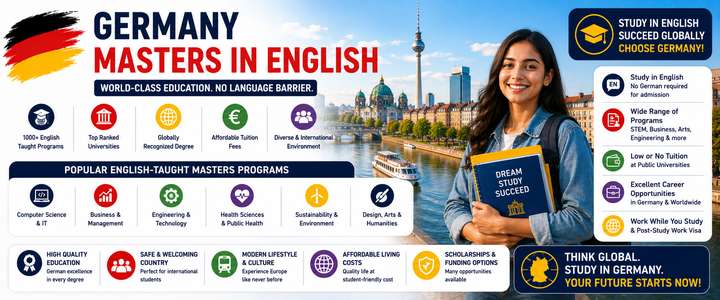
Yes, many English-taught programs at German public universities charge no tuition.
This is particularly common among consecutive master’s programs in:
Engineering
Computer Science
Artificial Intelligence
Data Science
Physics
Mathematics
Economics
Environmental Science
Public Policy
Life Sciences
The DAAD International Programmes database currently lists hundreds of internationally oriented bachelor’s programs and more than 1,700 master’s programs, although not all are tuition-free.
Students should check these fields individually:
Tuition fee per semester
Semester contribution
Application fee
Teaching language
Required German level
Program type
Whether the course is consecutive or continuing education
An English-taught program can be free, but English instruction does not guarantee tuition-free status.
Tuition-Free Bachelor’s Degrees
Bachelor’s programs at public universities are often tuition-free outside the major exceptions already discussed.
However, international applicants face two practical challenges.
Limited English-Taught Options
Most German bachelor’s programs are taught in German.
Applicants may need:
TestDaF
DSH
telc Deutsch C1 Hochschule
Goethe certification
Another university-approved German qualification
University Entrance Qualification
The applicant’s secondary school certificate must be recognized as a German higher education entrance qualification.
Possible outcomes include:
Direct general admission
Direct subject-restricted admission
Admission after previous university study
Studienkolleg requirement
No immediate eligibility
A tuition-free course is useful only when the applicant meets the academic and language conditions.
Tuition-Free Master’s Degrees
Germany offers a much wider selection of English-taught master’s programs.
A consecutive master’s normally builds directly on a related bachelor’s degree and is more likely to be tuition-free than a continuing-education degree.
Universities may evaluate:
Bachelor’s subject
Mathematics credits
Programming credits
Economics or business credits
Laboratory work
Research methods
Overall grade
Final project
Work experience
GRE or GMAT, where requested
German master’s admissions can be highly subject-specific. A strong overall GPA may not compensate for missing prerequisite modules.
Admission Requirements
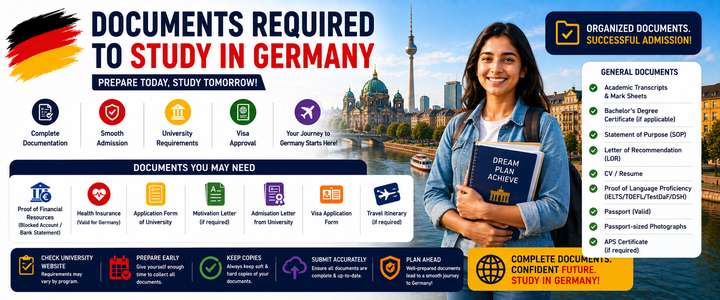
International students commonly need:
Recognized academic qualification
Complete transcripts
Degree or school certificate
Passport
Proof of language proficiency
Curriculum vitae
Motivation letter
Recommendation letters where requested
Module descriptions
Portfolio for creative programs
Entrance-test results where required
Additional country-specific verification documents
The official DAAD requirements guide emphasizes qualification recognition, language proficiency, admission, funding, and visa preparation as core stages of the process.
How to Apply
Applications may be submitted through:
The university’s own application portal
Uni-assist
A university portal after obtaining a VPD from uni-assist
A centralized admission platform
A program-specific application system
Applying through uni-assist is not free. Its standard processing charge is €75 for the first course and €30 for each additional course in the same semester.
This application cost is separate from tuition and does not guarantee admission.
Cost of Studying at a Tuition-Free University
Tuition may be zero, but students must plan for the complete cost of living.
Typical Expenses
| Expense | What It Covers |
|---|---|
| Semester contribution | Administration, student services, transport, representation |
| Rent | Residence hall, shared apartment, or private accommodation |
| Health insurance | Mandatory accepted coverage |
| Food | Groceries and student cafeteria |
| Transportation | Often partly covered by the semester contribution |
| Study materials | Books, software, laboratory items, printing |
| Phone and internet | Mobile service and home internet |
| Broadcasting contribution | Household media charge |
| Visa and residence costs | Visa, residence permit, documentation |
| Travel and emergency fund | Flights, deposits, unexpected costs |
Proof of Funds
For 2026, the University of Jena’s international guidance states that student visa or residence applicants should be prepared to demonstrate €11,904 for the first year, commonly through a blocked account, unless another accepted funding method applies. Applicants must verify the amount with the responsible German mission because financial requirements can change.
This amount is a visa threshold, not a guarantee that it will cover every student’s actual expenses.
Cost by City
Higher-Cost Locations
Students may face greater housing costs in:
Munich
Frankfurt
Hamburg
Berlin
Stuttgart
Freiburg
Potentially More Affordable Locations
Depending on accommodation availability, students may find lower costs in:
Magdeburg
Leipzig
Jena
Saarbrücken
Bochum
Duisburg
Bremen
Göttingen
A lower-cost city can reduce the total degree expense more effectively than saving a small amount on the semester contribution.
Can International Students Work While Studying?
Students from third countries may generally work:
Up to 140 full days per year
Up to 280 half-days per year
Alternatively, up to 20 hours per week during the lecture period under the applicable arrangement
Student-assistant work at universities may be treated differently from ordinary employment.
Common jobs include:
Research assistant
Teaching assistant
Working student
Software developer
Data analyst
Laboratory assistant
Retail employee
Restaurant employee
Tutor
Administrative assistant
Part-time income should supplement a financial plan rather than serve as the only source of support.
Scholarships for Tuition-Free Universities
A student attending a tuition-free university may still need a scholarship for:
Rent
Food
Insurance
Travel
Research
Study materials
Language courses
Funding sources may include:
DAAD scholarships
Deutschlandstipendium
University scholarships
Political foundations
Religious foundations
Erasmus programs
Research organizations
Home-country funding agencies
Subject-specific foundations
Scholarship deadlines may be earlier than university admission deadlines.
How to Confirm That a Program Has No Tuition Fees
Follow this verification process for every course.
Step 1: Open the Exact Program Page
Do not depend only on the university’s homepage.
Search for:
Tuition
Fees
Semester contribution
Costs
International students
Program regulations
Step 2: Identify the Program Type
Check whether the course is:
Consecutive
Continuing education
Executive
Joint degree
Double degree
Private-public partnership
Distance learning
Professional part time
Step 3: Check Nationality Rules
Look for separate fees applying to:
Non-EU students
Non-EEA students
Second-degree students
Long-term students
Visiting or freemover students
Step 4: Check the Federal State
Pay particular attention to:
Baden-Württemberg
Bavaria
Saxony
State-specific second-degree or long-term rules
Step 5: Confirm the Intake
A program that was free for one intake may introduce tuition for a later intake.
Step 6: Contact the University
Send the International Office a direct question:
“Does this program charge tuition for a newly enrolled non-EU international student for the relevant semester, excluding the semester contribution?”
Keep the written response with your financial records.
Choosing the Right Tuition-Free University
No tuition should be treated as one selection factor, not the entire selection strategy.
Compare universities using:
Academic Compatibility
Do you meet the required subject background?
Are specific credits required?
Is your qualification recognized?
Do you meet the language requirement?
Curriculum
Which modules are compulsory?
Are the electives relevant?
Is an internship included?
What research areas are available?
Can the thesis be completed with an employer?
Career Access
Which industries operate in the city?
Are working-student opportunities available?
Does the university hold career fairs?
Are local employers open to English-speaking graduates?
How important is German for the target career?
Complete Cost
Semester contribution
Rent
Insurance
Transportation
Food
Application fees
Visa funding
Deposits
Travel
University Type
A traditional university may suit research-oriented students.
A university of applied sciences may be better for students seeking:
Practical projects
Smaller classes
Mandatory internships
Industry exposure
Direct career preparation
Common Mistakes
Assuming Every Public University Is Free
TUM and public universities in Baden-Württemberg show why this assumption is unsafe.
Confusing Semester Fees with Tuition
A €350 semester contribution does not mean the university charges €350 in tuition.
Ignoring Fee-Based Programs
MBA, executive, distance, and continuing-education programs frequently charge tuition.
Choosing Only by Ranking
A lower-ranked university with a better curriculum and more affordable city may offer stronger value.
Underestimating Living Costs
Rent and insurance can cost far more than the semester contribution.
Waiting Too Long to Verify Fees
Students should check tuition before paying application charges or beginning visa preparation.
Depending Entirely on a Student Job
Work may not be immediately available, particularly for students who do not speak German.
Are Tuition-Free German Universities Worth It?
For many students, yes.
Tuition-free public universities can provide:
Recognized degrees
Research facilities
Industry connections
English-taught master’s programs
Access to the German labor market
Comparatively low education costs
Opportunities to pursue doctoral study
International academic exposure
The main challenge is not tuition.
Students must still manage:
Competitive admission
Detailed eligibility rules
German-language development
Housing
Visa funding
Academic independence
Career preparation
A tuition-free university creates financial value only when the student selects a suitable course and completes it successfully.
Frequently Asked Questions
Are public universities completely free in Germany?
Many public universities charge no general tuition for regular degrees, but students must pay a semester contribution and cover living expenses.
Can international students study for free?
Yes. Many public universities apply the same no-tuition policy to German and international students. Exceptions exist for non-EU students in Baden-Württemberg, TUM, and selected fee-based programs.
Is TUM tuition-free?
TUM generally charges tuition to newly enrolled non-EU international students. Fee levels depend on the degree program.
Is Heidelberg University tuition-free?
Non-EU students at Heidelberg University generally fall under Baden-Württemberg’s €1,500-per-semester international tuition rule unless they qualify for an exemption.
Are Berlin public universities tuition-free?
Free University Berlin, Humboldt University, and TU Berlin generally do not charge tuition for regular degrees. Students pay a semester contribution.
Which tuition-free university is best for engineering?
TU Berlin, University of Duisburg-Essen, Ruhr University Bochum, Leibniz University Hannover, Saarland University, Kiel University, and Otto von Guericke University are possible options, depending on the specialization.
Which tuition-free universities offer English master’s degrees?
Universities including Bonn, Berlin’s public universities, Hamburg, Bremen, Göttingen, Saarland, Potsdam, Jena, and Magdeburg offer selected English-taught master’s programs.
Are English-taught degrees more expensive?
Not necessarily. Many English-taught consecutive master’s programs are tuition-free. Specialized and continuing-education English programs may charge tuition.
What is a consecutive master’s degree?
It is a master’s program that academically continues a related bachelor’s degree. These programs are more commonly tuition-free than professional or continuing-education master’s courses.
How much is the semester contribution?
It often falls between approximately €250 and €500 per semester, but the amount varies by university and semester.
Does the semester contribution include transportation?
At many universities, it includes a local, regional, or nationwide student public-transport ticket. The exact coverage differs.
Is Studienkolleg free?
Public Studienkollegs may charge no general tuition, but semester contributions, examination fees, and course charges can apply.
Can I study medicine without tuition?
Medicine at many public universities outside the major fee exceptions may have no general tuition, but admission is extremely competitive and most programs are taught in German.
Can I work while studying?
Eligible third-country students may generally work within the 140-full-day, 280-half-day, or applicable 20-hour framework.
Do I need German for a tuition-free program?
The fee status and teaching language are separate issues. German-taught courses require German proficiency, while selected master’s and some bachelor’s programs are taught in English.
Can the university introduce tuition after I enroll?
Policies depend on the university, state, and applicable transition rules. Students should read the official fee regulations for their intake.
Final Verdict
Germany continues to provide international students with access to many respected public universities without general tuition fees.
Some of the strongest tuition-free options include:
Free University Berlin
Humboldt University Berlin
TU Berlin
University of Bonn
University of Cologne
University of Münster
University of Hamburg
University of Bremen
University of Göttingen
Leipzig University
University of Jena
Saarland University
Kiel University
University of Potsdam
Otto von Guericke University Magdeburg
However, students must not interpret “public university” as an automatic promise of free education.
Always check:
The exact program
The applicant’s nationality
The federal state
The intake semester
Continuing-education status
Semester contribution
Long-term and second-degree rules
Germany can offer excellent financial value, but the best university is not simply the one with zero tuition.
It is the one that combines:
Academic eligibility
Relevant curriculum
Manageable living costs
Suitable teaching language
Practical experience
Realistic career opportunities