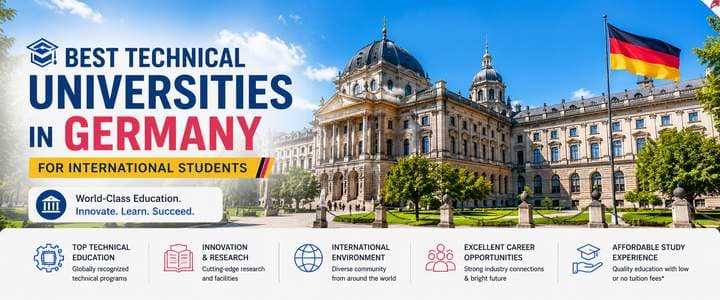
Germany’s technical universities are among the strongest choices for students interested in engineering, computer science, artificial intelligence, robotics, automotive technology, manufacturing, energy, architecture, and the natural sciences.
What makes them attractive is not only their academic reputation. Many German technical universities combine theoretical education with laboratories, research institutes, industrial projects, internships, and opportunities to complete a thesis with a company or research center.
The best-known institutions include the Technical University of Munich, RWTH Aachen University, Karlsruhe Institute of Technology, Technical University of Berlin, TU Dresden, University of Stuttgart, and TU Darmstadt.
However, the university with the highest global rank is not necessarily the right choice for every student. Applicants should also compare:
Academic eligibility
Engineering specialization
English-taught program availability
Research or practical orientation
Tuition and semester fees
Living costs
Local industry access
Internship opportunities
German-language requirements
Graduate career goals
This guide compares Germany’s leading technical universities and explains which institution may be most suitable for different subjects and career paths.
Best Technical Universities in Germany at a Glance
| University | Location | Strong Technical Areas | Tuition Position for Non-EU Students |
|---|---|---|---|
| Technical University of Munich | Munich | Engineering, AI, computer science, aerospace, robotics | Program-specific tuition generally applies |
| RWTH Aachen University | Aachen | Mechanical, automotive, manufacturing, energy, civil engineering | No additional tuition; semester contribution required |
| Karlsruhe Institute of Technology | Karlsruhe | Computer science, energy, mechanical and electrical engineering | Usually €1,500 per semester |
| Technical University of Berlin | Berlin | Computer science, engineering, transport, urban technology | No general tuition for regular degrees |
| TU Dresden | Dresden | Microelectronics, computer science, engineering, biotechnology | No general tuition for most regular programs |
| University of Stuttgart | Stuttgart | Automotive, aerospace, mechanical engineering, simulation | Usually €1,500 per semester |
| TU Darmstadt | Darmstadt | AI, cybersecurity, computer science, electrical engineering | No general tuition; semester contribution required |
| Leibniz University Hannover | Hannover | Mechanical engineering, optics, quantum technology, robotics | No general tuition for regular programs |
| TU Braunschweig | Braunschweig | Computational engineering, mobility, electrical engineering | No general tuition; semester contribution required |
The tuition information above refers to standard degree programs. Specialized, executive, continuing-education, double-degree, and privately administered programs may follow a different fee structure.
What Is a Technical University in Germany?
A technical university is a research-oriented higher education institution with significant strength in engineering, technology, mathematics, computer science, and the natural sciences.
Technical universities may also offer programs in:
Business and economics
Architecture
Medicine and health technology
Social sciences
Humanities
Public policy
Teacher education
The word “technical” therefore does not mean that the university offers only engineering degrees.
Germany’s best-known technical institutions generally emphasize:
Scientific foundations
Advanced mathematics
Research methodology
Laboratory work
Technical specialization
Interdisciplinary projects
Industry and research collaboration
Preparation for doctoral study
Students seeking highly practical, classroom-based professional training should also consider German universities of applied sciences. Traditional technical universities are usually more research- and theory-oriented.
What Are the TU9 Universities?
TU9 is the official alliance of nine leading universities of technology in Germany.
Its members are:
RWTH Aachen University
Technical University of Berlin
TU Braunschweig
TU Darmstadt
TU Dresden
Leibniz University Hannover
Karlsruhe Institute of Technology
Technical University of Munich
University of Stuttgart
TU9 describes its members as research and teaching institutions with strong records in STEM education, research funding, publications, innovation, and Germany’s Excellence Strategy.
Membership in TU9 is a useful indicator of technical reputation, but it should not be treated as a ranking. Other German universities outside the alliance may offer excellent programs in computer science, engineering, artificial intelligence, energy, and applied technology.
1. Technical University of Munich
The Technical University of Munich, commonly known as TUM, is Germany’s highest-ranked university in the QS World University Rankings 2027, where it is placed 25th globally.
Strong Study Areas
TUM is particularly attractive for:
Mechanical Engineering
Electrical Engineering
Computer Science
Artificial Intelligence
Robotics
Aerospace
Automotive Technology
Physics
Mathematics
Biotechnology
Energy Systems
Management and Technology
Why TUM Stands Out
TUM is suitable for students seeking a highly research-intensive university with broad technical specialization and interdisciplinary study options.
Its strengths include:
Large research infrastructure
Entrepreneurship and innovation support
Strong science and engineering faculties
Interdisciplinary technical programs
Opportunities for doctoral research
Programs connecting engineering with business and management
International applicants should carefully check whether their chosen program is completely English-taught, bilingual, or taught mainly in German.
Tuition Fees
TUM is no longer a tuition-free option for most newly enrolled students from outside the EU and EEA.
The university states that tuition for affected international students is commonly:
€2,000 or €3,000 per semester for bachelor’s programs
€4,000 or €6,000 per semester for master’s programs
The exact amount depends on the degree. Semester fees are charged separately, although scholarships and tuition waivers may be available.
Best Suited For
TUM may be best for students who:
Have a strong academic profile
Want advanced research exposure
Are targeting technology or engineering careers
Can manage Munich’s living expenses
Can afford or obtain support for the applicable tuition
Are comfortable with competitive admission
2. RWTH Aachen University
RWTH Aachen is one of Germany’s most recognized engineering and technology universities.
It is placed 104th globally in the QS World University Rankings 2027 and is one of Germany’s highest-ranked technical institutions.
Strong Study Areas
RWTH is particularly well suited to:
Mechanical Engineering
Automotive Engineering
Production Engineering
Electrical Engineering
Civil Engineering
Materials Engineering
Energy Technology
Battery Technology
Biomedical Engineering
Computer Science
Data Science
Industrial Engineering
Why RWTH Aachen Stands Out
RWTH has a strong engineering identity and offers a large network of faculties, institutes, laboratories, and technical research groups.
The university can be particularly valuable for students interested in:
Manufacturing
Automotive systems
Industrial research
Mechanical design
Production technology
Battery and energy systems
Engineering simulation
Its international master’s portfolio includes English-taught options in fields such as automotive engineering, battery science, data science, biomedical engineering, geophysics, and selected civil-engineering specializations.
Tuition Fees
RWTH continues not to charge additional tuition fees to international students from non-EU countries for its regular public degree programs.
Students pay a compulsory semester contribution that finances areas such as student services and mobility. RWTH advises that the exact amount changes, but it is generally around €300 per semester.
Students must distinguish standard RWTH degrees from programs administered through RWTH International Academy or other professional units, which may charge substantial tuition.
Best Suited For
RWTH Aachen may be best for students seeking:
Mechanical or automotive engineering
Industrial and manufacturing careers
Research-oriented engineering education
A lower-cost alternative to Munich
Strong technical specialization
Access to English-taught engineering master’s programs
3. Karlsruhe Institute of Technology
Karlsruhe Institute of Technology, commonly known as KIT, combines university education with large-scale scientific and technical research.
KIT is ranked 110th worldwide in the QS World University Rankings 2027.
Strong Study Areas
KIT is particularly known for:
Computer Science
Mechanical Engineering
Electrical Engineering
Energy Technology
Physics
Mathematics
Materials Science
Mobility
Climate Research
Chemical Engineering
Information Technology
Why KIT Stands Out
KIT is a strong choice for students interested in the connection between fundamental research and engineering applications.
Its technical profile can be especially relevant for:
Energy systems
High-performance computing
Software and algorithms
Mobility research
Climate and environmental technology
Advanced materials
Mechanical systems
Electrical and information engineering
It is particularly suitable for students considering research careers or doctoral study.
Tuition Fees
KIT is located in Baden-Württemberg.
Students from third countries outside the EU generally pay €1,500 per semester, unless a statutory exemption applies. Semester and administrative charges are payable in addition to tuition.
Specialized programs offered through units such as the HECTOR School or Carl Benz School may charge much higher program fees.
Best Suited For
KIT may be best for students who want:
Research-intensive computer science
Energy or mobility technology
Strong engineering fundamentals
Scientific research infrastructure
A route toward doctoral study
A technology-focused student city
4. Technical University of Berlin
Technical University of Berlin is one of Germany’s leading technical research universities and is ranked joint 158th worldwide in QS 2027.
Strong Study Areas
TU Berlin offers significant strength in:
Computer Science
Electrical Engineering
Mechanical Engineering
Industrial Engineering
Transportation
Architecture
Urban Planning
Energy Technology
Innovation
Sustainability
Scientific Computing
Why TU Berlin Stands Out
TU Berlin offers the combination of technical education and access to a large international city.
It may be particularly suitable for students interested in:
Startups and entrepreneurship
Software and technology
Urban infrastructure
Transportation systems
Sustainable cities
Innovation management
Engineering combined with business
The university offers several English-language master’s programs, although most undergraduate degrees remain German-taught.
Tuition Fees
TU Berlin does not charge general tuition for regular bachelor’s and consecutive master’s degrees.
Students pay a semester contribution. For Winter Semester 2026–27, the listed charges before any semester-ticket amount total €149.56. Continuing-education master’s programs are important exceptions and may charge significant tuition.
Best Suited For
TU Berlin may suit students who want:
Computer science or engineering in a large city
Exposure to startups and innovation
Urban or transportation technology
Tuition-free public study
English-taught graduate options
A multicultural student environment
5. TU Dresden
TU Dresden is another TU9 member and is ranked joint 185th worldwide in the QS World University Rankings 2027.
Strong Study Areas
TU Dresden is particularly attractive for:
Computer Science
Microelectronics
Nanoelectronic Systems
Electrical Engineering
Mechanical Engineering
Computational Modeling
Biotechnology
Materials Science
Environmental Engineering
Transportation and Logistics
Why TU Dresden Stands Out
Dresden has developed a strong academic and research environment in:
Semiconductors
Microelectronics
Embedded systems
Computational engineering
Advanced manufacturing
Biotechnology
Environmental technology
English-taught options include Computer Science, Nanoelectronic Systems, Computational Modeling and Simulation, Molecular Biosciences, Air Transport and Logistics, and selected environmental programs.
Tuition Fees
TU Dresden is a public university and generally does not charge tuition for regular degree programs.
Students pay a semester contribution, while second-degree, long-term, and specialized fee-based programs can be exceptions.
Best Suited For
TU Dresden may be best for students seeking:
Microelectronics and semiconductor specialization
English-taught computer science
Computational engineering
Lower living expenses than Munich
Tuition-free public education
Research in biotechnology or environmental technology
6. University of Stuttgart
The University of Stuttgart is one of Germany’s most important engineering-focused universities and a member of TU9.
Strong Study Areas
The university is especially suitable for:
Automotive Engineering
Aerospace Engineering
Mechanical Engineering
Civil Engineering
Electrical Engineering
Simulation Technology
Manufacturing
Architecture
Computational Mechanics
Infrastructure Planning
Why Stuttgart Stands Out
Stuttgart is an important destination for students interested in mobility, automotive systems, manufacturing, aerospace, and industrial technology.
The university’s technical programs are particularly relevant to students seeking advanced study in:
Vehicle development
Production systems
Structural engineering
Computational simulation
Aerospace systems
Industrial research
Selected master’s degrees are taught in English, including programs in computer science, engineering, infrastructure, and computational fields.
Tuition Fees
As a public university in Baden-Württemberg, the University of Stuttgart generally charges non-EU and non-EEA international students €1,500 per semester.
A regular semester fee is payable in addition. The university currently lists that semester charge at approximately €184.
Best Suited For
The University of Stuttgart may be best for students targeting:
Automotive engineering
Aerospace
Manufacturing
Mechanical engineering
Simulation and computational methods
Industrial research careers
7. TU Darmstadt
TU Darmstadt is a TU9 university with a particularly strong profile in computer science, cybersecurity, artificial intelligence, electrical engineering, and information technology.
Strong Study Areas
International students commonly consider TU Darmstadt for:
Computer Science
Artificial Intelligence
Machine Learning
IT Security
Electrical Engineering
Information and Communication Engineering
Mechanical Engineering
Materials Science
Autonomous Systems
Robotics
Why TU Darmstadt Stands Out
TU Darmstadt can be an excellent choice for students seeking advanced study in computing and digital technologies.
Its current program portfolio includes master’s study in:
Artificial Intelligence and Machine Learning
Computer Science
IT Security
Information and Communication Engineering
The Information and Communication Engineering program is taught in English and does not charge tuition, although students must pay the university’s semester contribution.
Tuition Fees
Regular students pay a semester contribution rather than general tuition.
The university indicates that the contribution is around €370 per semester, although the exact amount changes and should be confirmed for the relevant intake.
Best Suited For
TU Darmstadt may be best for students interested in:
Cybersecurity
Artificial intelligence
Computer science research
Electrical and communication engineering
Autonomous systems
Tuition-free public education
8. Leibniz University Hannover
Leibniz University Hannover is a broad research university and a TU9 member with significant strength in engineering, mathematics, optics, quantum technology, and environmental systems.
Strong Study Areas
Students may consider Hannover for:
Mechanical Engineering
Optical Technologies
Quantum Engineering
Computer Science
Nanotechnology
Mathematics
Water Resources Engineering
Geodesy and Geoinformatics
Mechatronics and Robotics
Renewable Energy
English-Taught Programs
Leibniz University Hannover offers fully English-language degrees and English study tracks in areas such as:
Computer Science
Nanotechnology
Optical Technologies
Quantum Engineering
Water Resources and Environmental Engineering
AI-Driven Mechatronics and Robotics
Mechanical Engineering
Computational Methods in Engineering
The university defines an English-language program as one that can be completed entirely in English without compulsory German-language proof.
Tuition Fees
Regular programs generally charge a semester contribution rather than general tuition.
Applicants should verify whether a specific international, joint, or continuing-education program has additional fees.
Best Suited For
Leibniz University Hannover may be best for:
Optics and photonics
Quantum technology
Mechanical engineering
Robotics
Water and environmental engineering
Students seeking a growing English-taught portfolio
9. TU Braunschweig
TU Braunschweig is one of Germany’s oldest technical universities and a member of TU9.
Strong Study Areas
It is a relevant option for students interested in:
Computational Engineering
Electrical Engineering
Mechanical Engineering
Data Science
Sustainable Engineering
Mathematics and Scientific Computing
Its English-taught Computational Sciences in Engineering master’s combines engineering, mathematics, and applied computer science.
Teaching Language
The primary teaching language at TU Braunschweig remains German.
English-taught and bilingual options are available, but students should verify whether German is also required for admission or for completing particular modules.
Tuition Fees
TU Braunschweig does not charge general tuition for regular degree study.
Students pay a semester contribution of approximately €350, which supports services such as public transportation, student facilities, dining, and university sports.
Best Suited For
TU Braunschweig may suit students seeking:
Computational engineering
A smaller technical-university environment
Tuition-free public study
Interdisciplinary mathematics and engineering
A German-language or bilingual technical education
Other Strong Technical Universities in Germany
The TU9 institutions are not the only options worth considering.
Hamburg University of Technology
TU Hamburg is known for:
Engineering
Logistics
Shipbuilding
Energy
Environmental technology
Process engineering
Data and information systems
It can be particularly attractive to students interested in maritime engineering, logistics, and northern Germany’s industrial sectors.
FAU Erlangen-Nürnberg
FAU is not branded as a traditional “TU,” but it offers strong programs in:
Engineering
Artificial Intelligence
Computer Science
Medical Technology
Materials Science
Electronics
Manufacturing
Saarland University
Saarland is especially strong in:
Computer Science
Artificial Intelligence
Cybersecurity
Visual Computing
Computational Linguistics
Data Science
It offers some of Germany’s clearest English-taught computing pathways.
Chemnitz University of Technology
TU Chemnitz offers programs in:
Automotive Software Engineering
Embedded Systems
Mechanical Engineering
Materials
Production
Information Technology
Clausthal University of Technology
TU Clausthal is a smaller technical university known for:
Energy
Mining
Materials
Mechanical Engineering
Process Engineering
Sustainability
A smaller institution may offer closer academic contact than Germany’s largest technical universities.
Best Technical Universities by Subject
Mechanical Engineering
Leading choices include:
RWTH Aachen
Technical University of Munich
University of Stuttgart
Karlsruhe Institute of Technology
TU Darmstadt
Leibniz University Hannover
TU Dresden
RWTH is particularly attractive for production and manufacturing, while Stuttgart is a strong fit for automotive and simulation-oriented students.
Automotive Engineering
Strong choices include:
RWTH Aachen
University of Stuttgart
Technical University of Munich
TU Braunschweig
Karlsruhe Institute of Technology
Students should compare whether the degree focuses on vehicle design, autonomous mobility, powertrains, production, electric mobility, software, or transportation systems.
Computer Science
Strong technical-university choices include:
Technical University of Munich
Karlsruhe Institute of Technology
TU Berlin
TU Darmstadt
RWTH Aachen
TU Dresden
Applicants focused specifically on AI or cybersecurity should also consider Saarland University.
Artificial Intelligence and Machine Learning
Strong options include:
TUM
TU Darmstadt
RWTH Aachen
TU Berlin
Saarland University
FAU Erlangen-Nürnberg
The best program depends on whether the student wants fundamental AI research, robotics, computer vision, data science, language technology, or industrial applications.
Electrical Engineering
Strong choices include:
TUM
RWTH Aachen
KIT
TU Darmstadt
University of Stuttgart
TU Dresden
Leibniz University Hannover
Aerospace Engineering
Leading choices include:
Technical University of Munich
University of Stuttgart
RWTH Aachen
TU Braunschweig
Civil and Environmental Engineering
Strong options include:
RWTH Aachen
TU Berlin
University of Stuttgart
TU Dresden
Leibniz University Hannover
Technical University of Munich
Cybersecurity
Strong choices include:
TU Darmstadt
Saarland University
TUM
RWTH Aachen
TU Berlin
Microelectronics and Semiconductors
TU Dresden is particularly attractive because of its nanoelectronics, semiconductor, and embedded-systems environment.
Other choices include:
TU Munich
KIT
TU Darmstadt
University of Stuttgart
Leibniz University Hannover
Which Technical Universities Are Tuition-Free?
For regular public degrees, the following generally do not charge general tuition:
RWTH Aachen
TU Berlin
TU Dresden
TU Darmstadt
Leibniz University Hannover
TU Braunschweig
Students still pay a semester contribution.
The main exceptions among the leading technical universities are:
TUM: program-specific tuition for most affected non-EU students
KIT: €1,500 per semester for most non-EU students
University of Stuttgart: €1,500 per semester for most non-EU students
Specialized professional programs can charge tuition even at universities that are otherwise tuition-free.
English-Taught Degrees at Technical Universities
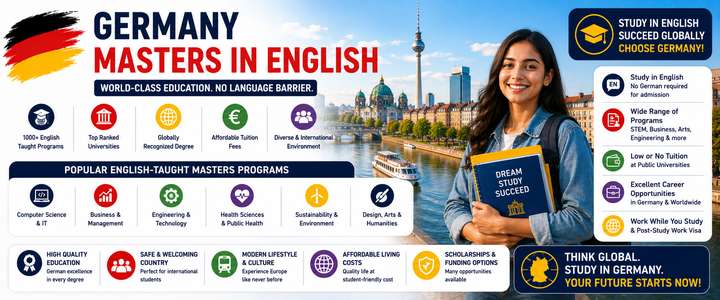
English-taught bachelor’s programs remain limited.
The largest selection is available at the master’s level in subjects such as:
Computer Science
Artificial Intelligence
Data Science
Automotive Engineering
Computational Engineering
Nanoelectronics
Energy
Materials Science
Environmental Engineering
Physics
Robotics
Students should confirm whether the program is:
Completely English-taught
Primarily English with German electives
Bilingual
English only in the first year
Dependent on the chosen specialization
A program described as “international” is not automatically taught entirely in English.
General Admission Requirements
Bachelor’s Admission
International bachelor’s applicants usually need:
A recognized university entrance qualification
Direct or subject-restricted admission eligibility
Studienkolleg where required
German-language proficiency for most programs
English-language evidence for English programs
Mathematics and science preparation
Entrance examinations where applicable
Most engineering bachelor’s degrees remain German-taught.
Master’s Admission
Applicants generally need:
A relevant bachelor’s degree
Required subject credits
Mathematics and technical modules
Minimum academic grades
English or German proficiency
Complete transcripts
Module descriptions
Curriculum vitae
Motivation letter where required
GRE or another test for selected programs
APS verification where applicable
German technical universities often assess exact academic content rather than relying only on the applicant’s GPA.
A student may have an excellent overall grade but still be rejected for missing:
Mathematics credits
Programming modules
Thermodynamics
Mechanics
Control systems
Circuit theory
Research methods
Required laboratory experience
Requirements for Indian Students
Applicants whose academic documents were issued by Indian institutions generally need to review the APS India process.
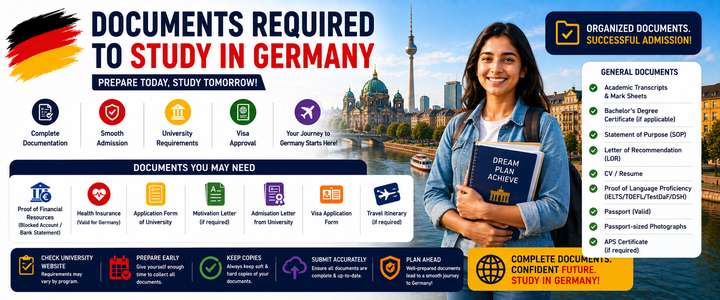
APS verifies academic qualifications and the authenticity of educational documents. The APS certificate is generally part of the German student-visa documentation, but APS does not decide university admission or the visa outcome.
Selected master’s applicants whose previous degrees fall within engineering, commerce, accounting, finance, economics, business, or management may also come under the new dMAT framework. Applicants should use the current APS checklist for their exact profile rather than relying on information from an earlier intake.
How to Choose the Right Technical University
Start With Your Specialization
“Engineering” is too broad for university selection.
A student interested in automotive software should build a different shortlist from someone pursuing thermal engineering, biotechnology, robotics, or structural engineering.
Compare the Curriculum
Review:
Compulsory modules
Electives
Laboratories
Research groups
Practical projects
Internship requirements
Thesis options
Available specializations
Check Academic Compatibility
Compare your transcript with:
Required credits
Subject prerequisites
Mathematics expectations
Programming requirements
Practical experience
Admission regulations
Calculate the Complete Cost
Include:
Tuition
Semester contribution
Rent
Health insurance
Food
Transportation
Application charges
Visa costs
Deposits
Travel
Emergency funds
A tuition-free university in an expensive city can cost more overall than a tuition-charging university in a lower-cost location.
Consider the Teaching Language
English-taught degrees are convenient, but German remains valuable for:
Internships
Working-student jobs
Daily administration
Networking
Graduate employment
Match the University to Your Career Goal
Choose a research-heavy institution when your goal is:
PhD study
Academic research
Research and development
Advanced scientific specialization
Consider applied universities or practice-focused programs when your goal is:
Direct industry employment
Mandatory internships
Smaller classes
Applied project work
Common Mistakes
Applying Only to TUM and RWTH
Both are competitive. A balanced shortlist should include universities with different admission levels.
Choosing by Overall Ranking
Overall rank may not reflect the strength of a specific engineering department.
Ignoring Tuition Exceptions
TUM, KIT, and Stuttgart can charge international tuition even though they are public universities.
Applying Without Comparing Modules
Technical master’s admissions often depend on prerequisite coursework.
Assuming Every Program Is in English
Most technical bachelor’s degrees and many master’s degrees remain German-taught.
Ignoring Living Costs
Munich and Stuttgart can be significantly more expensive than Dresden, Aachen, Braunschweig, or Saarbrücken.
Waiting Until Graduation to Learn German
German can strongly influence internship and employment opportunities.
Frequently Asked Questions
Which is the best technical university in Germany?
TUM is Germany’s highest-ranked university overall in QS 2027. RWTH Aachen, KIT, TU Berlin, TU Dresden, Stuttgart, and TU Darmstadt are also leading technical choices.
Which university is best for mechanical engineering?
RWTH Aachen, TUM, Stuttgart, KIT, TU Darmstadt, and Leibniz University Hannover are strong options.
Which university is best for automotive engineering?
RWTH Aachen, Stuttgart, TUM, KIT, and TU Braunschweig are popular choices.
Which university is best for computer science?
TUM, KIT, TU Berlin, TU Darmstadt, RWTH Aachen, and TU Dresden are strong technical-university options.
Which university is best for artificial intelligence?
TUM, TU Darmstadt, Saarland University, RWTH Aachen, and TU Berlin offer relevant AI and computing pathways.
Which technical universities have no tuition fees?
RWTH Aachen, TU Berlin, TU Dresden, TU Darmstadt, Leibniz University Hannover, and TU Braunschweig generally charge no general tuition for regular degrees.
Is TUM tuition-free?
No. Most newly enrolled non-EU and non-EEA students pay program-specific tuition unless an exemption or waiver applies.
Is RWTH Aachen tuition-free?
RWTH does not charge additional tuition to regular international students. A semester contribution remains compulsory.
Is KIT tuition-free?
Non-EU students generally pay €1,500 per semester unless exempt.
Are English-taught programs available?
Yes, especially at the master’s level. English-taught bachelor’s options are much more limited.
Is German necessary?
German may not be required for a fully English-taught degree, but it is highly useful for internships, student jobs, daily life, and graduate employment.
Is TU9 a ranking?
No. TU9 is an alliance of nine leading German technical universities, not a ranking table.
Which technical university is most affordable?
RWTH Aachen, TU Dresden, TU Braunschweig, and TU Darmstadt can offer strong value because they generally do not charge tuition and may have lower living costs than Munich.
Which university is best for semiconductor technology?
TU Dresden is particularly attractive for microelectronics, nanoelectronics, and semiconductor-related study.
Which university is best for cybersecurity?
TU Darmstadt and Saarland University are among the strongest specialized options.
Final Verdict
Germany has no single best technical university for every student.
Choose TUM for broad technical prestige, advanced research, AI, science, and entrepreneurship.
Choose RWTH Aachen for mechanical, automotive, manufacturing, and industrial engineering.
Choose KIT for computer science, energy, electrical engineering, and research.
Choose TU Berlin for computing, innovation, transportation, and urban technology.
Choose TU Dresden for semiconductors, nanoelectronics, computational engineering, and lower overall costs.
Choose Stuttgart for automotive, aerospace, simulation, and manufacturing.
Choose TU Darmstadt for AI, cybersecurity, computing, and communication engineering.
Choose Hannover for optics, quantum engineering, robotics, and mechanical engineering.
Choose Braunschweig for computational and interdisciplinary engineering in a smaller technical-university environment.
The best choice is the university where:
Your previous education meets the admission requirements
The specialization matches your career
The total cost is manageable
The teaching language works for you
Relevant laboratories and research groups are available
You can build practical experience before graduation