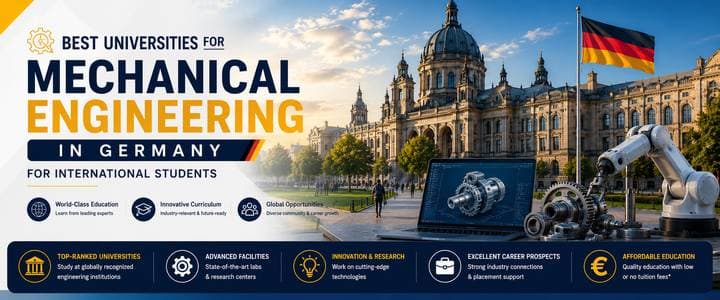
Germany is one of the world’s most attractive destinations for mechanical engineering. Its universities combine strong theoretical education with laboratory training, industrial research, computer-aided engineering, product development, manufacturing technology, energy systems, robotics, automotive engineering, and advanced materials.
Mechanical engineering students in Germany can specialize in areas such as:
Automotive Engineering
Aerospace Engineering
Production and Manufacturing
Mechatronics
Robotics
Energy Engineering
Computational Mechanics
Materials Engineering
Industrial Engineering
Thermodynamics
Fluid Mechanics
Process Engineering
Biomechanical Engineering
Sustainable Mobility
Digital Manufacturing
Germany’s position as a major engineering and manufacturing economy creates opportunities to connect university study with industrial projects, internships, working-student roles, and company-supported research.
However, the most famous university is not automatically the best choice for every applicant.
Students should compare:
Available specializations
Academic prerequisites
Teaching language
Tuition and semester charges
Living costs
Research laboratories
Industry partnerships
Internship opportunities
City and regional employers
Career objectives
This guide compares the best universities for mechanical engineering in Germany and explains which institution may suit different academic and professional goals.
Best Mechanical Engineering Universities in Germany at a Glance
| University | Location | Particularly Strong For | General Tuition Position |
|---|---|---|---|
| Technical University of Munich | Munich | Mechanical systems, robotics, aerospace, production, energy | Tuition generally applies to many non-EU students |
| RWTH Aachen University | Aachen | Manufacturing, automotive, production, simulation, energy | No general tuition for most regular programs |
| University of Stuttgart | Stuttgart | Automotive, aerospace, simulation, manufacturing | Non-EU state tuition generally applies |
| Karlsruhe Institute of Technology | Karlsruhe | Energy, automotive, materials, design, mechanical systems | Non-EU state tuition generally applies |
| TU Darmstadt | Darmstadt | Aerospace, mechanics, computational engineering, materials | No general tuition for regular programs |
| Leibniz University Hannover | Hannover | Production, robotics, energy, design, optical systems | No general tuition for regular programs |
| TU Dresden | Dresden | Production, lightweight engineering, energy, materials, simulation | No general tuition for most regular programs |
| Technical University of Berlin | Berlin | Mechanical systems, energy, transport, product development | No general tuition for regular degrees |
| TU Braunschweig | Braunschweig | Automotive, mobility, aerospace, production, mechatronics | No general tuition for regular programs |
| FAU Erlangen-Nürnberg | Erlangen and Nuremberg | Manufacturing, energy, materials, medical technology | No general tuition for many regular programs |
Why Study Mechanical Engineering in Germany?
Mechanical engineering has played a central role in Germany’s industrial development.
The country has a large network of:
Automotive manufacturers
Machinery companies
Aerospace businesses
Energy companies
Robotics firms
Industrial automation providers
Chemical and process industries
Medical-technology companies
Research institutions
Engineering consultancies
Small and medium-sized manufacturers
Mechanical engineering students can therefore study in an environment where technical research is closely connected with real industrial problems.
Major Benefits
Studying mechanical engineering in Germany may provide:
Access to research-intensive universities
Strong engineering laboratories
Industry-related projects
Opportunities to work with advanced simulation tools
Exposure to modern manufacturing systems
English-taught master’s programs
Affordable public-university options
Pathways into research and development
Opportunities to learn German
Access to major engineering employers
1. Technical University of Munich
The Technical University of Munich is one of Germany’s most internationally recognized institutions for engineering, science, and technology.
Its mechanical engineering environment covers traditional engineering foundations as well as emerging fields such as robotics, digital production, biomechanical systems, aerospace, and sustainable energy.
Strong Study Areas
Students may find opportunities in:
Mechanical Engineering
Product Development
Production Engineering
Mechatronics
Robotics
Biomechanical Engineering
Automotive Technology
Aerospace
Energy and Process Engineering
Materials Science
Computational Mechanics
Management in Engineering
Mechanical Engineering Master’s
The Mechanical Engineering master’s provides advanced knowledge in engineering science and allows students to develop a specialized academic profile.
Possible areas of study may include:
Product design
Mechanics
Manufacturing
Energy systems
Materials
Simulation
Automation
Systems engineering
The program is suitable for students who want flexibility rather than a narrowly defined degree.
Related Master’s Programs
Students interested in specialized pathways may consider programs connected with:
Mechatronics, Robotics and Biomechanical Engineering
Development, Production and Management
Aerospace
Robotics and Intelligent Systems
Materials Science
Energy and Process Engineering
Why Choose TUM?
TUM offers:
Advanced research facilities
Interdisciplinary study
Technology entrepreneurship
Strong engineering and science departments
Access to Munich’s industrial market
Opportunities to combine engineering with computing or management
Munich and the surrounding region provide employment opportunities in:
Automotive engineering
Aerospace
Robotics
Electronics
Software
Industrial automation
Energy
Consulting
Tuition and Costs
Many students from outside the EU and EEA pay tuition at TUM.
The Mechanical Engineering master’s may carry tuition of approximately €6,000 per semester for affected students. The semester fee and living expenses are separate.
Munich is also one of Germany’s most expensive cities for accommodation.
Best Suited For
TUM may be best for students who:
Have a strong academic profile
Want research-intensive study
Prefer broad specialization choices
Are interested in robotics or advanced technology
Want access to Munich’s industrial ecosystem
Can manage the total cost
2. RWTH Aachen University
RWTH Aachen is one of Germany’s most prominent mechanical engineering universities.
Its engineering environment includes a large network of institutes, laboratories, research centers, and industry-oriented projects.
Strong Study Areas
RWTH is particularly known for:
Production Engineering
Automotive Engineering
Mechanical Design
Energy Engineering
Process Engineering
Computational Engineering
Plastics Engineering
Textile Engineering
Automation
Digital Manufacturing
Materials and Lightweight Structures
Why RWTH Stands Out
RWTH has a strong connection with manufacturing and industrial research.
Students may gain exposure to:
Production systems
Machine-tool engineering
Automotive development
Digital factories
Simulation
Energy systems
Materials processing
Industrial automation
Large engineering projects
Master’s Study Options
Mechanical engineering students can find regular and specialized graduate pathways.
Options may relate to:
General Mechanical Engineering
Production Technology
Energy Engineering
Automotive Engineering
Computational Engineering
Plastics and Textile Engineering
Computer-Aided Design and Production
Some international programs are administered through professional academic units and charge tuition. Students must distinguish these from standard public-university programs.
Admission Approach
Admission is not based only on the applicant’s final grade.
Applicants may need to show previous coursework in:
Mathematics
Mechanics
Thermodynamics
Fluid Mechanics
Materials Science
Design
Production
Control Engineering
Engineering Science
Students with missing prerequisites may receive additional academic requirements or may not qualify.
Tuition
RWTH generally does not charge general tuition for regular degree programs.
Students pay a semester contribution.
Specialized professional and academy-administered programs may charge substantial tuition.
Best Suited For
RWTH is particularly suitable for students interested in:
Production and manufacturing
Automotive engineering
Industrial research
Mechanical design
Energy technology
Computer-aided engineering
Engineering simulation
3. University of Stuttgart
The University of Stuttgart is located in one of Germany’s most important automotive and manufacturing regions.
It is especially attractive to students interested in vehicles, aerospace, simulation, mechanical systems, and advanced production.
Strong Study Areas
The university offers strength in:
Mechanical Engineering
Automotive Engineering
Aerospace Engineering
Manufacturing
Simulation Technology
Computational Mechanics
Energy Technology
Product Development
Engineering Cybernetics
Materials Engineering
Why Stuttgart Stands Out
The Stuttgart region is associated with:
Automotive manufacturing
Vehicle suppliers
Mechanical engineering companies
Industrial automation
Aerospace
Production systems
Engineering research
Students may benefit from internships, working-student positions, industrial thesis projects, and employer networking.
Mechanical Engineering Master’s
The traditional Mechanical Engineering master’s is primarily designed for students with a relevant engineering bachelor’s degree.
The program allows advanced study in areas such as:
Design and development
Manufacturing
Energy
Mechanics
Materials
Control systems
Simulation
The standard Mechanical Engineering program is mainly German-taught.
English-Taught FAME Master’s
The Fundamentals and Applications of Mechanical Engineering master’s provides an English-language option for international students.
The program is designed to cover advanced mechanical engineering fundamentals while allowing specialization in modern applications.
Potential areas include:
Mechanics
Design
Energy
Production
Materials
Computational engineering
Sustainable systems
Applicants normally need a mechanical engineering or closely related bachelor’s degree and strong English proficiency.
Tuition
Most non-EU and non-EEA students pay €1,500 per semester under the state tuition policy.
Semester charges and living expenses are additional.
Best Suited For
The University of Stuttgart may be best for:
Automotive engineering
Aerospace
Manufacturing
Simulation
Computational mechanics
Students seeking industry access in southern Germany
4. Karlsruhe Institute of Technology
Karlsruhe Institute of Technology combines technical university education with large-scale research.
Its mechanical engineering programs are closely connected with energy, mobility, materials, manufacturing, and scientific computing.
Strong Study Areas
KIT is particularly relevant for:
General Mechanical Engineering
Energy and Environmental Engineering
Automotive Engineering
Materials and Structures
Production Engineering
Mechatronics
Applied Mechanics
Product Development
Thermal Engineering
Computational Engineering
Mechanical Engineering Master’s
The Mechanical Engineering master’s allows students to select from multiple areas of specialization.
English study pathways may be available in fields such as:
General Mechanical Engineering
Energy and Environmental Engineering
Automotive Engineering
Materials and Structures for High-Performance Systems
The exact availability of English modules should be checked before application.
English-Taught Bachelor’s Option
KIT also provides an international Mechanical Engineering bachelor’s pathway designed for students with English-language skills.
This is important because most public mechanical engineering bachelor’s programs in Germany are taught mainly in German.
The international bachelor’s option may include additional academic and student-support services and can have a different overall fee structure from the standard German-taught degree.
Why Choose KIT?
KIT may suit students who want to combine mechanical engineering with:
Energy research
Mobility
Materials
Climate technology
Computing
Physics
Automation
Scientific simulation
Tuition
Most non-EU students pay €1,500 per semester under the state tuition policy.
Semester and administrative charges are additional.
Special international programs may have further fees.
Best Suited For
KIT may be ideal for students interested in:
Energy systems
Automotive engineering
High-performance materials
Scientific computing
Mechanical research
English undergraduate study
5. TU Darmstadt
TU Darmstadt is a strong choice for students interested in mechanics, aerospace, materials, computational engineering, and interdisciplinary technical research.
Strong Study Areas
Students can explore:
Mechanical Engineering
Aerospace Engineering
Mechanics
Computational Engineering
Materials Science
Energy Systems
Production
Control Technology
Fluid Mechanics
Structural Mechanics
Mechanical Engineering Study
The main mechanical engineering pathways emphasize:
Engineering fundamentals
Mathematical methods
Design
Materials
Thermodynamics
Production
Control
Systems engineering
Some programs and specializations may require German.
English-Taught Mechanics Master’s
The Mechanics master’s is taught in English and combines:
Mechanical engineering
Mathematics
Physics
Civil engineering
Geodesy
Computational methods
It is particularly suitable for students interested in the mathematical and analytical side of engineering.
English-Taught Aerospace Engineering
The Aerospace Engineering master’s is also offered in English.
Students may study:
Aerodynamics
Flight mechanics
Propulsion
Structures
Control systems
Numerical methods
Aerospace design
Why Choose TU Darmstadt?
The university’s location near Frankfurt gives students access to a wider regional labor market covering:
Engineering
Aerospace
Technology
Consulting
Software
Electronics
Research
Tuition
Regular degree programs generally do not charge general tuition.
Students pay a semester contribution.
Best Suited For
TU Darmstadt may suit students interested in:
Mechanics
Aerospace
Mathematical engineering
Computational methods
Materials
Research-oriented study
6. Leibniz University Hannover
Leibniz University Hannover offers a broad mechanical engineering environment with strengths in production, robotics, energy, mechatronics, and technical optics.
Strong Study Areas
Students can focus on:
Production Engineering
Design Engineering
Energy and Process Engineering
Mechatronics
Robotics
Biomedical Engineering
Materials
Optical Technologies
Sustainable Manufacturing
Digital Engineering
Mechanical Engineering Master’s
The Mechanical Engineering master’s is research-oriented and allows students to select different competence areas.
Students may combine:
Production
Energy
Design
Mechatronics
Materials
Biomedical applications
Digital systems
English Study Track
An English track is available within the Mechanical Engineering master’s.
International applicants normally need a related engineering degree and sufficient previous coursework in areas such as:
Mathematics
Design
Technical Mechanics
Electrical Engineering
Materials Science
Advanced English proficiency is required.
AI-Driven Mechatronics and Robotics
Students interested in automation and intelligent mechanical systems may consider the English-taught AI-Driven Mechatronics and Robotics master’s.
The program may include:
Artificial intelligence in engineering
Robotics
Control
Electrical machines
Data-driven methods
Sustainability
Mechatronic systems
Tuition
Regular degree programs generally do not charge general tuition.
Students pay a semester contribution.
Long-term study fees may apply when students significantly exceed the standard period of study.
Best Suited For
Leibniz University Hannover may be best for:
Production engineering
Robotics
Mechatronics
Energy
Intelligent mechanical systems
Students seeking an English mechanical engineering track
7. TU Dresden
TU Dresden is a strong technical university with mechanical engineering expertise connected to production, materials, lightweight structures, energy, and simulation.
Strong Study Areas
Students may specialize in:
Mechanical Engineering
Production Technology
Lightweight Engineering
Materials Engineering
Energy Technology
Process Engineering
Mechatronics
Computational Engineering
Industrial Design
Transportation
Why Dresden Stands Out
Dresden has a growing industrial and research environment in:
Advanced manufacturing
Semiconductors
Materials
Automotive suppliers
Energy technology
Microelectronics
Industrial systems
The city may offer lower living costs than Munich, Stuttgart, Frankfurt, or Hamburg.
Mechanical Engineering Study
Mechanical engineering programs provide foundations in:
Mathematics
Mechanics
Thermodynamics
Materials
Design
Production
Control
Fluid systems
Students can move into specialized engineering areas at the graduate level.
English-Taught Alternatives
The standard Mechanical Engineering degree may require German, but English graduate options exist in related areas such as:
Computational Modeling and Simulation
Nanoelectronic Systems
Air Transport and Logistics
Materials-related fields
Environmental engineering
These can suit mechanical engineering graduates seeking an interdisciplinary specialization.
Tuition
Regular public degree programs generally do not charge general tuition.
Students pay a semester contribution.
Best Suited For
TU Dresden may be suitable for:
Production
Lightweight engineering
Materials
Simulation
Energy
Students seeking lower living expenses
8. Technical University of Berlin
Technical University of Berlin offers mechanical engineering within a large international and technology-focused city.
Strong Study Areas
The university provides strength in:
Mechanical Engineering
Energy Technology
Transportation
Product Development
Manufacturing
Control Technology
Fluid Systems
Industrial Engineering
Sustainable Systems
Urban Mobility
Mechanical Engineering Master’s
The master’s program provides advanced engineering study across:
Mechanics
Design
Manufacturing
Energy
Materials
Control
Fluid dynamics
Systems engineering
The standard Mechanical Engineering master’s is taught primarily in German.
English may be useful for academic literature and selected modules, but international applicants should not assume that the degree can be completed entirely in English.
Why Study in Berlin?
Berlin offers access to:
Technology companies
Startups
Mobility businesses
Energy organizations
Research institutes
Industrial design
Consulting
Sustainable infrastructure projects
The city may suit students who want to combine traditional mechanical engineering with innovation, entrepreneurship, or urban technology.
Tuition
Regular bachelor’s and consecutive master’s programs generally do not charge tuition.
Students pay a semester contribution.
Continuing-education programs may charge tuition.
Best Suited For
TU Berlin may be best for students who:
Can study in German
Want access to a major international city
Are interested in mobility or energy
Want exposure to startups
Prefer a tuition-free public university
9. TU Braunschweig
TU Braunschweig has a long engineering tradition and is especially relevant to automotive, mobility, aerospace, production, and mechatronics.
Strong Study Areas
Students may explore:
Mechanical Engineering
Automotive Engineering
Aerospace
Production and Systems Engineering
Mechatronics
Materials
Energy and Process Engineering
Computational Engineering
Mobility Systems
Mechanical Engineering Master’s
The master’s program allows specialization in areas such as:
Materials Technology
Energy and Process Engineering
Production and Systems Engineering
Mechatronics
Design
The program is taught primarily in German.
Mobility and Automotive Environment
Braunschweig is located in a region with significant activity in:
Automotive development
Transportation
Aerospace research
Mobility systems
Vehicle safety
Rail technology
Industrial manufacturing
This can be valuable for students interested in vehicle engineering and mobility research.
Tuition
Regular degree programs generally do not charge general tuition.
Students pay a semester contribution, which can be several hundred euros.
Best Suited For
TU Braunschweig may be ideal for:
Automotive and mobility engineering
Aerospace
Production
Mechatronics
German-taught technical study
Students preferring a smaller city
10. FAU Erlangen-Nürnberg
FAU Erlangen-Nürnberg offers a broad engineering environment connected with manufacturing, energy, materials, electronics, medical technology, and industrial digitalization.
Strong Study Areas
Mechanical engineering students may find opportunities in:
Manufacturing
Production Engineering
Energy Technology
Materials Engineering
Mechatronics
Medical Engineering
Computational Engineering
Industrial Automation
Process Technology
Why Choose FAU?
The Erlangen-Nürnberg region provides access to:
Engineering companies
Automation businesses
Energy technology
Electronics
Medical technology
Manufacturing
Industrial software
This makes the university attractive to students who want mechanical engineering combined with electronics, digitalization, or healthcare technology.
English Study Options
The standard Mechanical Engineering degree may include substantial German-language study.
English-taught interdisciplinary master’s programs may be available in related engineering and technology areas.
Applicants must check the exact teaching language and module structure.
Tuition
Regular public programs generally do not charge general tuition.
Students pay a semester contribution.
Best Suited For
FAU may suit students interested in:
Manufacturing
Medical technology
Energy
Mechatronics
Digital production
Interdisciplinary engineering
Other Strong Mechanical Engineering Universities
Hamburg University of Technology
Strong areas include:
Mechanical Engineering
Energy Systems
Mechatronics
Product Development
Process Engineering
Ship and Marine Technology
Logistics
The university may be particularly relevant for maritime engineering and industrial sectors in northern Germany.
Ruhr University Bochum
Students may find strengths in:
Mechanical Engineering
Materials
Energy Systems
Industrial Engineering
Automation
Manufacturing
The Ruhr region provides access to engineering, energy, logistics, and industrial employers.
Technical University of Dortmund
The university is relevant for:
Mechanical Engineering
Production
Logistics
Automation
Materials
Industrial Engineering
Clausthal University of Technology
Strong areas include:
Mechanical Engineering
Energy
Materials
Process Engineering
Mining Technology
Sustainability
Its smaller size may provide closer academic interaction.
Chemnitz University of Technology
Students may consider Chemnitz for:
Production
Lightweight Structures
Automotive Engineering
Materials
Mechatronics
Manufacturing Technology
Best Universities by Mechanical Engineering Specialization
Automotive Engineering
Strong choices include:
RWTH Aachen
University of Stuttgart
Technical University of Munich
KIT
TU Braunschweig
Students should compare whether a program focuses on:
Vehicle design
Electric mobility
Powertrains
Autonomous systems
Vehicle dynamics
Automotive software
Production
Sustainable transportation
Production and Manufacturing
Strong choices include:
RWTH Aachen
Leibniz University Hannover
University of Stuttgart
TU Dresden
TUM
FAU Erlangen-Nürnberg
Important study areas include:
Manufacturing systems
Machine tools
Digital factories
Quality control
Production planning
Automation
Additive manufacturing
Industrial data
Aerospace Engineering
Strong choices include:
TUM
University of Stuttgart
TU Darmstadt
TU Braunschweig
RWTH Aachen
Robotics and Mechatronics
Strong choices include:
TUM
Leibniz University Hannover
TU Darmstadt
TU Braunschweig
KIT
RWTH Aachen
Students interested in robotics should seek a curriculum combining:
Mechanics
Electronics
Control
Programming
Artificial intelligence
Sensors
Actuators
System integration
Energy Engineering
Strong choices include:
KIT
TUM
RWTH Aachen
TU Dresden
Leibniz University Hannover
TU Berlin
Computational Mechanics and Simulation
Strong choices include:
University of Stuttgart
TUM
TU Darmstadt
RWTH Aachen
KIT
TU Dresden
Students should look for modules in:
Finite element methods
Numerical simulation
Fluid dynamics
Structural analysis
Optimization
Digital twins
Computer-aided engineering
Materials and Lightweight Engineering
Strong choices include:
KIT
University of Stuttgart
TU Dresden
TUM
RWTH Aachen
TU Darmstadt
Process Engineering
Strong choices include:
TUM
RWTH Aachen
KIT
TU Dresden
TU Braunschweig
Hamburg University of Technology
English-Taught Mechanical Engineering Programs
English-taught mechanical engineering bachelor’s degrees are less common than master’s degrees.
Notable options include:
Mechanical Engineering International at KIT
Selected private or applied-science university programs
International engineering pathways at specialized institutions
At the master’s level, English options may include:
Mechanical Engineering at TUM
FAME at the University of Stuttgart
Mechanics at TU Darmstadt
Aerospace Engineering at TU Darmstadt
Mechanical Engineering English Track at Hannover
AI-Driven Mechatronics and Robotics at Hannover
Professional mechanical engineering programs at RWTH Aachen
Related computational and engineering programs at TU Dresden
Students must distinguish between:
Completely English-taught programs
English tracks within a larger degree
Bilingual programs
German programs with some English modules
Fee-based professional programs
Bachelor’s vs Master’s in Mechanical Engineering
Bachelor’s Degree
Most public mechanical engineering bachelor’s programs are taught in German.
Applicants generally need:
A recognized university entrance qualification
Strong mathematics and physics
German-language proficiency
Direct admission or Studienkolleg
A pre-study internship where required
English proficiency for an English program
Bachelor’s study usually begins with:
Mathematics
Physics
Technical Mechanics
Thermodynamics
Materials
Design
Manufacturing
Electrical Engineering
Programming
Control systems
Master’s Degree
Mechanical engineering master’s programs offer greater specialization.
Applicants generally need:
A relevant bachelor’s degree
Strong mathematics
Technical Mechanics
Thermodynamics
Fluid Mechanics
Materials Science
Design
Manufacturing knowledge
English or German proficiency
Complete academic documents
Admission Requirements
International applicants may need:
Bachelor’s degree certificate
Complete transcripts
Module descriptions
Grading-system explanation
Curriculum vitae
Motivation letter
English certificate
German certificate
Passport
APS certificate where applicable
Recommendation letters for selected programs
GRE for selected international courses
Proof of internship or work experience where required
Important Academic Prerequisites
Universities may evaluate previous coursework in:
Mathematics
Physics
Statics
Dynamics
Strength of Materials
Thermodynamics
Fluid Mechanics
Heat Transfer
Materials Science
Machine Design
Manufacturing
Control Engineering
Electrical Engineering
Programming
Numerical Methods
Professional experience does not always compensate for missing academic credits.
Requirements for Indian Students
Applicants educated in India generally need to review the current APS process before planning their application and visa timeline.
The process may require:
Academic documents
Identity documents
University records
Payment confirmation
Additional verification
Test requirements for applicable academic profiles
Mechanical engineering applicants should also review whether the current digital admission test rules apply to their qualification.
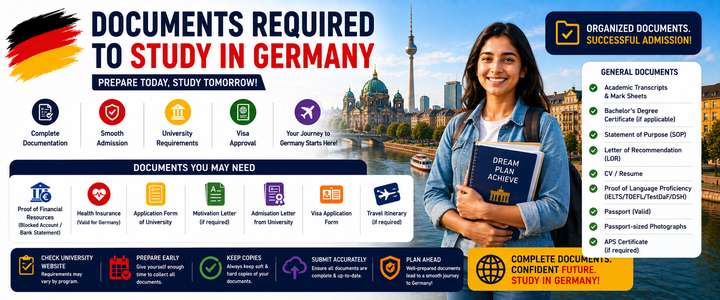
Students should begin document preparation early because university admission, academic verification, and visa processing are separate stages.
Tuition Fees
Universities Commonly Charging No General Tuition
Many regular degree programs at the following institutions generally charge no general tuition:
RWTH Aachen
TU Darmstadt
Leibniz University Hannover
TU Dresden
TU Berlin
TU Braunschweig
FAU Erlangen-Nürnberg
Students still pay a semester contribution.
Major Tuition Exceptions
Tuition may apply at:
TUM for many non-EU students
University of Stuttgart for most non-EU students
KIT for most non-EU students
Private universities
Professional master’s programs
Continuing-education courses
Academy-administered programs
Living Costs
The total cost depends heavily on location.
Higher-Cost Locations
Munich
Stuttgart
Berlin
Hamburg
Frankfurt region
Freiburg
Potentially More Manageable Locations
Aachen
Dresden
Braunschweig
Hannover
Erlangen
Bochum
Chemnitz
Clausthal
Students should calculate:
Rent
Health insurance
Food
Transportation
Semester contribution
Tuition
Study materials
Visa expenses
Deposits
Emergency funds
A tuition-free university in an expensive city can cost more overall than a tuition-charging program in a less expensive location.
Career Opportunities
Mechanical engineering graduates may pursue roles such as:
Mechanical Design Engineer
Production Engineer
Manufacturing Engineer
Automotive Engineer
Aerospace Engineer
Energy Engineer
Simulation Engineer
Robotics Engineer
Mechatronics Engineer
Materials Engineer
Quality Engineer
Process Engineer
Research Engineer
Project Engineer
Product Development Engineer
Maintenance Engineer
Technical Consultant
Major Employment Sectors
Automotive
Aerospace
Machinery
Energy
Robotics
Industrial automation
Rail transportation
Medical technology
Electronics
Manufacturing
Chemicals
Engineering consulting
Research and development
Working During the Degree
Students may seek:
Working-student positions
Research-assistant jobs
Laboratory roles
Engineering internships
CAD positions
Simulation projects
Production support roles
Teaching-assistant work
A degree-related student job can help students build:
German work experience
Technical skills
Professional references
Industry contacts
Thesis opportunities
Graduate-job pathways
Is German Required?
German may not be required for a fully English-taught degree.
However, mechanical engineering is closely connected with industrial workplaces where German is often valuable.
German can improve access to:
Factory internships
Production roles
Small and medium-sized companies
Technical meetings
Safety training
Customer communication
Graduate employment
A practical language plan is:
A1 or A2 before arrival
B1 during the first year
B2 before major internship or job applications
How to Choose the Right University
Choose by Specialization
Do not choose a university only because it is famous.
First identify whether you want:
Automotive
Aerospace
Manufacturing
Energy
Robotics
Mechatronics
Simulation
Materials
Product Development
Process Engineering
Compare the Curriculum
Review:
Compulsory modules
Electives
Laboratories
Research groups
Design projects
Internship requirements
Thesis opportunities
Available specializations
Check Academic Eligibility
Compare your transcript with:
Mathematics requirements
Mechanics credits
Thermodynamics
Fluid Mechanics
Materials
Design
Manufacturing
Control Engineering
Programming
Evaluate Industry Access
Look for:
Relevant employers
Career fairs
Research institutes
Working-student jobs
Company projects
Industrial thesis opportunities
Alumni networks
Calculate the Total Cost
Include tuition, semester fees, housing, insurance, food, transportation, and initial settlement expenses.
Common Mistakes
Applying only to TUM and RWTH
Choosing by overall reputation instead of specialization
Ignoring German-language requirements
Assuming every public university is tuition-free
Applying without detailed module descriptions
Underestimating mathematics and mechanics prerequisites
Depending entirely on part-time work
Ignoring city living costs
Waiting until graduation to seek industry experience
Using the same motivation letter for every program
Frequently Asked Questions
Which university is best for mechanical engineering in Germany?
TUM, RWTH Aachen, Stuttgart, KIT, TU Darmstadt, Hannover, TU Dresden, TU Berlin, and TU Braunschweig are strong choices. The best option depends on the specialization.
Which university is best for automotive engineering?
RWTH Aachen, Stuttgart, TUM, KIT, and TU Braunschweig are particularly relevant.
Which university is best for production engineering?
RWTH Aachen, Hannover, Stuttgart, TU Dresden, and TUM offer strong production-related environments.
Which university is best for aerospace engineering?
TUM, Stuttgart, TU Darmstadt, TU Braunschweig, and RWTH Aachen are strong options.
Which university is best for robotics and mechatronics?
TUM, Hannover, TU Darmstadt, KIT, RWTH Aachen, and TU Braunschweig are relevant choices.
Which universities charge no general tuition?
RWTH Aachen, TU Darmstadt, Hannover, TU Dresden, TU Berlin, TU Braunschweig, and FAU generally charge no general tuition for many regular degrees.
Is TUM tuition-free?
Many students from outside the EU and EEA pay program-specific tuition at TUM.
Is RWTH Aachen tuition-free?
Regular public degree programs generally charge no tuition, although students pay a semester contribution.
Is the University of Stuttgart tuition-free?
Most non-EU students generally pay state tuition unless exempt.
Is KIT tuition-free?
Most non-EU students generally pay state tuition unless exempt.
Can I study mechanical engineering in English?
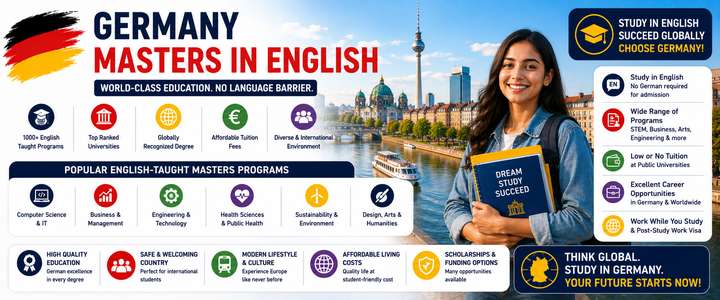
Yes, particularly at the master’s level. English bachelor’s options are less common.
Do I need German?
German may not be needed for an English program, but it can significantly improve internship and employment opportunities.
Is mechanical engineering difficult?
The subject requires strong mathematics, physics, mechanics, problem-solving, and consistent study. Students should expect laboratory work, design projects, and technical examinations.
Is Germany good for mechanical engineering jobs?
Germany has a large engineering, automotive, manufacturing, energy, machinery, and industrial technology market. Employment prospects improve when graduates combine academic knowledge with practical experience and German-language skills.
Final Verdict
Germany offers excellent mechanical engineering education across large research universities, specialized technical institutions, and industry-connected programs.
Choose TUM for advanced research, robotics, aerospace, and interdisciplinary engineering.
Choose RWTH Aachen for production, manufacturing, automotive, simulation, and industrial research.
Choose Stuttgart for automotive, aerospace, simulation, and access to a major manufacturing region.
Choose KIT for energy, automotive, materials, and mechanical research.
Choose TU Darmstadt for mechanics, aerospace, mathematical engineering, and computational methods.
Choose Hannover for production, robotics, mechatronics, and English study tracks.
Choose TU Dresden for manufacturing, materials, lightweight structures, and lower living expenses.
Choose TU Berlin for energy, transportation, innovation, and study in an international city.
Choose TU Braunschweig for automotive, mobility, aerospace, and mechatronics.
Choose FAU Erlangen-Nürnberg for manufacturing, energy, medical technology, and interdisciplinary engineering.
The best university is the institution where:
Your academic background meets the requirements
The specialization supports your career goal
The teaching language works for you
The total cost is manageable
Relevant laboratories and industry connections are available
You can gain practical experience before graduation