Technical University of Munich (TUM) Summary
Technical University of Munich (TUM) is a public research university located in Munich, Bavaria. The Technical University of Munich (TUM) is a public research university that specialises in engineering, natural and life sciences, medicine, computing, management, education, architecture and interdisciplinary technology-driven innovation. Its institutional history includes 1868 — King Ludwig II founded the Polytechnic School of Munich. The institution was founded in an effort to improve the scientific and technical education in Bavaria. Its academic profile today is defined by mechanical engineering, electrical engineering, information technology, civil and environmental engineering, architecture, computer science, artificial intelligence, data science, mathematics, physics, chemistry, life sciences, agriculture, food, medicine, health, management, education, and public policy. The location makes a difference: TUM is a key player in the heart of Munich, Garching, Weihenstephan, Straubing, Heilbronn and the university hospital network, linking students to laboratories, start-ups, research institutes, hospitals, international technology firms, manufacturing, agriculture and the innovation economy of Bavaria.
This master file contains the course portfolio including 16 undergraduate and 16 postgraduate entries . Subject combinations have been brought together under their parent degrees as appropriate. Undergraduate examples include Aerospace, Architecture, Chemical Engineering, Civil Engineering, Computer Science, Electrical Engineering and Information Technology, and later entries include Medicine, Physics, Sustainable Management and Technology. In postgraduate study you can study Aerospace, Automotive Engineering, Biomedical Engineering and Medical Physics, Civil Engineering, Computational Science and Engineering, Computer Science, Power Engineering, Quantum Science and Technology, Robotics, Cognition, Intelligence. Still, each course is a parent qualification and specialisations are recorded on the course entry and not disguised as separate degrees. This row summarises major parent qualifications and notes concentrations, subject combinations, teaching tracks and elective pathways within the relevant degree, rather than listing them as distinct programs.
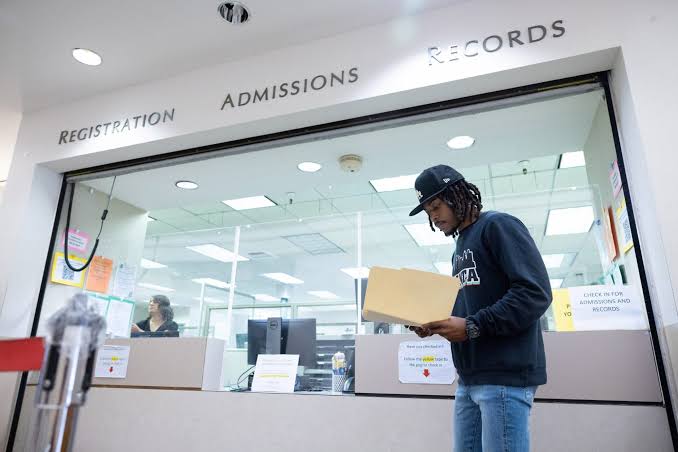
Admission is handled at the program level. The application process for the program is determined and accurate via TUMonline. For many international qualifications, the bachelor and master routes may involve a qualification review, an aptitude test, interviews, portfolios, internships, subject-credit conditions, evidence of language skills and preliminary documentation via uni-assist. Before applying, applicants are asked to check the teaching language, entry semester, subject prerequisites, selection procedure and document route. International School or University Qualifications External evaluation, certified translations, APS documentation where applicable or other proof of academic equivalence may be required. Master’s committees may ask for module descriptions, portfolios, writing samples, professional experience, or interviews. Admission to a doctoral program is separate from admission to a bachelor's or master's program and generally requires a viable research proposal, eligible supervision, and formal acceptance by the responsible faculty.
All students pay a campus-specific semester fee. For the summer semester 2026, the fee is € 97 in Munich, Garching, Weihenstephan and Heilbronn and € 82 in Straubing. For example, program tuition for non-EU international students is generally €2,000-3,000 per bachelor semester or €4,000-6,000 per master semester (with exemptions and waivers). These institutional fees do not include rent, health insurance, food, learning materials, residence formalities, project costs or personal travel. Special tuition may be applied in the case of continuing-education, distance-learning, joint, second-degree or long-term study formats, if provided for by the relevant law or program regulation. Funding may include BAföG for eligible students, the Deutschlandstipendium, DAAD and Erasmus+ mobility support, foundations, research employment or university-specific awards, but each funding application is assessed independently from admission.
Career preparation is a reflection of the subject mix of the university, not a guarantyd placement scheme. Internships, applied projects, research assistantships, employer events, language development, entrepreneurship services, international mobility and a thesis developed in cooperation with an external partner can all help to improve professional readiness.
This master file contains the course portfolio including 16 undergraduate and 16 postgraduate entries . Subject combinations have been brought together under their parent degrees as appropriate. Undergraduate examples include Aerospace, Architecture, Chemical Engineering, Civil Engineering, Computer Science, Electrical Engineering and Information Technology, and later entries include Medicine, Physics, Sustainable Management and Technology. In postgraduate study you can study Aerospace, Automotive Engineering, Biomedical Engineering and Medical Physics, Civil Engineering, Computational Science and Engineering, Computer Science, Power Engineering, Quantum Science and Technology, Robotics, Cognition, Intelligence. Still, each course is a parent qualification and specialisations are recorded on the course entry and not disguised as separate degrees. This row summarises major parent qualifications and notes concentrations, subject combinations, teaching tracks and elective pathways within the relevant degree, rather than listing them as distinct programs.
Admission is handled at the program level. The application process for the program is determined and accurate via TUMonline. For many international qualifications, the bachelor and master routes may involve a qualification review, an aptitude test, interviews, portfolios, internships, subject-credit conditions, evidence of language skills and preliminary documentation via uni-assist. Before applying, applicants are asked to check the teaching language, entry semester, subject prerequisites, selection procedure and document route. International School or University Qualifications External evaluation, certified translations, APS documentation where applicable or other proof of academic equivalence may be required. Master’s committees may ask for module descriptions, portfolios, writing samples, professional experience, or interviews. Admission to a doctoral program is separate from admission to a bachelor's or master's program and generally requires a viable research proposal, eligible supervision, and formal acceptance by the responsible faculty.
All students pay a campus-specific semester fee. For the summer semester 2026, the fee is € 97 in Munich, Garching, Weihenstephan and Heilbronn and € 82 in Straubing. For example, program tuition for non-EU international students is generally €2,000-3,000 per bachelor semester or €4,000-6,000 per master semester (with exemptions and waivers). These institutional fees do not include rent, health insurance, food, learning materials, residence formalities, project costs or personal travel. Special tuition may be applied in the case of continuing-education, distance-learning, joint, second-degree or long-term study formats, if provided for by the relevant law or program regulation. Funding may include BAföG for eligible students, the Deutschlandstipendium, DAAD and Erasmus+ mobility support, foundations, research employment or university-specific awards, but each funding application is assessed independently from admission.
Career preparation is a reflection of the subject mix of the university, not a guarantyd placement scheme. Internships, applied projects, research assistantships, employer events, language development, entrepreneurship services, international mobility and a thesis developed in cooperation with an external partner can all help to improve professional readiness.