Germany is one of the most popular destinations for international students seeking an affordable, research-oriented, and industry-relevant master’s degree. Its universities offer thousands of postgraduate programs across engineering, computer science, artificial intelligence, data science, natural sciences, biotechnology, environmental studies, management, and interdisciplinary fields.
The qualification commonly called an “MS” in India, the United States, and several other countries is usually awarded as a Master of Science or M.Sc. in Germany. German universities may also award specialized degrees such as Master of Engineering, Master of Arts, Master of Business Administration, or program-specific international master’s qualifications.
Most Master of Science programs take three or four semesters. Consecutive master’s programs at many public universities have no regular tuition, although students must pay semester contributions and living expenses. Important exceptions include tuition for many non-EU students in Baden-Württemberg, program-specific fees at certain Bavarian universities, and higher charges for private or non-consecutive programs.
Admission is based on more than the overall percentage or CGPA. German universities frequently evaluate whether an applicant’s bachelor’s curriculum contains the exact mathematics, programming, engineering, science, research, and subject-specific credits required by the master’s program.
For Indian applicants, APS certification is generally part of the application and visa process. Selected master’s applicants whose previous degrees fall within engineering, commerce, finance, economics, business, or management may also need dMAT for applicable intakes under current APS India rules.
This guide explains MS courses in Germany, universities, eligibility, tuition fees, application procedures, APS and dMAT requirements, scholarships, work rights, and career opportunities.
MS in Germany: Quick Overview
| Category | Details |
|---|---|
| Common Degree Title | Master of Science or M.Sc. |
| Typical Duration | 3–4 semesters |
| Academic Credits | Usually 90 or 120 ECTS |
| Main Intakes | Winter and summer |
| Teaching Language | English, German, or a combination |
| Public-University Tuition | Often no regular tuition for consecutive programs |
| Semester Contribution | Commonly approximately €150–€450 |
| Baden-Württemberg Tuition | Generally €1,500 per semester for many non-EU students |
| TUM Non-EU Tuition | Commonly €4,000 or €6,000 per semester for many master’s programs |
| Current Visa Financial Benchmark | €11,904 for one year, equivalent to €992 per month |
| Student Work Limit | Generally 140 full days or 280 half-days annually, or the applicable 20-hour weekly alternative |
| Post-Study Job Search | Up to 18 months for eligible graduates |
| Common English Requirement | Often IELTS 6.5 or an equivalent score, but program rules vary |
| APS for Indian Students | Generally required |
| dMAT | Applies to selected master’s applicants in specified previous-degree fields |
Why Study MS in Germany?
Germany combines public investment in higher education with a major industrial economy. Students can study close to companies, research centers, laboratories, technology clusters, and manufacturing facilities.
Important advantages include:
Low or no regular tuition at many public universities
A large selection of English-taught master’s programs
Strong engineering and scientific research
Access to internationally recognized universities
Collaboration between universities and industry
Opportunities for research assistantships and working-student employment
Specialized programs in emerging technologies
A qualification structured under the European Higher Education Area
Post-study residence options for eligible graduates
Exposure to German and European professional networks
Opportunities to pursue doctoral research after graduation
Germany is particularly strong in mechanical engineering, automotive technology, electrical engineering, renewable energy, computer science, artificial intelligence, data science, materials, biotechnology, physics, chemistry, and environmental science.
Students should still evaluate every program individually. A famous university is not automatically the best choice when another institution offers a curriculum, laboratory, location, or industry partnership that aligns more closely with the applicant’s career plans.
What Does MS Mean in Germany?
The term MS is not the standard degree label used by most German universities. The common equivalent is Master of Science, abbreviated as M.Sc.
An M.Sc. is generally awarded in:
Engineering
Computer science
Data science
Mathematics
Physics
Chemistry
Biology
Biotechnology
Environmental science
Economics
Business analytics
Psychology
Interdisciplinary scientific fields
Some technical programs use Master of Engineering instead. Management programs may award an M.Sc., MA, MBA, or another qualification depending on their academic orientation.
Applicants should search using both “MS” and “M.Sc.” but rely on the official degree title published by the university.
Types of Master’s Programs
Consecutive Master’s Programs
A consecutive master’s builds directly on a related bachelor’s degree. It is the most common route for international students.
Examples include:
BTech Mechanical Engineering to M.Sc. Mechanical Engineering
BTech Computer Science to M.Sc. Computer Science
BSc Mathematics to M.Sc. Mathematics
BSc Biotechnology to M.Sc. Molecular Biotechnology
BTech Electrical Engineering to M.Sc. Electrical Engineering
These programs often have no regular tuition at public universities, subject to state and university-specific exceptions.
Non-Consecutive Master’s Programs
A non-consecutive program may accept applicants from broader backgrounds or focus on professional development. It may require work experience and can charge tuition even at a public university.
Examples can include:
Technology management
Innovation management
International education management
Specialized sustainability programs
Professional data or business programs
Executive and continuing-education courses
Research-Oriented Master’s Programs
Research-oriented programs prepare students for scientific work, research institutes, product development, or doctoral study.
They generally include:
Advanced theory
Research methodology
Laboratory or computational work
Research seminars
Independent projects
A substantial master’s thesis
Application-Oriented Master’s Programs
Application-oriented programs emphasize practical problem-solving, industry projects, internships, product development, and professional skills.
They are commonly offered by universities of applied sciences, although research universities can also provide practice-oriented programs.
Joint and Double-Degree Programs
A joint or double-degree program involves more than one university, sometimes in different countries. Students may study at multiple campuses and receive either a joint qualification or separate degrees.
These programs can provide international exposure but may involve additional tuition, travel, visa, and accommodation costs.
Popular MS Courses in Germany
MS in Computer Science
Computer Science is one of the most popular choices for international students.
Common subjects include:
Algorithms
Software engineering
Distributed systems
Databases
Computer networks
Cybersecurity
Cloud computing
Embedded systems
Human-computer interaction
Theoretical computer science
Admission usually requires substantial undergraduate coursework in programming, algorithms, mathematics, data structures, operating systems, and theoretical computer science.
MS in Artificial Intelligence
Artificial Intelligence programs focus on:
Machine learning
Deep learning
Natural-language processing
Computer vision
Intelligent systems
Reinforcement learning
Robotics
Data mining
AI ethics
Statistical learning
Applicants are frequently expected to have strong foundations in linear algebra, calculus, probability, statistics, algorithms, and programming.
MS in Data Science
Data Science combines mathematics, statistics, computer science, and domain applications.
Typical modules include:
Statistical modeling
Machine learning
Data engineering
Big-data systems
Data visualization
Optimization
Database technology
Scientific computing
Responsible data use
Research methods
Many universities examine the applicant’s individual credits in mathematics, statistics, and computer science rather than accepting every degree carrying the word “data.”
MS in Mechanical Engineering
Mechanical Engineering remains one of Germany’s core academic strengths.
Specializations may include:
Computational engineering
Production technology
Design engineering
Thermodynamics
Fluid mechanics
Manufacturing
Materials
Mechatronics
Automotive systems
Energy engineering
The curriculum can be mathematically intensive and may require specific credits in mechanics, design, thermodynamics, manufacturing, and engineering mathematics.
MS in Automotive Engineering
Automotive Engineering programs may cover:
Vehicle dynamics
Electric mobility
Battery systems
Autonomous driving
Powertrain engineering
Lightweight design
Automotive software
Control systems
Vehicle safety
Sustainable mobility
Students should consider the industry transition toward electric, connected, software-defined, and autonomous vehicles rather than selecting a course focused only on traditional combustion technologies.
MS in Electrical Engineering
Common areas include:
Power systems
Electronics
Communications
Signal processing
Microelectronics
Automation
Control engineering
Embedded systems
Renewable energy
Semiconductor technology
Applicants generally need a closely related bachelor’s degree with strong mathematics and electrical-engineering fundamentals.
MS in Robotics and Mechatronics
These programs combine mechanical engineering, electronics, control, and computer science.
Students may study:
Robot kinematics
Automation
Sensors
Control systems
Computer vision
Embedded programming
Human-robot interaction
Industrial robotics
Autonomous systems
Intelligent manufacturing
Admission can be strict because universities expect prior learning across several technical areas.
MS in Renewable Energy
Renewable-energy courses may include:
Solar energy
Wind energy
Energy storage
Hydrogen technology
Smart grids
Power conversion
Energy economics
Sustainable energy systems
Environmental assessment
Energy policy
Programs can be engineering-heavy, science-based, or interdisciplinary. Applicants must check whether the curriculum matches their undergraduate preparation.
MS in Civil and Structural Engineering
Specializations include:
Structural engineering
Construction management
Transportation systems
Water resources
Geotechnical engineering
Infrastructure planning
Computational mechanics
Sustainable construction
Environmental engineering
German-language knowledge may be especially useful because construction standards, local regulations, and project communication frequently involve German.
MS in Aerospace Engineering
Aerospace programs cover:
Aerodynamics
Flight mechanics
Propulsion
Aircraft structures
Space systems
Guidance and control
Computational fluid dynamics
Satellite technology
Lightweight materials
Admission is competitive and generally requires strong mathematics, mechanics, thermodynamics, and engineering fundamentals.
MS in Biotechnology
Biotechnology programs may include:
Molecular biology
Cell biology
Genetic engineering
Bioinformatics
Bioprocess engineering
Pharmaceutical biotechnology
Industrial biotechnology
Medical biotechnology
Laboratory methods
Research ethics
Research experience, laboratory exposure, and a strong scientific curriculum can be important in selection.
MS in Bioinformatics
Bioinformatics combines biology, computer science, mathematics, and statistics.
Applicants may need evidence of previous coursework in:
Molecular biology
Genetics
Programming
Algorithms
Statistics
Mathematics
Computational biology
The required balance between biology and computing varies significantly between universities.
MS in Materials Science
Materials Science focuses on:
Metals
Polymers
Ceramics
Semiconductors
Nanomaterials
Composite materials
Material characterization
Computational materials
Manufacturing processes
Sustainable materials
Germany’s automotive, aerospace, electronics, chemical, and manufacturing sectors make this a relevant specialization.
MS in Environmental Science
Environmental programs can cover:
Climate science
Environmental modeling
Water management
Ecology
Pollution control
Environmental policy
Sustainable development
Geographic information systems
Resource management
Circular economy
Some programs are scientific, while others emphasize policy or interdisciplinary sustainability.
MS in Business Analytics
Business Analytics combines:
Statistics
Data analysis
Operations research
Business intelligence
Machine learning
Decision science
Information systems
Marketing analytics
Financial analytics
Supply-chain analytics
Applicants may come from business, engineering, economics, mathematics, statistics, or computer science, depending on program requirements.
Representative Universities for MS in Germany
| University | Representative Strengths |
|---|---|
| Technical University of Munich | Engineering, computer science, AI, data, natural sciences, management and technology |
| RWTH Aachen University | Mechanical, automotive, electrical, production, materials and computational engineering |
| Karlsruhe Institute of Technology | Engineering, energy, computer science, physics and environmental research |
| Technical University of Berlin | Engineering, computer science, energy, urban systems and technology |
| Technical University of Dresden | Engineering, microelectronics, materials, computer science and biotechnology |
| Technical University of Darmstadt | Computer science, cybersecurity, electrical, mechanical and civil engineering |
| University of Stuttgart | Mechanical, automotive, aerospace, computational and civil engineering |
| Saarland University | Computer science, AI, language technology and cybersecurity |
| University of Bonn | Mathematics, computer science, life sciences and economics |
| Heidelberg University | Natural sciences, data, life sciences and interdisciplinary research |
| LMU Munich | Data, natural sciences, mathematics, economics and life sciences |
| Friedrich-Alexander University Erlangen-Nuremberg | Engineering, AI, medical technology, materials and computer science |
| University of Freiburg | Embedded systems, computer science, renewable energy and life sciences |
| University of Göttingen | Data science, computer science, mathematics and biological sciences |
| University of Hamburg | Data, physics, climate science, informatics and natural sciences |
| University of Bremen | Production, systems engineering, marine sciences and space-related study |
| Ruhr University Bochum | Engineering, cybersecurity, materials and natural sciences |
| University of Paderborn | Computer science, electrical engineering and applied sciences |
| Chemnitz University of Technology | Automotive software, data, mathematics, engineering and materials |
| Deggendorf Institute of Technology | Applied computer science, AI, engineering and technology programs |
University rankings can be useful for initial research, but they should not determine the final decision. Curriculum compatibility, faculty research, laboratories, thesis opportunities, city costs, and industry access may be more important.
Universities Versus Universities of Applied Sciences
Germany has different types of higher-education institutions.
| Factor | Research University | University of Applied Sciences |
|---|---|---|
| Academic Focus | Theory and research | Applied learning and industry practice |
| Class Structure | Often larger and more independent | Often smaller and more structured |
| Research | Strong emphasis | Applied and industry-linked research |
| Internships | Program-dependent | Frequently integrated or strongly encouraged |
| Doctoral Route | Direct doctoral-awarding authority | May involve cooperation, with expanding rights under state systems |
| Best For | Research, scientific depth, PhD preparation | Practical skills, industry projects and applied careers |
Both institution types can award recognized master’s degrees. The qualification should be evaluated based on accreditation, curriculum, academic level, and career relevance—not on the word “applied.”
MS Eligibility Requirements
Admission requirements vary by university and program, but the following conditions are common.
Relevant Bachelor’s Degree
Applicants generally need a recognized bachelor’s degree in a related subject.
A university may evaluate:
Degree title
Duration of study
Total academic workload
Subject-specific modules
Laboratory work
Mathematics credits
Programming credits
Research experience
Final-year project
Overall grade
A related degree title alone may not be enough. For example, an applicant with a computer-related degree can still be rejected from an M.Sc. Computer Science program if the transcript lacks sufficient theoretical computer science or mathematics.
ECTS Requirements
German programs use the European Credit Transfer and Accumulation System.
A four-semester master’s generally awards 120 ECTS, while a three-semester program generally awards 90 ECTS.
Admission may depend on whether the bachelor’s degree is considered equivalent to:
180 ECTS
210 ECTS
A specified number of years
A defined amount of subject-specific study
Applicants with a 180-ECTS-equivalent bachelor’s degree applying to a 90-ECTS master’s may need additional academic credits, depending on the university. Other institutions offer separate three-semester and four-semester routes.
GPA and Academic Performance
Germany has no universal minimum GPA for all MS programs.
A university may use:
A published minimum German grade
Departmental ranking
Grade conversion
Subject-specific grades
An aptitude-assessment score
Competitive selection among eligible applicants
Strong programs can reject applicants who meet the formal minimum because the number of qualified candidates exceeds the available places.
English-Language Proficiency
English-taught programs may accept qualifications such as:
IELTS Academic
TOEFL iBT
Cambridge English qualifications
Previous education conducted in English, where explicitly accepted
Other university-approved evidence
IELTS 6.5 is a common requirement, but it is not a nationwide rule. Some programs accept lower scores, while others require 7.0 or proof at C1 level.
A Medium of Instruction certificate is accepted only when the university’s rules allow it. Applicants should not assume that it can replace IELTS or TOEFL everywhere.
German-Language Proficiency
German-taught programs commonly require TestDaF, DSH, telc Deutsch C1 Hochschule, or another approved certificate.
Some English-taught courses request basic German either at admission or during the degree. Even when it is not compulsory, German can improve:
Internship access
Working-student opportunities
Communication with local teams
Daily life
Full-time employment prospects
GRE, GATE or GMAT
These tests are not universally required.
Depending on the program, applicants may encounter:
GRE General Test
GRE subject-related expectations
GATE score
GMAT
University aptitude assessment
Online technical test
Interview
Applicants should take an additional examination only when the official program requires or clearly recommends it.
Work Experience
Consecutive science and engineering master’s programs often do not require full-time experience. Professional, non-consecutive, executive, or management-related programs may require one or more years.
Internships, research projects, publications, and relevant employment can still strengthen an application when they support the intended specialization.
Documents Required
Applicants may need:
Passport
Bachelor’s degree certificate
Complete semester-wise transcripts
Current transcript if the degree is unfinished
School-leaving certificate
Official university grading system
APS certificate
dMAT certificate where applicable
English or German language certificate
Curriculum vitae
Statement of purpose or motivation letter
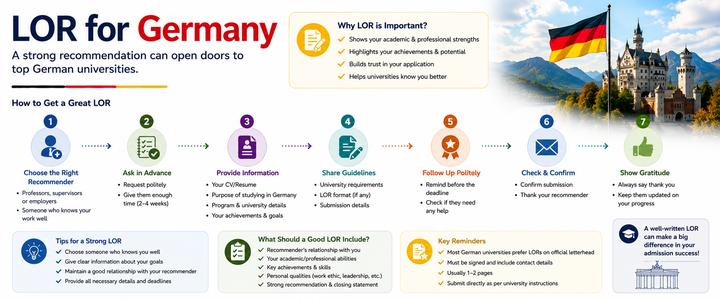
Letters of recommendation
Course descriptions or module handbook
Internship and employment certificates
Final-year project summary
GRE, GATE or GMAT score where required
Application form
Preliminary Review Documentation where required
Certified translations
Universities may request detailed module descriptions to determine whether the previous curriculum matches the master’s prerequisites.
APS Certificate for Indian Students
APS India verifies academic qualifications issued by Indian educational institutions. It is generally required for Indian students applying for academic study in Germany and is also important for the student-visa process.
Applicants should:
Select the correct APS procedure.
Complete online registration.
Pay the applicable fee.
Submit the required academic documents.
Complete any verification or interview step requested by APS.
Receive the APS certificate.
Use it for applicable university and visa applications.
Students should begin early. Waiting for university admission before starting APS can delay the entire application cycle.
dMAT Requirements for MS Applicants
The dMAT is an additional academic aptitude test for selected master’s applicants from India. It does not replace APS document verification.
Under the current published rules, affected previous-degree groups include:
Engineering
Commerce
Accounting
Finance
Economics
Business
Management
The requirement applies to relevant applicants connected with the summer semester 2027 intake and subsequent intakes, unless a stated transitional exemption applies.
This means that many Indian applicants targeting MS programs may be affected because their previous degree is in engineering. The requirement is based primarily on the field of the previous degree, not simply the title of the German master’s program.
Examples that may fall within the engineering group include:
Mechanical Engineering
Computer Science and Engineering
Electrical Engineering
Electronics and Communication Engineering
Civil Engineering
Chemical Engineering
Aerospace Engineering
Biotechnology Engineering
Industrial Engineering
Mechatronics
Automotive Engineering
Applicants from pure science fields such as mathematics, physics, chemistry, biology, or statistics should check the published affected-field list rather than assuming inclusion or exemption.
Applicants meeting the announced transitional conditions may be exempt. Since dMAT rules, field classifications, dates, and procedures can be updated, students should verify the latest APS India notice before submitting documents.
Application Routes
German universities commonly use one of three routes.
Direct University Application
The complete application is submitted through the university’s own portal.
Application Through Uni-Assist
Uni-assist evaluates international academic documents for participating universities. It may receive the complete program application or perform a preliminary academic check.
VPD Procedure
Some universities require a Preliminary Review Documentation from uni-assist. The student requests the VPD and then applies directly to the university before its deadline.
A VPD is university-specific and is generally valid for one year. Uni-assist states that processing commonly takes approximately four to six weeks after receiving a complete application, so it should be requested well before the university deadline.
Step-by-Step Application Process
Select a field that closely matches the bachelor’s curriculum.
Identify English-taught and German-taught programs.
Read the official admission and examination regulations.
Compare required modules with the bachelor’s transcript.
Confirm ECTS, grade, and language conditions.
Check whether GRE, GATE, GMAT, work experience, or an internship is required.
Complete APS verification.
Complete dMAT if applicable.
Obtain the required language score.
Prepare the CV, motivation letter, recommendations, and course descriptions.
Determine whether the application is direct, through uni-assist, or through VPD.
Submit the application before the international deadline.
Monitor the portal and respond to document requests.
Compare offers based on curriculum, cost, location, and career opportunities.
Accept the offer and complete enrollment requirements.
Arrange the blocked account or other accepted financial evidence.
Obtain health insurance and apply for the student visa.
Secure accommodation and prepare for arrival.
Winter and Summer Intakes
Winter Intake
The winter semester generally begins around October and offers the largest selection of programs.
Applications frequently open several months earlier. Deadlines can fall between March and July, but some competitive international programs close earlier.
Summer Intake
The summer semester generally begins around April. It offers fewer MS choices, although many computer science, engineering, data, and applied programs accept summer applications.
Deadlines commonly fall between October and January, but there is no universal schedule.
| Intake | Typical Beginning | General Application Period |
|---|---|---|
| Winter | September or October | Commonly March–July |
| Summer | March or April | Commonly October–January |
Students must follow the program-specific international deadline. A general university deadline may not apply to applicants with foreign qualifications.
Tuition Fees for MS in Germany
Public Universities
Many public universities charge no regular tuition for consecutive master’s programs. Students still pay a semester contribution, commonly around €150–€450.
Baden-Württemberg
Many non-EU students at public universities in Baden-Württemberg generally pay €1,500 per semester. Exemptions can apply.
This can affect students considering institutions such as:
Heidelberg University
University of Freiburg
University of Stuttgart
Karlsruhe Institute of Technology
University of Mannheim
University of Hohenheim
Technical University of Munich
Technical University of Munich charges tuition to many newly enrolled students from countries outside the European Union. Master’s fees are commonly €4,000 or €6,000 per semester, depending on the program. Waivers and exemptions may be available under specific conditions.
Private Universities
Private-university MS fees can range from several thousand euros to much higher total amounts. Applicants should examine:
Total tuition
Enrollment charges
Examination fees
Mandatory service packages
Refund conditions
Accreditation
Internship support
Campus-delivery requirements
Non-Consecutive Programs
Public institutions can charge tuition for continuing-education and non-consecutive master’s degrees. “Public university” should not automatically be interpreted as “free program.”
Estimated Monthly Living Expenses
| Expense | Approximate Monthly Range |
|---|---|
| Accommodation | €350–€850 |
| Food | €180–€300 |
| Student Health Insurance | Approximately €130–€160 |
| Transport Beyond Included Benefits | €0–€80 |
| Study Materials | €20–€60 |
| Phone and Internet | €20–€45 |
| Personal Expenses | €80–€200 |
| Estimated Total | Approximately €850–€1,550 |
Munich, Frankfurt, Hamburg, Stuttgart, and central Berlin are generally more expensive than smaller cities such as Chemnitz, Magdeburg, Ilmenau, Siegen, Kaiserslautern, or Paderborn.
Proof of Funds
The current German Missions in India benchmark for applicable student-visa cases is €11,904 for one year, with a monthly blocked-account withdrawal limit of €992.
Accepted financial evidence may include:
Blocked account
Formal obligation from an eligible sponsor in Germany
Recognized German or European scholarship
Another method accepted by the responsible German mission
The blocked-account figure is a visa threshold, not a guarantee that €992 will cover every student’s real monthly expenses.
Scholarships for MS in Germany
Possible funding sources include:
DAAD Study Scholarships
DAAD scholarships for selected STEM disciplines
DAAD EPOS programs
Deutschlandstipendium
Erasmus funding
University merit scholarships
Research-institute funding
Foundation scholarships
State-specific programs
Company-sponsored scholarships
Departmental research assistantships
DAAD scholarships commonly consider:
Academic record
Motivation
Quality of the proposed study plan
Professional experience where relevant
Social engagement
Development impact
Future potential
Scholarship deadlines may occur much earlier than university admission deadlines. Applicants should not wait for an admission letter before researching funding.
Working While Studying
Eligible students from outside the European Union can generally work:
Up to 140 full days per year
Up to 280 half-days per year
Or under the applicable alternative of up to 20 hours per week during the lecture period
Common student roles include:
Working student
Research assistant
Teaching assistant
Laboratory assistant
Software developer
Data analyst
Engineering assistant
Quality-assurance assistant
Technical support employee
Operations assistant
Compulsory internships that form part of the curriculum are generally treated differently from voluntary internships. Voluntary internships commonly affect the annual work allowance.
Part-time income should not be the only funding plan. Finding work can take time, and the combination of lectures, projects, examinations, and thesis research can be demanding.
MS Careers in Germany
Career opportunities depend on the specialization.
| MS Field | Representative Career Roles |
|---|---|
| Computer Science | Software engineer, systems engineer, cloud specialist, developer |
| Artificial Intelligence | Machine-learning engineer, AI specialist, computer-vision engineer |
| Data Science | Data scientist, data analyst, data engineer, quantitative analyst |
| Mechanical Engineering | Design engineer, production engineer, simulation engineer |
| Automotive Engineering | Vehicle engineer, mobility specialist, testing engineer |
| Electrical Engineering | Electronics engineer, power-systems engineer, control engineer |
| Robotics | Robotics engineer, automation engineer, controls specialist |
| Renewable Energy | Energy engineer, grid specialist, sustainability analyst |
| Civil Engineering | Structural engineer, infrastructure planner, project engineer |
| Aerospace Engineering | Aerospace engineer, simulation specialist, systems engineer |
| Biotechnology | Research associate, bioprocess specialist, laboratory scientist |
| Bioinformatics | Computational biologist, bioinformatics analyst, research scientist |
| Materials Science | Materials engineer, process specialist, research engineer |
| Environmental Science | Environmental consultant, climate analyst, sustainability specialist |
| Business Analytics | Business analyst, analytics consultant, decision-science specialist |
Actual access to a profession may depend on German-language ability, licensing, employer requirements, and whether the role is regulated.
German Language and Employment
An English-taught MS can be completed without advanced German when the university does not require it. Employment is a separate matter.
German helps students:
Secure working-student jobs
Communicate with local engineering teams
Understand workplace documentation
Apply to small and medium-sized companies
Participate in customer-facing projects
Build professional relationships
Handle administrative processes
Compete for more full-time positions
A practical target is to reach at least conversational B1 or B2 by graduation. Roles involving local regulations, production facilities, healthcare, construction, consulting, or client interaction may require stronger German.
Post-Study Work Opportunities
Eligible graduates can apply for a residence permit lasting up to 18 months to search for qualified employment after completing a recognized German university degree.
During this period, graduates can generally take up any form of employment while seeking a position related to their qualifications.
After securing suitable employment, a graduate may apply for:
Residence permit for qualified employment
EU Blue Card if current conditions are met
Another applicable employment residence category
A degree does not automatically guarantee a job or residence permit. Graduates must secure appropriate employment and complete the relevant immigration procedure.
Common Reasons for MS Application Rejection
Insufficient Subject-Specific Credits
A good CGPA cannot compensate when mandatory mathematics, programming, engineering, laboratory, or theory modules are missing.
Unrelated Bachelor’s Degree
German consecutive master’s programs usually require close academic continuity.
Incomplete Documents
Missing transcripts, grading-scale information, course descriptions, APS, translations, or language proof can make an application formally incomplete.
Weak Motivation Letter
A generic statement that praises Germany without explaining academic fit adds little value.
Incorrect Application Route
Submitting directly when VPD or uni-assist is required can invalidate the application.
Missed Deadline
International deadlines may be earlier than domestic deadlines. Late APS or VPD preparation is a common problem.
Assuming Medium of Instruction Is Always Accepted
Universities determine which language evidence they accept.
Applying Only to Highly Competitive Programs
A balanced shortlist should include ambitious, realistic, and comparatively safer options. No German university should be treated as guaranteed admission.
Ignoring dMAT
Affected Indian applicants who overlook the new dMAT requirement may have incomplete APS documentation for applicable intakes.
Focusing Only on Rankings
A highly ranked university can still be the wrong choice if the applicant does not meet its module requirements.
MS Application Checklist
Before applying, confirm:
The bachelor’s degree is related to the intended MS.
All mandatory subject credits are present.
The 180- or 210-ECTS requirement is satisfied.
The academic grade meets the published condition.
The language certificate is accepted.
APS has been completed or started.
dMAT applicability has been checked.
GRE, GATE or GMAT requirements are understood.
Work-experience requirements are satisfied.
Course descriptions are available.
The correct application route has been identified.
VPD processing time has been considered.
International deadlines have been verified.
Tuition and semester contributions have been calculated.
The city’s living costs are affordable.
Scholarship deadlines have been checked.
The financial and visa plan is realistic.
Frequently Asked Questions
Is MS free in Germany?
Many consecutive MS programs at public universities have no regular tuition. Semester contributions, living expenses, insurance, and visa costs remain payable. Tuition may apply in Baden-Württemberg, at TUM, and in private or non-consecutive programs.
Is an MS in Germany called an M.Sc.?
Yes. Most German universities use the title Master of Science or M.Sc. for science, technology, engineering, mathematics, data, and related degrees.
How long is MS in Germany?
Most programs take three or four semesters, equivalent to approximately 18 months or two years.
Can I study MS in Germany in English?
Yes. Germany offers many English-taught MS programs, especially in engineering, computer science, data science, AI, natural sciences, and interdisciplinary fields.
What CGPA is required for MS in Germany?
There is no universal minimum. Requirements vary by university, and selection can depend on subject credits, grade conversion, aptitude assessment, and competition.
Is IELTS compulsory?
IELTS is not universally compulsory. Universities may accept TOEFL, Cambridge qualifications, previous English-taught education, or other evidence. Applicants must follow the program’s official language rules.
Is GRE required for MS in Germany?
Most German MS programs do not universally require GRE. Certain departments or programs may require or recommend it.
Is GATE accepted in Germany?
Some German universities or specific technical programs may accept or request GATE from Indian applicants. It is not a nationwide requirement.
Is work experience required?
Consecutive MS programs generally focus on academic eligibility and may not require work experience. Professional or non-consecutive programs can require relevant employment.
Is APS compulsory for Indian students?
APS is generally required for Indian applicants seeking academic study in Germany, subject to the applicable procedure and exemptions.
Who needs dMAT?
Under current APS India rules, dMAT affects selected master’s applicants whose previous degree falls within engineering, commerce, accounting, finance, economics, business, or management for applicable intakes.
Can I apply before completing my bachelor’s degree?
Some universities accept applications from students in their final semester if sufficient credits and an expected-completion document are available. Final enrollment normally requires proof of graduation by the specified deadline.
Can a three-year bachelor’s degree be accepted?
It can be accepted when it is recognized and satisfies the program’s academic and credit requirements. The decision is made by the university.
Which intake is better?
Winter offers more programs. Summer can have fewer choices but may provide another opportunity without waiting an entire year. The better intake is the one in which suitable programs are available.
Can I work part-time during MS?
Eligible international students can generally work up to 140 full days or 280 half-days annually, or use the applicable 20-hour-per-week alternative.
Can I stay in Germany after MS?
Eligible graduates can apply for up to 18 months to seek qualified employment after completing their degree.
Is German required for jobs after MS?
Not for every international role, but German significantly expands employment options. B1 or B2 can be valuable, while certain jobs require higher proficiency.
Is TUM free for international students?
TUM charges tuition to many newly enrolled students from outside the European Union. Master’s fees are commonly €4,000 or €6,000 per semester, depending on the program and any applicable exemption or waiver.
Can I change my field during MS?
Major field changes are difficult in consecutive German master’s programs. Universities normally expect the new course to build on the bachelor’s curriculum.
Are universities of applied sciences good for MS?
Yes. They can be especially suitable for industry-oriented students seeking applied projects, internships, smaller classes, and practical learning.
Final Thoughts
An MS in Germany can provide high-quality education, research exposure, and access to one of Europe’s largest employment markets. The strongest applications are built on academic compatibility rather than rankings alone.
Applicants should compare their bachelor’s modules with each program’s required credits, complete APS early, verify dMAT applicability, and prepare the correct language evidence. They should also distinguish between tuition-free public programs and universities or specialized courses that charge non-EU tuition.
Indian students should create a balanced shortlist and avoid applying exclusively to famous technical universities. Germany has many strong research universities and universities of applied sciences that offer English-taught programs, industry projects, and affordable study options.
Learning German alongside an English-taught degree can significantly improve internship, part-time work, networking, and graduate-employment opportunities. With careful program selection, realistic financial planning, and timely document preparation, an MS in Germany can become a strong foundation for an international technical, scientific, research, or business career.