Germany is one of the most attractive destinations for studying computer science because it combines respected universities, research-driven teaching, strong industry connections, and comparatively affordable public education. Students can choose from broad computer science degrees as well as specialized programs in artificial intelligence, data science, cybersecurity, software engineering, robotics, embedded systems, and other emerging areas.
Public universities in Germany generally charge no regular tuition for many degree programs, although students must pay semester contributions. Important exceptions exist. Non-EU students at public universities in Baden-Württemberg generally pay tuition, while some universities in Bavaria and certain specialized or continuing-education programs charge separate fees. Private universities usually charge considerably more.
Germany is particularly attractive for master’s applicants because numerous computer science and related programs are taught entirely in English. English-taught bachelor’s programs are also available, but German remains the primary language of instruction for many undergraduate courses.
This guide explains the main computer science courses in Germany, universities, eligibility requirements, costs, application process, scholarships, career opportunities, and important considerations for Indian and other international students.
Why Study Computer Science in Germany?
Germany offers a combination of academic depth and practical exposure. Its universities collaborate with technology companies, automotive manufacturers, research institutes, financial institutions, healthcare organizations, and industrial enterprises.
The main advantages include:
A large selection of computer science and technology programs
Tuition-free or low-tuition education at many public universities
Numerous English-taught master’s degrees
Strong research in artificial intelligence, cybersecurity, robotics, software systems, and data science
Opportunities to work as a student assistant, intern, or working student
Access to technology companies, research institutes, start-ups, and industrial employers
An internationally recognized degree
A post-study residence option for eligible international graduates
Opportunities to learn German and build a career in Europe
Research pathways leading to doctoral programs and academic careers
Germany is not only a destination for students interested in conventional software development. Its industrial economy creates opportunities at the intersection of computer science and automotive engineering, manufacturing, logistics, energy, biotechnology, finance, telecommunications, and healthcare.
Types of Computer Science Degrees in Germany
German universities offer computer science education at undergraduate, postgraduate, and doctoral levels.
| Degree | Typical duration | Suitable for | Common outcome |
|---|---|---|---|
| Bachelor of Science in Computer Science | 3 to 3.5 years | Students completing secondary education | Entry-level technology roles or master’s study |
| Bachelor of Engineering in Computer Engineering or IT | 3 to 3.5 years | Students interested in software and hardware integration | Embedded systems, automation, or systems roles |
| Master of Science in Computer Science | 1.5 to 2 years | Graduates with a relevant bachelor’s degree | Advanced technical, research, and specialist roles |
| Master of Engineering in a computing field | 1.5 to 2 years | Graduates seeking an applied technical program | Industry-oriented technology careers |
| Doctorate in Computer Science | Approximately 3 to 5 years | Students with a strong master’s degree and research profile | Research, academia, and advanced research and development |
| Preparatory or pathway program | Usually 1 year | Applicants who do not qualify for direct bachelor’s admission | Eligibility for an undergraduate degree |
Degree titles and durations vary between institutions. Students should assess the curriculum instead of selecting a course solely because it contains “computer science,” “artificial intelligence,” or another popular term in its title.
Research Universities vs Universities of Applied Sciences
Germany has different categories of higher education institutions. The two most relevant for computer science students are traditional research universities and universities of applied sciences.
Research Universities
Research universities generally emphasize:
Algorithms and theoretical computer science
Mathematical foundations
Independent academic research
Advanced seminars and research projects
Preparation for doctoral study
Collaboration with university research groups and institutes
They are suitable for students interested in theory, advanced research, or research-intensive technology careers.
Universities of Applied Sciences
Universities of applied sciences generally emphasize:
Practical programming and implementation
Industry projects
Laboratories and team assignments
Applied research
Internships and employer collaboration
Career-oriented specialization
These institutions can be particularly suitable for students who want a practical curriculum and direct exposure to industry problems.
Neither category is automatically better. A research university may suit a student interested in algorithms or a PhD, while a university of applied sciences may be a stronger match for someone seeking project-based education and an industry career.
Popular Computer Science Courses in Germany
Computer science is a broad field. Applicants should compare the required modules, elective options, thesis areas, and admission prerequisites before choosing a specialization.
1. Computer Science or Informatik
A general computer science degree provides the broadest technical foundation. Common subjects include:
Programming
Algorithms and data structures
Computer architecture
Operating systems
Computer networks
Databases
Software engineering
Theoretical computer science
Discrete mathematics
Artificial intelligence
Distributed systems
A broad degree is suitable for students who want flexibility and do not want to specialize too early. It can lead to careers in software development, systems engineering, data engineering, cloud computing, research, or technology consulting.
The German term for computer science is “Informatik.” Applicants searching university databases should use both “Computer Science” and “Informatik.”
2. Artificial Intelligence and Machine Learning
Artificial intelligence programs focus on creating systems that learn, reason, predict, and make decisions. Typical subjects include:
Machine learning
Deep learning
Neural networks
Natural language processing
Computer vision
Reinforcement learning
Probabilistic modeling
Data mining
Intelligent agents
AI ethics and responsible technology
These programs usually require strong mathematics, particularly linear algebra, calculus, probability, and statistics. Applicants should not assume that experience with a few programming libraries is enough for admission or academic success.
3. Data Science
Data science combines computer science, mathematics, statistics, and domain knowledge. Modules may include:
Statistical learning
Data mining
Database systems
Big-data technologies
Machine learning
Data visualization
Optimization
Data engineering
Business analytics
Research methods
The balance between statistics, computer science, and business varies significantly. One program may be highly mathematical, while another may focus on business analytics. Applicants should examine the compulsory modules carefully.
4. Software Engineering
Software engineering programs focus on the structured development and maintenance of complex software. Common topics include:
Software architecture
Requirements engineering
Software testing
DevOps
Cloud-native development
Distributed software systems
Agile development
Software quality assurance
Project management
Human-centered software design
This specialization is suitable for students interested in becoming software developers, software architects, technical consultants, quality engineers, or engineering managers.
5. Cybersecurity and Information Security
Cybersecurity degrees cover the protection of software, networks, information, and digital infrastructure. Typical modules include:
Cryptography
Network security
Secure software development
Digital forensics
Malware analysis
Privacy engineering
Security protocols
System security
Risk management
Security governance
Some programs are highly theoretical and mathematics-based, while others emphasize practical security testing and digital forensics. Students should check whether a course expects prior knowledge of operating systems, computer networks, programming, and discrete mathematics.
6. Computer Engineering and Embedded Systems
Computer engineering combines software, electronics, and hardware-oriented computing. Common subjects include:
Computer architecture
Microprocessors and microcontrollers
Embedded programming
Real-time systems
Digital systems
Electronics
Sensors and control systems
Internet of Things
Hardware-software co-design
Automotive computing
This field is especially relevant to Germany’s automotive, industrial automation, manufacturing, medical technology, and electronics sectors.
7. Robotics and Autonomous Systems
Robotics programs bring together computer science, mechanical systems, control engineering, and artificial intelligence. Modules may cover:
Robot perception
Motion planning
Computer vision
Control systems
Autonomous navigation
Sensor fusion
Machine learning
Human-robot interaction
Embedded systems
Intelligent vehicles
Admission requirements can be interdisciplinary. Depending on the university, applicants may need previous credits in computer science, mathematics, electrical engineering, mechanical engineering, or control theory.
8. Business Informatics and Information Systems
Business informatics, commonly called Wirtschaftsinformatik in Germany, combines computing with business processes and management. Subjects may include:
Information systems
Enterprise software
Database management
Business process modeling
Digital transformation
IT strategy
Data analytics
Supply-chain systems
Accounting or management fundamentals
Technology project management
It can lead to careers in technology consulting, enterprise systems, product management, business analysis, data analytics, and digital transformation.
Applicants seeking a highly technical software or AI degree should determine how much programming and mathematics the curriculum includes.
9. Human-Computer Interaction
Human-computer interaction examines how people interact with technology. Programs may include:
User experience research
Interaction design
Cognitive psychology
Usability engineering
Accessibility
Prototyping
Visual interfaces
User-centered design
Experimental methods
Virtual and augmented reality
This field suits students interested in the relationship between technology, design, behavior, and accessibility.
10. Bioinformatics
Bioinformatics applies computing and data analysis to biology and medicine. Typical topics include:
Computational biology
Genomics
Biological databases
Sequence analysis
Statistical genetics
Machine learning for biological data
Systems biology
Biomedical data science
Applicants may need previous education in computer science, biology, biotechnology, mathematics, or a related interdisciplinary subject.
11. Scientific Computing and Computational Science
Scientific computing uses mathematical models and computer simulations to solve scientific and engineering problems. Modules may include:
Numerical methods
High-performance computing
Mathematical modeling
Simulation
Parallel computing
Optimization
Computational physics
Scientific visualization
It is appropriate for students with strong preparation in mathematics, programming, engineering, or the natural sciences.
12. Cloud Computing and Distributed Systems
These programs focus on scalable computing platforms and interconnected software systems. Common subjects include:
Distributed algorithms
Cloud architecture
Virtualization
Container technologies
Networked systems
Database scalability
Parallel computing
Edge computing
System reliability
DevOps and infrastructure automation
Graduates may work in cloud engineering, platform engineering, DevOps, site reliability engineering, backend development, or distributed-system design.
13. Media Informatics, Game Technology, and Visual Computing
These interdisciplinary areas combine programming with graphics, media, visualization, or interactive technology. Subjects may include:
Computer graphics
Animation
Game engines
Virtual reality
Image processing
Computer vision
Interactive media
Visual analytics
Audio processing
Students should distinguish between technically rigorous visual-computing programs and primarily creative media courses. The degree structure, mathematics content, and programming requirements can be very different.
Which Computer Science Specialization Should You Choose?
| Interest or strength | Suitable specialization | Possible career areas |
|---|---|---|
| General programming and problem-solving | Computer Science | Software development, systems engineering, consulting |
| Mathematics, models, and intelligent systems | Artificial Intelligence | Machine learning, AI engineering, research |
| Statistics and large datasets | Data Science | Data science, analytics, data engineering |
| Building reliable applications | Software Engineering | Software development, architecture, DevOps |
| Networks, privacy, and system protection | Cybersecurity | Security engineering, forensics, risk analysis |
| Electronics and low-level programming | Embedded Systems | Automotive software, IoT, industrial systems |
| Intelligent machines and automation | Robotics | Robotics engineering, autonomous systems |
| Technology and organizational processes | Business Informatics | IT consulting, enterprise systems, product roles |
| Design, behavior, and usability | Human-Computer Interaction | UX research, interaction design, accessibility |
| Biology and computing | Bioinformatics | Genomics, pharmaceutical research, health technology |
| Mathematics and simulation | Scientific Computing | Research computing, simulation, modeling |
| Scalable platforms and infrastructure | Distributed Systems | Cloud, platform engineering, site reliability |
Students should choose a specialization based on academic preparation and genuine interest rather than short-term popularity. A specialized program may reject an applicant who lacks required foundational credits, even if the applicant has professional experience in the field.
Leading Universities for Computer Science in Germany
Germany has many respected institutions offering computer science and related degrees. The following are representative options rather than a formal ranking:
Technical University of Munich
RWTH Aachen University
Karlsruhe Institute of Technology
Technical University of Berlin
Technical University of Darmstadt
Saarland University
Ludwig Maximilian University of Munich
University of Freiburg
University of Tübingen
University of Bonn
TU Dresden
Friedrich-Alexander University Erlangen-Nürnberg
University of Potsdam and the Hasso Plattner Institute
TU Dortmund University
University of Hamburg
University of Bayreuth
Kiel University
Free University of Berlin
Deggendorf Institute of Technology
Bingen University of Applied Sciences
University reputation should be only one part of the decision. Applicants should also compare:
Compulsory and elective modules
Admission prerequisites
Language of instruction
Research groups
Laboratory facilities
Industry partnerships
Internship opportunities
Tuition and semester fees
Cost of living in the city
Availability of accommodation
Thesis options
Graduate career outcomes
A less famous institution with the right specialization, affordable location, and strong industry connections may be a better choice than a well-known university whose curriculum does not fit the student’s goals.
Bachelor’s in Computer Science in Germany
A bachelor’s degree in computer science generally takes six or seven semesters. Programs at universities of applied sciences may contain practical semesters, industry projects, or mandatory internships.
Typical Bachelor’s Curriculum
The first semesters usually establish foundations in:
Programming
Mathematics
Algorithms and data structures
Logic and theoretical computer science
Computer organization
Operating systems
Databases
Computer networks
Software engineering
Later semesters may allow specialization through electives, projects, internships, and a bachelor’s thesis.
Bachelor’s Eligibility Requirements
International applicants usually need:
A recognized secondary-school qualification
Eligibility for university entrance in Germany
Required mathematics preparation
Proof of the course’s language of instruction
Certified academic documents
Any course-specific entrance examination or aptitude requirement
APS documentation where applicable to Indian applicants
A secondary-school certificate that permits university admission in the applicant’s home country does not automatically guarantee direct admission in Germany. The qualification must be assessed under German admission rules.
Some applicants may need to:
Complete a recognized period of university study in their home country
Attend a Studienkolleg in Germany
Pass the Feststellungsprüfung after Studienkolleg
Meet another qualification pathway specified by the university
The DAAD Admission Database and anabin can provide preliminary guidance, but the university makes the final admission decision.
Language Requirements for Bachelor’s Programs
Most public-university bachelor’s programs in computer science are taught in German. Universities may accept qualifications such as TestDaF, DSH, telc Deutsch C1 Hochschule, or another recognized certificate.
The exact level and accepted test vary. Although B2 may be a general minimum for certain programs, many German-taught degrees require stronger proof, often at the C1-equivalent level.
English-taught bachelor’s degrees exist, but the selection is smaller. Applicants should verify whether the entire program is taught in English or whether only selected modules are available in English.
Master’s in Computer Science in Germany
A master’s degree normally takes three or four semesters and is the most popular route for international computer science applicants.
Typical Master’s Admission Requirements
Universities may require:
A bachelor’s degree in computer science or a closely related subject
A minimum number of credits in computer science
Credits in mathematics and theoretical computer science
Prior study of algorithms and data structures
Programming and software engineering credits
Computer systems, databases, or network-related modules
A minimum academic grade
Proof of English or German proficiency
A statement of purpose or motivation letter
A curriculum vitae
Academic transcripts and degree documents
Module descriptions or a detailed syllabus
Letters of recommendation, where requested
GRE or another examination for selected programs
APS documentation for applicable Indian qualifications
German universities often evaluate the content of a previous degree, not merely its title. A candidate with a high GPA can still be rejected if the bachelor’s curriculum does not contain enough credits in required subjects.
For example, an applicant with a bachelor’s degree in electronics, business analytics, or mechanical engineering may have professional programming experience but still lack formal credits in theoretical computer science, algorithms, databases, or software engineering.
Importance of Module Matching
Before applying, compare the master’s admission regulations with the bachelor’s transcript. Create a table matching each university requirement to completed modules.
| University requirement | Possible evidence from previous study |
|---|---|
| Algorithms and data structures | Algorithms, Data Structures, Design and Analysis of Algorithms |
| Theoretical computer science | Automata Theory, Computability, Formal Languages |
| Mathematics | Calculus, Linear Algebra, Discrete Mathematics, Probability |
| Programming | C++, Java, Python, Object-Oriented Programming |
| Computer systems | Operating Systems, Computer Architecture, Networks |
| Software engineering | Software Engineering, Testing, Software Project |
| Databases | Database Management Systems, Advanced Databases |
If a module’s title is unclear, a detailed official syllabus may help the admissions committee understand its content. Work experience and online certificates can strengthen an application, but they do not always replace missing academic credits.
English-Taught vs German-Taught Programs
English-Taught Programs
English-taught programs are particularly common at the master’s level. They offer several advantages:
Students can begin without advanced German
Courses attract an international cohort
Research literature is frequently available in English
Graduates can target international technology companies
However, an English-taught degree does not eliminate the practical value of German. Housing, administration, healthcare, internships, networking, and many employment opportunities are easier to navigate with German proficiency.
German-Taught Programs
German-taught programs provide access to a wider selection of bachelor’s degrees and some specialized master’s programs. They can also improve integration and employment prospects.
Students planning to study in German should prepare for technical vocabulary, lectures, examinations, group work, and formal academic writing—not only everyday conversation.
Common English Tests
Universities may accept:
IELTS Academic
TOEFL iBT
Cambridge English qualifications
Previous education taught in English, if explicitly accepted
Other institution-specific evidence
A Medium of Instruction certificate is not accepted automatically by every university. Applicants must follow the course-specific language rules.
Eligibility for Indian Students
Indian students must satisfy the university’s academic requirements and the documentation rules applicable to their qualifications.
APS Certificate
An APS certificate is generally an important part of the process for applicants with Indian academic qualifications. APS verifies academic documents and is commonly needed for university applications or the German student visa process, depending on the applicant’s route.
Students should begin the APS process early because document verification can affect the application and visa timeline.
dMAT Requirement for Selected Master’s Applicants
APS India has introduced the Digital Master Test, or dMAT, for selected master’s applicants whose previous degrees fall within affected fields.
Under the current affected-fields guidance, computer-related degree titles that are automatically covered include examples such as:
Computer Science and Engineering
Computer Engineering
Information Science and Engineering
Information Technology and Engineering
Applicants with an affected previous degree should check the dMAT requirements for the relevant intake. Under the currently published transition, the requirement applies to applicable APS cases connected with the summer semester 2027 intake and later intakes, unless an exemption applies.
Standalone titles such as Computer Science, Bachelor of Computer Applications, Computer Applications, Information Technology, Artificial Intelligence, Data Science, or Cyber Security are not automatically treated as affected merely because they are computer-related. Classification depends on the exact official degree title and the detailed APS affected-fields guidance.
Students should not make assumptions based on informal descriptions of their degrees. They should check the latest APS India list because:
Exact degree wording matters
Interdisciplinary degrees may be assessed separately
Rules and transitional exemptions can change
APS determines the applicable classification
The dMAT does not replace APS verification, university admission, language proof, or recognition assessment.
Academic Documents for Indian Applicants
Depending on the program, applicants may need:
Class 10 and Class 12 certificates
Bachelor’s semester-wise marksheets
Degree certificate or provisional certificate
University transcripts
Grading-system explanation
Course or module descriptions
APS certificate
Language-test results
Passport copy
Curriculum vitae
Motivation letter
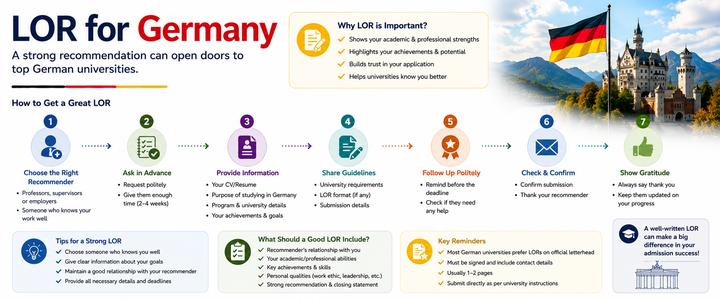
Recommendation letters
Internship or employment certificates, if relevant
Names, dates, grades, and degree titles should be consistent across the documents.
Application Process
The application route depends on the university and program. Applications may be submitted:
Directly through the university portal
Through uni-assist
Through uni-assist for preliminary document evaluation followed by a university application
Through another procedure specified by the institution
Step-by-Step Application Process
Identify your preferred specialization.
Decide whether you want a broad computer science degree or a specialized course.Search official degree databases and university websites.
Filter courses by degree level, language, intake, location, and tuition.Check academic eligibility.
Compare every prerequisite with your transcript and module descriptions.Confirm the language requirement.
Identify the accepted tests, minimum scores, and validity rules.Check APS and dMAT requirements.
Indian master’s applicants should examine the latest classification based on their exact previous degree.Prepare certified documents.
Follow the university’s rules for translations, certifications, formats, and file sizes.Write a course-specific motivation letter.
Explain why the curriculum, specialization, and institution match your background and goals.Apply through the correct platform.
Do not assume every course at the same university uses the same application route.Monitor the application portal.
Respond promptly if the institution requests additional documents.Accept the offer and complete enrollment requirements.
This may include paying the semester contribution, obtaining health insurance, and submitting original documents.Prepare financial and visa documentation.
Begin the visa process as soon as the admission and required documents are available.Arrange accommodation early.
Student housing is limited in many university cities.
Intakes and Application Timeline
The two main academic intakes are:
Winter Semester
The winter semester generally begins around September or October and offers the widest selection of programs.
Applications commonly open several months earlier. Many deadlines fall between May and July, although competitive programs may close earlier.
Summer Semester
The summer semester generally begins around March or April. Fewer programs admit students in summer, but several computer science master’s degrees offer both intakes.
Deadlines often fall between November and January, but they vary widely.
Recommended Preparation Timeline
| Time before enrollment | Recommended action |
|---|---|
| 12–15 months | Research programs and identify missing requirements |
| 9–12 months | Take language tests and begin APS-related preparation |
| 7–10 months | Collect transcripts, syllabi, and certified documents |
| 5–8 months | Submit applications according to individual deadlines |
| 3–6 months | Arrange finances, visa documents, and accommodation |
| 1–3 months | Complete enrollment, insurance, and travel preparation |
Students should follow the official course deadline rather than relying on a general national timeline.
Tuition Fees for Computer Science Courses
Many public universities do not charge regular tuition for consecutive bachelor’s and master’s programs. Students usually pay a semester contribution covering administrative costs and student services. The amount varies by institution.
Important exceptions include:
Public universities in Baden-Württemberg generally charge non-EU students €1,500 per semester, subject to legally defined exemptions.
The Technical University of Munich charges program-specific tuition to many students from non-European Economic Area countries.
Certain Bavarian institutions may charge international tuition under applicable state rules.
Continuing-education, executive, online, or non-consecutive programs may charge tuition.
Private universities usually charge substantially higher fees.
Students should verify both the tuition fee and semester contribution on the official page for their exact program. A statement that a German university is “public” does not guarantee that every student and every program is tuition-free.
Cost of Living
Living expenses depend heavily on the city, housing type, health insurance, and lifestyle. Munich, Frankfurt, Hamburg, Stuttgart, and central Berlin can be considerably more expensive than smaller university towns.
Common monthly expenses include:
| Expense | Indicative monthly range |
|---|---|
| Rent and utilities | €350–€900 or more |
| Food | €200–€350 |
| Health insurance | Approximately €120–€150 |
| Local transportation | Often partly covered by semester arrangements |
| Phone and internet | €25–€60 |
| Study materials and personal expenses | €100–€250 |
| Estimated total | Approximately €900–€1,400 or more |
These are planning estimates, not fixed government rates. Housing is usually the largest variable.
For visa purposes, applicants must demonstrate the officially required amount of financial resources. The current benchmark used for many student visa cases is €11,904 for one year, corresponding to €992 per month. This amount can change, so applicants should verify the latest requirement with the responsible German mission before transferring funds or opening a blocked account.
The official proof-of-funds figure should not be treated as a guarantee that it will cover every student’s actual expenses, especially in high-rent cities.
Scholarships for Computer Science Students
Fully funded awards for taught degrees are competitive, but international students can explore several sources.
DAAD Scholarships
The German Academic Exchange Service maintains scholarship opportunities for international students, graduates, and researchers. Relevant options may include STEM-focused study scholarships, research grants, development-related postgraduate programs, and country-specific funding.
Eligibility depends on the scholarship, nationality, academic level, work experience, and course.
Deutschlandstipendium
Participating universities award the Deutschlandstipendium to selected students based on academic achievement and additional criteria. It is generally worth €300 per month.
Students apply through their university, and availability differs between institutions.
Erasmus Mundus Joint Master’s Scholarships
Some computer science, data science, AI, cybersecurity, and digital-technology programs are offered jointly by European universities. Selected students may receive funding covering participation costs and contributions toward travel and living expenses.
These degrees are not necessarily completed entirely in Germany because mobility between participating countries is often required.
University Scholarships
Individual universities may offer:
Merit scholarships
Completion grants
Emergency assistance
Scholarships for international students
Research assistantships
Mobility grants
Many university awards are limited and may become available only after enrollment.
Foundations and External Organizations
Political, social, religious, and professional foundations fund selected students. These scholarships often consider academic achievement, social engagement, leadership, values, and German-language ability.
Students should not plan their entire degree on the assumption that a scholarship will be awarded. They need a realistic funding plan independent of uncertain scholarship results.
Part-Time Work and Internships
Eligible students from non-EU countries may generally work up to 140 full days or 280 half-days per year. Alternatively, applicable rules allow work of up to 20 hours per week during the lecture period. Different treatment can apply to certain university student-assistant roles and compulsory internships.
Computer science students commonly work as:
Student software developers
Research assistants
Teaching assistants
Working students in data or analytics teams
IT support assistants
Web developers
Software testers
Student DevOps or cloud assistants
Laboratory assistants
Technology interns
A working-student position can provide German workplace experience, professional contacts, and a potential route to full-time employment.
However, students should not depend entirely on part-time income. Securing a suitable technology position may take time, and academic workloads can be demanding. Immigration, tax, insurance, and working-time rules must also be followed.
Career Opportunities After Graduation
Computer science graduates in Germany can work across technology companies and traditional industries undergoing digital transformation.
Common roles include:
Software developer
Backend or frontend developer
Full-stack developer
Mobile application developer
Data scientist
Data engineer
Machine-learning engineer
AI engineer
Cybersecurity analyst
Security engineer
Cloud engineer
DevOps engineer
Site reliability engineer
Systems engineer
Embedded software engineer
Robotics engineer
Database specialist
IT consultant
Business intelligence analyst
Product analyst
Research engineer
Doctoral researcher
Potential employment sectors include:
Software and information technology
Automotive and mobility
Industrial automation
Telecommunications
Banking and financial technology
Insurance
Healthcare and medical technology
Logistics and supply chains
Energy and sustainability
E-commerce
Public-sector technology
Research institutes
Start-ups
Importance of German for Employment
Some international technology teams operate primarily in English, particularly in Berlin, Munich, Hamburg, and other major technology centers. Nevertheless, German can considerably expand the job market.
German becomes especially valuable for:
Client-facing positions
Consulting
Small and medium-sized employers
Public-sector projects
Business analysis
Product management
Roles involving local regulations or documentation
Workplace integration and networking
Students beginning an English-taught course should aim to develop German throughout their studies. Reaching B1 or B2 can make a meaningful difference during internship and graduate-job searches.
Post-Study Work Options
Eligible graduates from non-EU countries who complete a German university degree can apply for a residence permit valid for up to 18 months to search for qualified employment.
During this period, graduates may generally take up any type of employment while searching for an appropriate qualified position. Applicants normally need to demonstrate:
Successful completion of studies in Germany
Valid health insurance
Sufficient means of subsistence
Compliance with the applicable residence requirements
Once a suitable position is secured, the graduate can apply for an appropriate employment residence permit, such as a residence permit for qualified employment or an EU Blue Card where the conditions are met.
Salary thresholds and immigration conditions are updated periodically. Graduates should verify the rules applicable when they apply.
How to Choose the Right Computer Science Program
Compare the Core Curriculum
Two programs with similar names can have very different structures. Review the compulsory modules before examining attractive electives.
A program called “Data Science” may be mainly statistics, business analytics, or computer science. An “Artificial Intelligence” degree may emphasize mathematical research, robotics, cognitive science, or software applications.
Check Credit Requirements Before Applying
For a master’s degree, determine whether your previous studies satisfy requirements in:
Computer science
Mathematics
Theoretical computer science
Programming
Algorithms
Software engineering
Computer systems
Do this before paying application or document-evaluation fees.
Examine Assessment Methods
German courses may rely on:
A single final examination
Oral examinations
Programming projects
Laboratory work
Presentations
Research papers
Group projects
A thesis
Students accustomed to continuous assessment should prepare for courses where a large part of the grade depends on one examination.
Evaluate the City as Well as the University
Consider:
Rent levels
Student-housing availability
Local technology employers
Internship opportunities
Transportation
Language environment
Distance from major employment centers
Overall quality of student life
Investigate Research and Industry Connections
For research-oriented applicants, examine professors, laboratories, current projects, publications, and available thesis topics.
For industry-oriented applicants, look for internships, company projects, working-student opportunities, career fairs, and the surrounding employer ecosystem.
Common Application Mistakes
Applying Only to Famous Universities
Highly visible institutions receive large numbers of applications. A balanced shortlist should include programs selected for academic fit, not only reputation.
Ignoring Subject-Credit Requirements
Professional coding experience does not automatically compensate for missing university credits in algorithms, mathematics, or theoretical computer science.
Sending a Generic Motivation Letter
A strong letter connects the applicant’s background to the specific curriculum, research areas, and career goals.
Assuming Every Public University Is Free
Tuition exceptions exist by state, institution, student category, and program. Applicants must check the exact fee page.
Confusing English-Taught Modules with an English-Taught Degree
A university may offer some modules in English while requiring German for compulsory courses or administration.
Applying Too Late for APS or a Visa
Academic verification and visa processing can take significant time. These steps should be included in the initial application plan.
Choosing a Specialization Only Because It Is Popular
AI and data science programs can be mathematically demanding. Students should evaluate their preparation and interest honestly.
Underestimating Housing Difficulties
Admission does not guarantee student accommodation. Applications for residences should be submitted as early as permitted.
Relying on Part-Time Work to Fund Everything
Technology jobs are not guaranteed, especially during the first semester. Students need adequate financial reserves.
Application Checklist
Before submitting an application, confirm that you have checked:
The exact degree title and teaching language
Academic prerequisites
Required subject credits
Minimum grade requirement
Language-test requirement
Application platform
Application deadline
Certified-document requirements
Module descriptions or syllabus requirements
APS requirement
Current dMAT classification, if applicable
Tuition and semester contribution
Estimated living expenses
Scholarship deadlines
Intake availability
Internship or practical-semester requirements
Visa proof-of-funds requirement
Accommodation options
Frequently Asked Questions
Is Germany good for computer science?
Yes. Germany offers established universities, research institutes, industry-linked education, numerous master’s programs in English, and access to technology careers across several sectors. The best outcome depends on selecting a course that matches the student’s academic background and career plans.
Can I study computer science in Germany in English?
Yes. Many computer science master’s degrees are offered entirely in English. English-taught bachelor’s programs are available but are fewer than German-taught undergraduate courses.
Is computer science tuition-free in Germany?
Many public-university programs charge no regular tuition, but students normally pay a semester contribution. Exceptions include non-EU tuition at public universities in Baden-Württemberg, program-specific tuition at institutions such as the Technical University of Munich, and fees at private or specialized programs.
What is the duration of a computer science degree?
A bachelor’s degree normally takes three to three and a half years. A master’s generally takes one and a half to two years. Actual completion time can vary.
Can a BCA graduate apply for a master’s in computer science in Germany?
A BCA graduate can apply where the program accepts that qualification and the completed curriculum satisfies the required credits. Some universities may consider a three-year degree insufficient or may identify missing credits in mathematics, theoretical computer science, or systems. Eligibility must be checked course by course.
Can an electronics or electrical engineering graduate apply?
Yes, for programs that accept a related discipline. Admission is more likely when the previous degree includes sufficient programming, algorithms, computer systems, mathematics, or embedded-systems coursework. Work experience alone may not replace missing academic credits.
Is the GRE required?
Most computer science programs do not universally require the GRE, but selected universities or applicant categories may request it. Applicants must check the official admission regulations for each course.
Is German required for an English-taught program?
German is usually not an academic admission requirement when a program is taught entirely in English, unless the university states otherwise. However, learning German is strongly recommended for daily life, internships, networking, and employment.
Do Indian students need APS?
APS documentation is generally relevant to applicants with Indian academic qualifications. The exact requirement and stage at which it is needed depend on the applicant’s study and visa route.
Do all Indian computer science applicants need dMAT?
No. The requirement depends on the exact official title and classification of the applicant’s previous degree. Certain engineering-based computing degrees are listed as affected, while standalone computer science, BCA, IT, AI, data science, and cybersecurity titles are not automatically included. Applicants must check the latest APS India affected-fields list.
Can international students work during their studies?
Eligible third-country students may generally work up to 140 full days or 280 half-days per year or follow the applicable 20-hours-per-week option. Special rules can apply to compulsory internships and university assistant positions.
Can I stay in Germany after completing the degree?
Eligible non-EU graduates of German universities can apply for a residence permit of up to 18 months to search for qualified employment. After finding an appropriate position, they can apply for the relevant employment residence permit.
Which computer science specialization has the best career prospects?
Software engineering, data engineering, cloud computing, cybersecurity, AI, embedded systems, and enterprise technology can all offer opportunities. There is no single best specialization. Career prospects depend on technical ability, projects, internships, language skills, and market conditions.
Is a university of applied sciences good for computer science?
Yes. It can be an excellent choice for students seeking project-based teaching, practical laboratories, internships, and industry collaboration. Students interested in theoretical research or a doctorate may prefer a research-intensive university, although applied-sciences graduates can also pursue further academic study when they meet the requirements.
How many universities should I apply to?
There is no ideal number, but applicants should build a balanced shortlist. It should include ambitious options, programs closely matching their profile, and comparatively less competitive alternatives. Every application should still satisfy the formal prerequisites.
Final Thoughts
Computer science courses in Germany offer international students a wide range of pathways, from broad software and systems education to advanced specializations in artificial intelligence, cybersecurity, data science, robotics, and embedded computing.
Affordable public education is an important advantage, but applicants must look beyond the general idea of “free education.” Tuition exceptions, semester contributions, living expenses, subject-credit requirements, language rules, and immigration documentation can materially affect the study plan.
The strongest applications begin with curriculum matching. Students should compare their previous modules with the formal admission requirements, prepare APS and language documents early, and choose universities based on academic fit rather than reputation alone.
An English-taught program can provide entry into Germany’s academic system, while German proficiency, practical projects, internships, and working-student experience can substantially strengthen long-term career prospects.