Gisma University of Applied Sciences (Gisma) Summary
The Gisma University of Applied Sciences is a private university of applied sciences located in Potsdam, Brandenburg. Gisma University of Applied Sciences is a private English taught university. It is based in Potsdam, Germany and offers bachelor’s, master’s, MBA, foundation and pathway education in business, technology, data, artificial intelligence, engineering, entrepreneurship and marketing. Institutional Development 1999 – GISMA Business School was founded in Hanover with the support of the public and private regional authorities. The original school was dedicated to graduate education in management and to international cooperation. Its current academic profile is shaped by international business, management, data science, artificial intelligence, digital business, computer science, software engineering, engineering, project management, marketing, creative entrepreneurship, leadership and global MBA education. The location is important because The principal Potsdam location at Konrad-Zuse-Ring is located within the Berlin-Brandenburg innovation region. Additional teaching activity in Berlin and international links expose students to technology, startups, consulting, research parks, manufacturing, creative industries and multinational employers.
The course portfolio in this master file includes 5 undergraduate and 9 postgraduate entries, with subject combinations grouped where appropriate under their parent degrees. Undergraduate courses include International Business Management, Data Science, AI and Digital Business, Computer Science, Software Engineering, Business Management, the latter including Computer Science, Software Engineering, Business Management. The postgraduate programs include Data Science, AI and Digital Business, International Business Management Double Degree, Project Management, Business Management, Business Management and Marketing, Computer Science, Creative Entrepreneurship, Social Media and Influencer Marketing, Global MBA. Each course is still recorded as a parent qualification and specialisations are captured at the course entry level, not incorrectly as separate degrees.
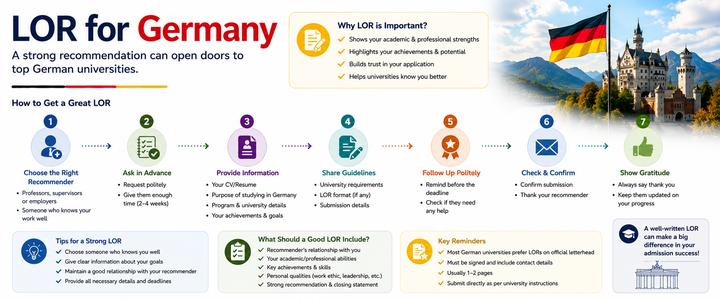
Implement program level admission controls. Applicants submit an online application with academic records, proof of identity and language. International credentials may need to be evaluated by APS or other evaluators. The recognised school qualification is required for bachelor entry. For master’s and MBA routes an eligible first degree will be needed, with subject preparation and any stated professional experience. Applicants are required to check the language of teaching, entry semester, subject prerequisites, selection procedure and document route before submission. International School or University Qualifications External evaluation, certified translations, APS documentation where applicable or other proof of academic equivalence may be required. Master’s committees may ask for module descriptions, portfolios, writing samples, professional experience, or interviews. Admission to doctoral studies is independent of admission to bachelor or master studies and generally requires a feasible research proposal, appropriate supervision and formal approval by the responsible faculty.
The 180-credit bachelor’s degree is priced at €13,825 annually for 2026 intakes. The tuition for a Master’s degree is €16,250 for 60 credits, €19,200 for 90 credits and €25,100 for 120 credits. The Global MBA is €22,500 for the 60 ECTS. Pathway combinations and double degrees have their own fee schedule. Institutional charges do not include rent, health insurance, food, learning materials, residence formalities, project costs or personal travel. Special tuition may be applied in the case of continuing-education, distance-learning, joint, second-degree or long-term study formats, if provided for by the relevant law or program regulation. Funding may include BAföG for eligible students, the Deutschlandstipendium, DAAD and Erasmus+ mobility support, foundations, research employment or university-specific awards, but each funding application is assessed independently from admission.
Career preparation is not a guarantyd placement scheme, but is a reflection of the subject mix of the university. Students may improve their professional readiness through internships, applied projects, research assistantships, employer events, language development, entrepreneurship services, international mobility and an externally partnered thesis.