
NCERT Class 9 Social Science Part 2 Released: Check Availability and Key Changes
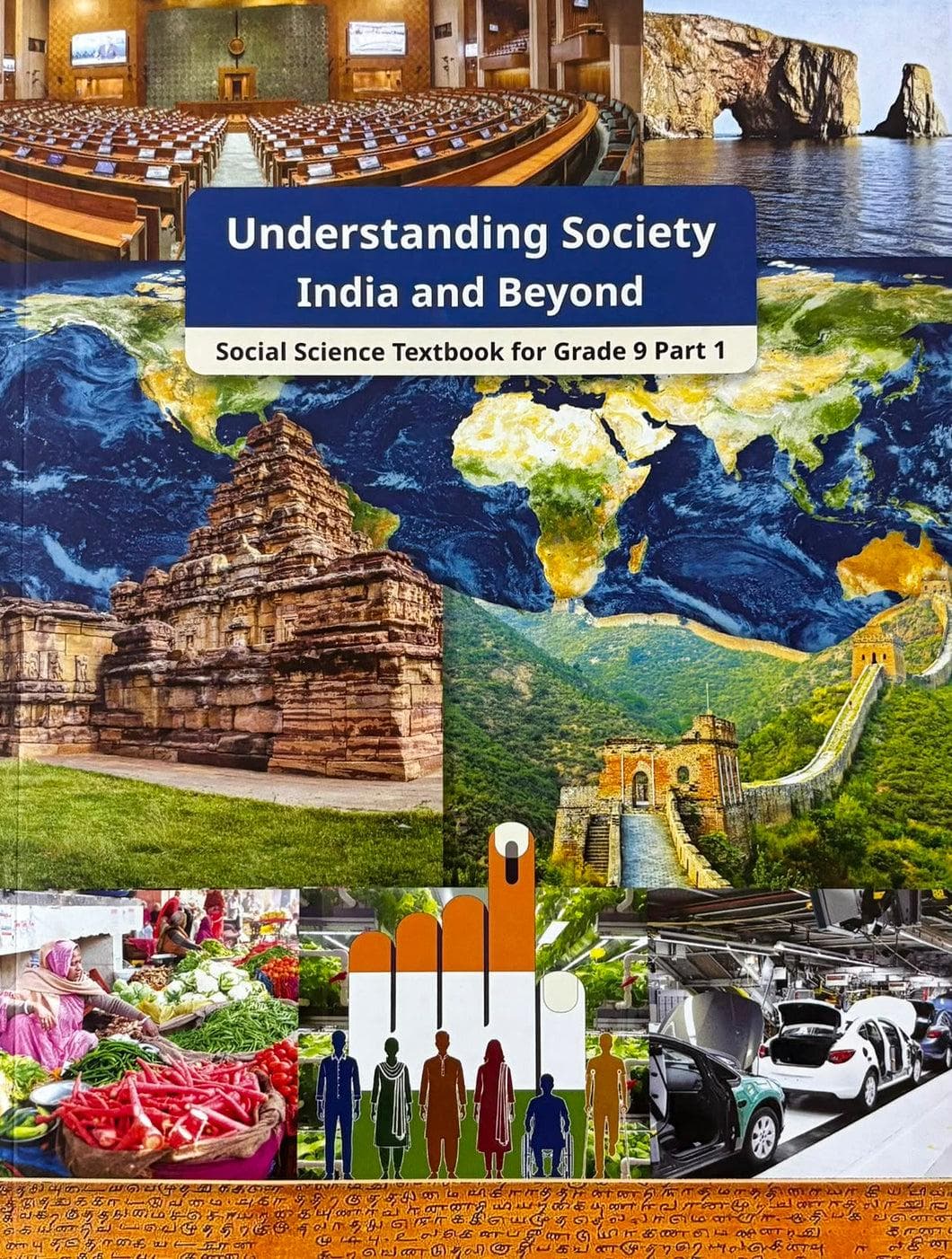
NCERT has released Part 2 of its new Class 9 Social Science textbook, Understanding Society: India and Beyond, for the 2026-27 academic session. Students, parents, teachers and schools can purchase the new book from September 29, 2026 through authorised NCERT sales channels.
The textbook completes the new two-part Social Science series introduced for Grade 9 as part of NCERT's curriculum transition under the National Curriculum Framework for School Education (NCF-SE) 2023 and the National Education Policy (NEP) 2020.
NCERT Class 9 Social Science Part 2: Key Details
| Particulars | Details |
|---|---|
| Book | Understanding Society: India and Beyond |
| Part | Part 2 |
| Subject | Social Science |
| Class | Grade 9 / Class 9 |
| Publisher | NCERT |
| Release Announcement | September 28, 2026 |
| Available From | September 29, 2026 |
| Academic Session | 2026-27 |
Where Can Students Buy the New NCERT Book?
NCERT has said the new textbook will be available through multiple authorised channels.
- NCERT Publication Division sales outlets
- NCERT-authorised textbook vendors
- Official NCERT online textbook and publication channels
- Amazon
Students should preferably purchase the authorised NCERT edition rather than relying on unofficial PDFs or recreated versions circulating online.
What Has Changed in Class 9 Social Science?
The biggest change is the broader restructuring of Social Science under the new Grade 9 curriculum. The new series moves away from treating History, Geography, Political Science and Economics simply as isolated textbook streams and instead promotes greater connection between social-science disciplines.
NCERT's official Grade 9 syllabus says the revised approach places emphasis on:
- Competency-based learning
- Experiential learning
- Cross-curricular connections
- Critical and reflective thinking
- Evidence-based reasoning
- Cultural rootedness
- Indian Knowledge Systems
- Inclusion and diversity
- Technology-supported learning
- Responsible citizenship
Part 1 and Part 2 Form the New Social Science Series
Part 1 of Understanding Society: India and Beyond was released earlier in 2026. It introduced the redesigned Social Science curriculum through an integrated structure rather than the older model of separate textbooks for major Social Science disciplines.
Part 2 now completes the second half of the Grade 9 learning material for schools following the revised NCERT curriculum.
Has NCERT Announced All Part 2 Chapter Changes?
Not yet in its release announcement. NCERT's September announcement confirms publication and availability of the textbook but does not provide a detailed chapter-by-chapter explanation of every change introduced in Part 2.
Students should therefore be cautious about unofficial websites claiming specific deleted, added or rewritten chapters unless those details can be checked against the actual NCERT textbook.
What Is the New Social Science Learning Approach?
According to NCERT's Grade 9 curriculum framework, Social Science education should help students understand society through historical, geographical, political, economic and cultural perspectives.
The curriculum also aims to develop the ability to:
- Source and validate information
- Interpret evidence and data
- Construct logical explanations
- Analyse social and economic issues
- Understand democratic and constitutional principles
- Develop awareness of inequality, conflict and environmental challenges
What Students and Teachers Should Do Now
Schools using the revised 2026-27 NCERT curriculum should confirm their Class 9 Social Science requirements and obtain the authorised Part 2 textbook through official channels.
Students who are already studying from Part 1 should also follow school instructions regarding the transition to Part 2, chapter sequence, classroom activities and assessment.
With the release of Understanding Society: India and Beyond Part 2, Class 9 students now have access to the next volume of NCERT's redesigned Social Science programme for the 2026-27 academic session.






q.jpg)


