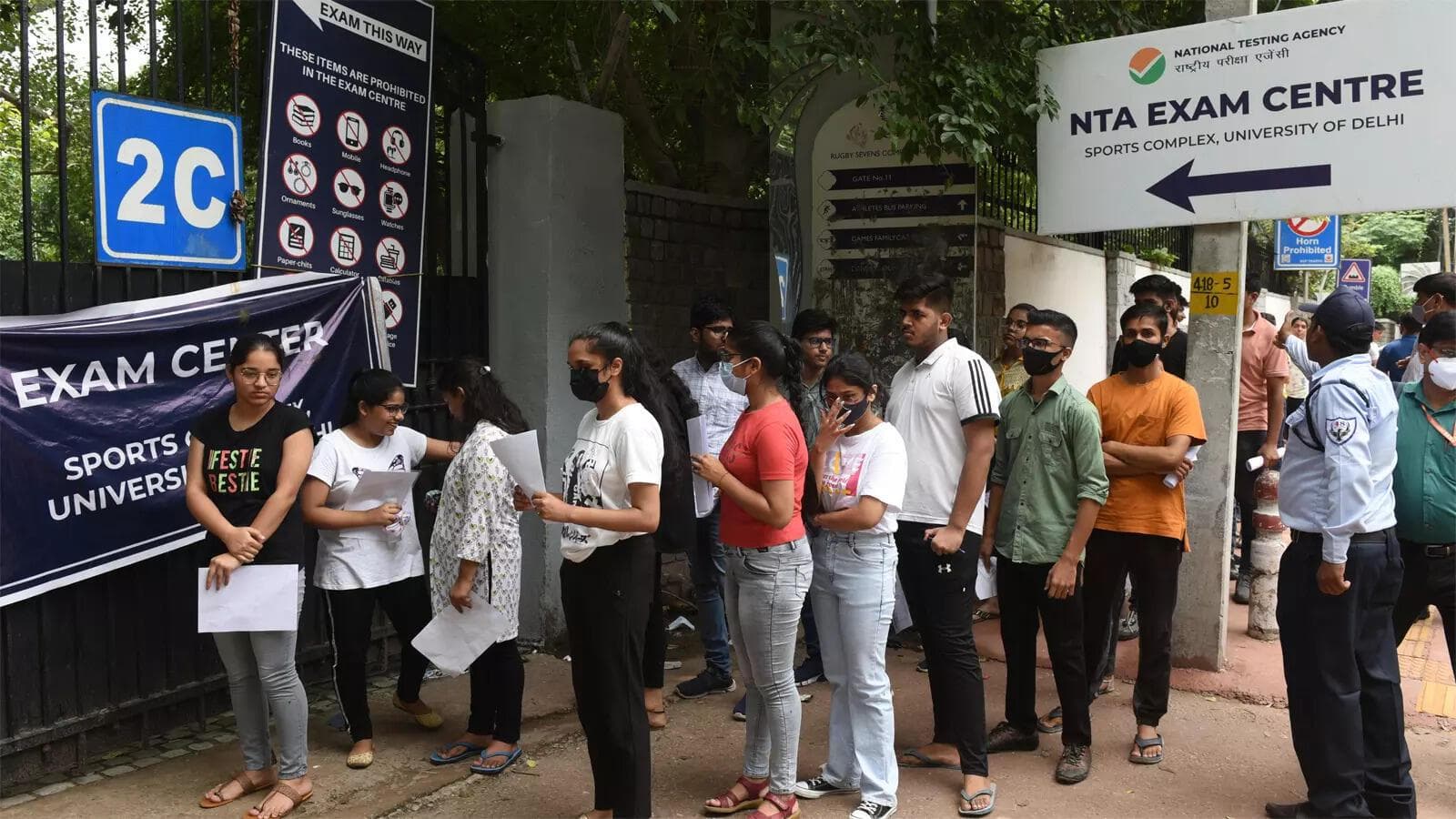
JEE, NEET and Other Entrance Exams Under Reform Review: Twice-a-Year NEET Proposal Explained
India's national entrance examination system could see major changes as the government and an expert task force examine proposals aimed at reducing student pressure, strengthening exam security and improving the way high-stakes tests are conducted.
One of the key proposals under discussion is to conduct examinations such as NEET more than once a year, giving candidates another opportunity instead of making admission depend on a single examination day. However, students should note that the proposal is still under review and has not yet become an official NEET examination rule.
Entrance Exam Reform 2026: What Is Being Proposed?
| Reform Area | Current Position |
|---|---|
| NEET Twice a Year | Proposed / under discussion |
| CUET Twice a Year | Included in reported reform proposals |
| JEE Main | Already conducted with two opportunities in a year |
| Two-Stage Competitive Exams | Recommended by stakeholders to the reform task force |
| Computer-Based Testing | Being considered for wider use |
| Final New Rules | Not yet notified |
Could NEET Be Conducted Twice a Year?
A recent Education Ministry draft reported in September 2026 proposes examining whether major entrance tests such as NEET and CUET can be conducted twice annually. The idea is broadly intended to reduce the consequences of a candidate having only one opportunity in an entire admission cycle.
If a twice-a-year model is eventually approved for NEET, it could potentially give medical aspirants a second opportunity to improve their performance. However, details such as score calculation, examination dates, counselling timelines and whether the better score would be considered have not been formally announced.
What About JEE Main?
JEE Main is different because candidates already receive two examination opportunities during the year. Government documents have previously stated that candidates can appear in both JEE Main sessions and the better performance is considered according to the applicable rules.
Therefore, the current reform debate is not simply about introducing two JEE Main attempts. Instead, broader discussions around JEE include examination design, security, coaching dependence, testing methods and possible changes to the assessment system.
Nilekani-Led Task Force Reviewing Exam Reforms
The government constituted a High-Powered Task Force chaired by Nandan Nilekani to examine reforms relating to the conduct, security, design and governance of public examinations, including examinations conducted by the National Testing Agency.
The areas being examined include:
- Examination security and prevention of malpractice
- Computer-based testing infrastructure
- Question-paper security
- Candidate verification and data protection
- Exam-centre standards
- Transparent answer-key and result systems
- Student accessibility and well-being
- Reducing excessive dependence on coaching
Two-Stage Exams Also Proposed
Some stakeholders have recommended that major competitive examinations move to a two-stage structure. Under such a system, the first examination could shortlist candidates and a second stage could be used for final selection.
Recommendations submitted to the task force have also included stronger independent audits, better examination-centre standards, digital evaluation systems and clearer procedures for technical failures and re-examinations.
Has NEET Twice a Year Been Confirmed?
No. Candidates should not treat the proposal as a confirmed change to the NEET calendar. Until the Ministry of Education, National Testing Agency or another competent authority publishes formal rules, the existing officially announced examination process remains applicable.
Students preparing for upcoming JEE, NEET or CUET examinations should therefore continue following the current syllabus, examination pattern and official schedule while monitoring government and NTA announcements for any future reform.



q.jpg)