

Engineers’ Day 2026: Who Was A. Lalitha, India’s First Female Engineer?
As India celebrates National Engineers’ Day 2026, the story of Ayyalasomayajula Lalitha offers another side of the country’s engineering history — one defined not by dams or public infrastructure alone, but by breaking an educational barrier that had excluded women almost completely. Widely recognised as India’s first female engineer, Lalitha entered the College of Engineering, Guindy in 1940 when engineering classrooms were almost entirely male and went on to build a professional career in electrical engineering.
Her achievement becomes even more remarkable when placed in the social context of her life. Lalitha had been married as a teenager and was widowed at 18 while caring for an infant daughter. Rather than accept the limited life expected of many widows in that era, she returned to education and pursued a profession in which there was virtually no precedent for women in India.
Her career later included work associated with electrical systems, transmission lines, substations and the Bhakra Nangal project, and she represented India at the first International Conference of Women Engineers and Scientists in New York in 1964.
A. Lalitha: Quick Facts
| Full Name | Ayyalasomayajula Lalitha |
| Born | August 27, 1919 |
| Field | Electrical Engineering |
| Known For | Widely recognised as India’s first woman engineer |
| Engineering College | College of Engineering, Guindy |
| Career | Central Standards Organisation and Associated Electrical Industries |
| International Milestone | First International Conference of Women Engineers and Scientists, 1964 |
Who Was Ayyalasomayajula Lalitha?
Lalitha was born in 1919 into a family that valued technical education.
Her father, Pappu Subba Rao, was himself an engineer and educator.
That support became extremely important when Lalitha’s life changed dramatically at a young age.
She Was Married at 15
Lalitha married as a teenager, following the social practices common in many families during the period.
By the age of 18, she had become a widow and was caring for a four-month-old daughter.
For many women in that era, widowhood sharply restricted:
- Education
- Employment
- Economic independence
- Social mobility
She Chose Education Instead of Dependence
Lalitha decided to continue studying so that she could support herself and her child.
She completed further education and turned toward engineering.
This was an extraordinary decision because engineering colleges had not been designed with female students in mind.
College of Engineering, Guindy Had No Woman Engineering Student
When Lalitha sought admission, engineering was essentially a male-only profession in India.
Her father supported her application to the College of Engineering, Guindy.
The institution ultimately admitted her as a special case.
She Entered CEG in 1940
Her admission represented more than one student joining a degree.
The college had to adapt to the presence of its first woman engineering student.
Facilities that students now take for granted were not designed for women.
There Was Initially No Female Peer Group
Lalitha entered an almost entirely male environment.
That meant she had to manage:
- Social isolation
- Institutional unfamiliarity
- Gender expectations
- Academic pressure
More Women Soon Joined Engineering at Guindy
Other pioneering women followed, including P.K. Thressia and Leelamma Koshie.
Together, these early students helped establish that engineering education did not have to remain exclusively male.
Was A. Lalitha the First Woman Engineer in India?
She is widely recognised as India’s first woman to qualify as an engineer.
Historical sources sometimes differ by one year when describing her graduation because of the academic calendar and wartime adjustments, with references to 1943 and 1944.
IEEE material identifies her as graduating in electrical engineering in 1943.
The key historical point is undisputed: Lalitha was the pioneering first woman engineering graduate in India.
She Trained at Jamalpur Railway Workshop
Her engineering education included practical training at the Jamalpur Railway Workshop.
This mattered because engineering education required practical exposure in addition to classroom study.
For a woman in the early 1940s, entering an industrial training environment was another major barrier crossed.
She Began Her Professional Career in Shimla
After completing her engineering education, Lalitha worked briefly with the Central Standards Organisation in Shimla.
This gave her an opportunity to begin working professionally in engineering rather than holding the degree only as an academic achievement.
She Later Joined Associated Electrical Industries
Lalitha’s longer professional career was associated with Associated Electrical Industries in Calcutta, now Kolkata.
Her work involved technical areas including:
- Transmission lines
- Substation layouts
- Electrical systems
- Engineering contracts
She Was Associated With Bhakra Nangal Work
IEEE accounts of her career note that she was associated with work involving electrical generators for the Bhakra Nangal Dam project.
Large hydroelectric projects require electrical engineers for:
- Generation systems
- Power transmission
- Substations
- Control systems
Her Career Was Not Symbolic
Lalitha was not simply “the first woman engineer” who disappeared from professional practice after graduation.
She worked as an engineer for decades.
This distinction matters because true inclusion means more than allowing someone to enter a classroom.
It also requires access to:
- Employment
- Professional development
- Recognition
- Leadership
International Professional Recognition Followed
In 1953, the Institution of Electrical Engineers in London elected Lalitha as an associate member.
She later became a full member.
Professional society membership helped connect engineers to international technical communities.
She Attended a Historic Women Engineers Conference in 1964
Lalitha was the only woman engineer representing India at the first International Conference of Women Engineers and Scientists in New York in 1964.
This placed her within a growing international movement seeking greater participation of women in technical professions.
Why Was the 1964 Conference Important?
Women engineers from different countries could share experiences involving:
- Professional discrimination
- Education
- Career advancement
- Leadership
- Technical societies
For women working as small minorities in their own countries, international networks provided important visibility.
Lalitha Became a Symbol for Women in Engineering
IEEE Women in Engineering in Hyderabad continues to commemorate her through the Lalitha Memorial Lecture.
The event recognizes women leaders in engineering and technology and keeps Lalitha’s pioneering career visible to new generations.
Why Her Story Matters on Engineers’ Day
Engineers’ Day discussions often focus on major infrastructure achievements.
Lalitha’s life reminds students that the engineering profession is also shaped by who is allowed to participate.
Women’s IIT Intake Has Risen, but the Gap Remains
The contrast between Lalitha’s era and 2026 is dramatic.
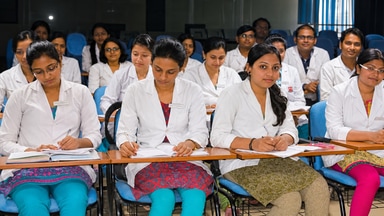
Thousands of women now enter IITs each year.
Women’s IIT intake rose by roughly 52% between 2019 and 2025.
Yet women still represented only around one-fifth of IIT admissions in the latest reported data.
Progress Is Real but Incomplete
Today women study:
- Computer Science
- Electrical Engineering
- Mechanical Engineering
- Aerospace
- Civil Engineering
- AI
But representation remains uneven across branches, faculty positions and senior technology leadership.
Why Girls Leave the Engineering Pipeline
Barriers can begin before university.
They may include:
- Stereotypes
- Limited role models
- Unequal coaching access
- Family expectations
- Concerns about campus safety
- Workplace culture
Engineering Is Not a “Male Aptitude”
There is no academic basis for treating engineering talent as gender-specific.
Success depends on:
- Preparation
- Interest
- Practice
- Opportunity
- Support
Role Models Affect Career Choices
A student who knows about women such as Lalitha can more easily imagine herself:
- Designing a chip
- Building a bridge
- Running a laboratory
- Leading an engineering company
- Founding a startup
Women Engineers Are Especially Important in AI
AI systems increasingly affect:
- Hiring
- Health care
- Finance
- Education
- Public services
Diverse engineering teams can help identify assumptions or design problems that homogeneous teams may overlook.
Product Design Also Benefits From Diverse Teams
Engineering products are used by:
- Women
- Men
- Children
- Older adults
- People with disabilities
Diverse teams can improve understanding of different user needs.
Getting Women Into College Is Not Enough
Institutions also need to consider:
- Hostels
- Campus safety
- Mentorship
- Research access
- Internships
- Placement opportunities
Retention in Engineering Careers Matters Too
A country can graduate large numbers of women engineers and still lose talent if women leave the technical workforce because of workplace barriers.
Long-term inclusion therefore involves both education and employment.
Mentorship Can Make a Difference
Women students benefit from access to:
- Faculty mentors
- Industry mentors
- Professional networks
- Alumni
Engineering Colleges Can Celebrate Lalitha Through Action
Rather than only organizing a speech, colleges can use her legacy to:
- Support women’s technical clubs
- Fund research projects
- Improve laboratories
- Create mentorship networks
- Track gender gaps
What Students Can Learn From A. Lalitha
Her story offers several lessons:
- Career barriers can be structural, not personal
- Education can create independence
- One pioneer can change institutional expectations
- Professional achievement matters after admission
Final Takeaway
Ayyalasomayajula Lalitha is widely recognised as India’s first female engineer, having entered the College of Engineering, Guindy in 1940 and completed electrical engineering at a time when Indian engineering education was overwhelmingly male.
She went on to build a professional career in electrical engineering, worked with Associated Electrical Industries, contributed to projects involving transmission systems and Bhakra Nangal equipment, and represented India at the first International Conference of Women Engineers and Scientists in New York in 1964.
Her achievement was particularly remarkable because she pursued engineering after being widowed at 18 while raising an infant daughter.
On Engineers’ Day 2026, Lalitha’s legacy remains relevant. India has made substantial progress in bringing women into engineering colleges, but gender gaps remain in admissions, specializations, faculty ranks and technology leadership.
Her story therefore represents more than a historical first. It is a reminder that technical talent can emerge wherever educational institutions are willing to open doors that once appeared permanently closed.