
Berlin is one of Europe’s most attractive university cities for international students. Germany’s capital combines major research universities, technical institutions, medical schools, business schools, arts academies, and practice-oriented universities of applied sciences.
Students can pursue programs in:
Computer Science
Artificial Intelligence
Engineering
Medicine
Business and Management
Economics
Political Science
International Relations
Data Science
Public Policy
Law
Humanities
Natural Sciences
Fine Arts
Music
Architecture
Design
Media
Sustainability
Most public universities in Berlin do not charge general tuition for regular bachelor’s degrees and consecutive master’s programs. Students instead pay a semester contribution that commonly includes administrative charges, student services, and a public transportation ticket.
Private universities and specialized graduate schools follow a different fee model and may charge substantial tuition.
The best university in Berlin depends on the student’s academic goals.
A student interested in engineering or computer science may prefer TU Berlin. Someone targeting humanities, economics, life sciences, or social sciences may consider Humboldt University or Freie Universität Berlin. Medical applicants may focus on Charité, while students pursuing art, music, architecture, or design may prefer Berlin University of the Arts.
This guide compares the best universities in Berlin by academic strengths, tuition, teaching language, admission requirements, career opportunities, and suitability for international students.
Best Universities in Berlin at a Glance
| University | Institution Type | Particularly Strong For | General Tuition Position |
|---|---|---|---|
| Humboldt University of Berlin | Public research university | Humanities, social sciences, economics, life sciences, mathematics | No general tuition for regular degrees |
| Freie Universität Berlin | Public research university | Political science, international relations, humanities, life sciences, data science | No general tuition for regular degrees |
| Technical University of Berlin | Public technical university | Engineering, computer science, architecture, technology, planning | No general tuition for regular degrees |
| Charité – Universitätsmedizin Berlin | Public university medical institution | Medicine, neuroscience, global health, clinical research | No tuition for standard medicine; selected master’s programs charge tuition |
| Berlin University of the Arts | Public arts university | Fine arts, music, design, architecture, performing arts | No general tuition for most regular programs |
| HTW Berlin | Public university of applied sciences | Engineering, computing, business, design, applied technology | No general tuition for most regular degrees |
| Berlin School of Economics and Law | Public university of applied sciences | Business, economics, law, public administration, security management | No general tuition for regular degrees |
| ESMT Berlin | Private business school | MBA, management, innovation, analytics, technology, sustainability | Private-school tuition |
| Hertie School | Private graduate university | Public policy, international affairs, governance, policy data science | Private-school tuition |
| SRH University Berlin | Private university | Business, computer science, engineering, design, media | Private-university tuition |
Why Study in Berlin?
Berlin offers an academic environment that is difficult to match in many other European cities.
The city combines:
Public research universities
Specialized technical education
University hospitals
International organizations
Startups
Research institutions
Technology companies
Cultural institutions
Government agencies
Creative industries
Nonprofit organizations
Consulting firms
Media companies
International Academic Environment
Berlin attracts students, researchers, artists, entrepreneurs, and professionals from around the world.
International students may find:
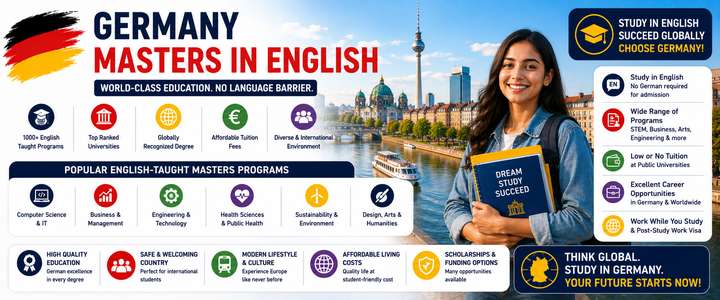
English-taught master’s programs
International research groups
Diverse student communities
Exchange programs
International career events
English-speaking startup environments
Cultural and professional networks
However, English-taught options are much more common at the master’s level than at the bachelor’s level.
Public-University Affordability
Regular programs at Berlin’s public universities generally charge no general tuition.
Students usually pay a semester contribution of approximately €350 to €400.
The contribution commonly covers:
University administration
Student services
Student representation
Student welfare
Public transportation
Continuing-education programs, professional degrees, and selected specialized master’s programs may charge tuition.
1. Humboldt University of Berlin
Humboldt University of Berlin is one of the city’s major public research universities.
Its academic profile covers humanities, social sciences, economics, law, mathematics, natural sciences, life sciences, education, and computer science.
Strong Study Areas
Humboldt University is particularly relevant for:
Philosophy
History
Cultural Studies
Social Sciences
Political Science
Economics
Business Administration
Law
Mathematics
Computer Science
Physics
Biology
Agricultural Sciences
Psychology
Education
Linguistics
Why Humboldt Stands Out
The university is suitable for students who want a research-oriented education with strong connections across different academic disciplines.
Its central Berlin location provides access to:
Libraries
Research institutes
Museums
Government institutions
Cultural organizations
Academic events
International organizations
Students interested in humanities and social sciences may benefit from Berlin itself as a location for historical, political, social, and cultural research.
English-Taught Study
English-taught programs are available mainly at the master’s level.
Possible English or internationally oriented options may include areas such as:
Economics
Agricultural Economics
Horticultural Science
Global Change Geography
Optical Sciences
Mind and Brain
British Studies
Social Sciences
Quantitative research
Interdisciplinary international programs
Students must check whether a program is:
Entirely taught in English
Primarily taught in English
Bilingual
German-taught with selected English modules
Tuition and Semester Fees
Humboldt University generally does not charge tuition for regular bachelor’s and consecutive master’s programs.
Students pay a semester contribution that includes university charges and the student transportation ticket.
The total is generally around €350 to €380 per semester, depending on the current ticket and contribution structure.
Fee-based continuing-education programs may follow a separate tuition model.
Admission
International applicants with foreign academic qualifications generally apply through the required international evaluation process.
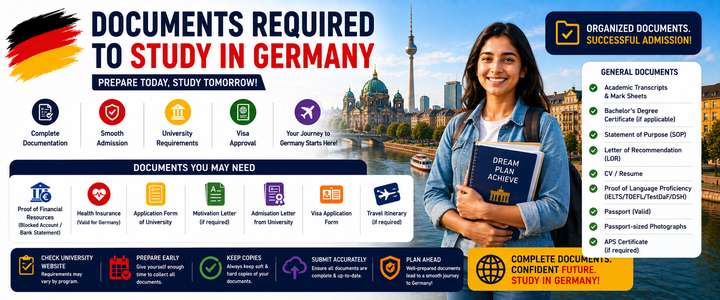
Documents may include:
School or university certificates
Transcripts
Certified translations
Language certificate
Passport
Curriculum vitae for selected programs
Program-specific documents
APS certificate where applicable
Best Suited For
Humboldt University may be best for students interested in:
Humanities
Social sciences
Economics
Life sciences
Mathematics
Interdisciplinary research
Central Berlin
A traditional research-university environment
2. Freie Universität Berlin
Freie Universität Berlin is a large public research university with major strengths in political science, international relations, humanities, life sciences, economics, law, area studies, and data-oriented research.
Its main campus is located in southwest Berlin.
Strong Study Areas
Freie Universität is particularly relevant for:
Political Science
International Relations
Global Studies
Economics
Business Administration
Law
History
Languages
Literature
Philosophy
Psychology
Biology
Chemistry
Pharmacy
Earth Sciences
Data Science
Environmental Studies
Area Studies
International and Area Studies
Freie Universität is particularly attractive for students interested in regional and global studies.
Academic areas include:
European Studies
North American Studies
Latin American Studies
East Asian Studies
Middle Eastern Studies
Islamic Studies
Global History
International Relations
Berlin’s diplomatic, political, and nonprofit sectors can provide additional exposure for students in these fields.
English-Taught Programs
English-taught master’s options may include:
Data Science
Physics
Mathematics
Bioinformatics
Computational Sciences
International Relations
North American Studies
Global History
Sociology
Political Science-related programs
Environmental and Earth Sciences
English Studies
Polymer Science
Some programs are jointly offered with other Berlin and regional universities.
Tuition and Semester Fees
Freie Universität generally does not charge tuition for regular programs.
For the 2026–27 winter semester, newly enrolled students pay a semester contribution of approximately €377.
The amount includes:
Administrative fee
Student services contribution
Student government contribution
Public transportation ticket
Social fund contribution
Continuing-education master’s programs may charge tuition.
Admission
Admission requirements depend on the degree.
International applicants may need:
Recognized academic qualification
Competitive grades
Program-specific academic credits
German or English proficiency
Certified academic records
Preliminary academic evaluation
APS certificate where applicable
Some competitive master’s programs reserve only a limited proportion of places for non-EU applicants educated outside Germany.
Best Suited For
Freie Universität may be ideal for:
Political science
International relations
Humanities
Life sciences
Pharmacy
Data science
Area studies
Students seeking a green campus outside the busiest city center
3. Technical University of Berlin
Technical University of Berlin is the city’s leading public technical university.
It offers programs across engineering, computer science, natural sciences, architecture, planning, economics, management, and technology.
Strong Study Areas
TU Berlin is particularly strong in:
Computer Science
Electrical Engineering
Mechanical Engineering
Civil Engineering
Architecture
Urban Planning
Transportation
Energy Engineering
Mathematics
Physics
Process Engineering
Environmental Engineering
Industrial Engineering
Information Systems
Data and Communication Technology
Why TU Berlin Stands Out
TU Berlin provides access to a large technical and innovation ecosystem.
Students may benefit from:
Engineering laboratories
Startup support
Technology projects
Industry partnerships
Research institutes
International technical communities
Berlin’s software and startup market
The university is especially attractive for students interested in connecting engineering with sustainability, urban development, mobility, energy, or digital technology.
English-Taught Programs
English-taught master’s options may be available in areas such as:
Computer Science
Scientific Computing
Computational Engineering
Space Engineering
Global Production Engineering
Urban Management
Environmental Planning
Energy-related fields
Information systems
Interdisciplinary technical programs
Most bachelor’s programs and many master’s degrees still require German.
Students should not assume that all technical programs can be completed entirely in English.
Tuition and Semester Fees
TU Berlin generally does not charge tuition for regular consecutive programs.
The semester contribution for the 2026–27 winter semester is approximately €376, including the public transportation ticket.
Continuing-education programs may charge tuition. Examples can include selected international engineering, urban management, production, and professional master’s programs.
Admission
Applicants may need:
Recognized secondary or university qualification
Required subject-specific academic credits
Mathematics preparation
German or English proficiency
Preliminary document evaluation
Complete module descriptions
APS certificate where applicable
For many master’s programs, applicants are assessed on the detailed content of their previous degree rather than only the degree title.
Best Suited For
TU Berlin may be best for:
Engineering
Computer science
Architecture
Urban planning
Transportation
Energy
Technology entrepreneurship
Industrial engineering
Students seeking a public technical university in a major city
4. Charité – Universitätsmedizin Berlin
Charité is one of Germany’s largest and most important university medical institutions.
It provides medical education, clinical training, health-science programs, biomedical research, and postgraduate study across several Berlin hospital campuses.
Strong Study Areas
Charité is particularly relevant for:
Human Medicine
Dentistry
Neuroscience
Infectious Diseases
Immunology
Oncology
Cardiovascular Medicine
Global Health
Public Health
Molecular Medicine
Medical Research
Health Sciences
Medicine
The Human Medicine program:
Leads to the Medical State Examination
Is taught in German
Has restricted admission
Lasts approximately 13 semesters
Includes clinical training
Requires advanced German proficiency
The standard medical program does not charge tuition, although enrollment and semester fees apply.
English-Taught Graduate Programs
English graduate options may include:
International Health
Molecular Medicine
Medical Neurosciences
Public Health-related study
Epidemiology
Biomedical research
Specialized clinical science programs
Some of these graduate programs charge tuition even though the standard medical degree does not.
For example, selected molecular medicine and medical neuroscience programs may charge approximately €2,500 per semester.
Clinical and Research Environment
Students may gain access to:
Large university hospitals
Specialized clinical departments
International research projects
Diverse patient populations
Medical technology
Clinical trials
Translational medicine
Public health organizations
Best Suited For
Charité may be ideal for students interested in:
Medicine
Dentistry
Neuroscience
Global health
Clinical research
Molecular medicine
Public health
Hospital-based education
5. Berlin University of the Arts
Berlin University of the Arts is one of Germany’s largest institutions dedicated to art, design, music, architecture, and performance.
It offers an environment that connects academic training with Berlin’s creative and cultural sectors.
Strong Study Areas
Students may study:
Fine Arts
Music
Performing Arts
Acting
Musical Theater
Product Design
Fashion Design
Visual Communication
Architecture
Art and Media
Sound
Composition
Music Education
Art Education
Admission and Artistic Selection
Admission is commonly based on artistic ability rather than academic grades alone.
Depending on the program, applicants may need:
Portfolio
Audition
Entrance examination
Artistic assignment
Interview
Previous training
Language certificate
Academic qualification
Creative programs can be extremely selective.
Teaching Language
Many undergraduate programs require German.
Selected graduate, international, or specialized programs may use English, but students must verify the exact language requirements.
Even when teaching is partly in English, German can be valuable for:
Studio collaboration
Local projects
Internships
Freelance work
Cultural networking
Tuition and Semester Fees
Most regular programs do not charge general tuition.
Students pay semester contributions.
The current total is approximately €360 to €380 per semester, depending on the semester and transportation-ticket arrangement.
Selected continuing-education master’s programs charge tuition.
Career Environment
Berlin provides opportunities in:
Galleries
Museums
Music
Film
Theater
Advertising
Fashion
Design studios
Architecture
Cultural organizations
Freelance creative work
Digital media
Best Suited For
Berlin University of the Arts may be best for students pursuing:
Fine arts
Music
Performing arts
Design
Architecture
Visual communication
Creative careers in Berlin
6. HTW Berlin
HTW Berlin is a public university of applied sciences with a strong emphasis on practical education, industry projects, internships, and career preparation.
It offers programs in engineering, computer science, business, design, culture, and environmental technology.
Strong Study Areas
HTW Berlin is particularly relevant for:
Computer Science
Cybersecurity
Mechanical Engineering
Electrical Engineering
Renewable Energy
Business
International Business
Construction and Real Estate
Design
Fashion
Museum Studies
Game Design
Environmental Technology
Practice-Oriented Study
Programs commonly include:
Applied projects
Laboratory work
Internships
Industry collaboration
Team assignments
Practical examinations
Career-focused teaching
This structure can appeal to students who prefer direct professional preparation over a highly theoretical research curriculum.
English-Taught Programs
English options include selected programs such as:
International Business
International and Development Economics
Project Management and Data Science
Business Administration and Engineering
International programs in engineering or management
Some regular English programs are tuition-free, while advanced professional master’s degrees may charge tuition.
Tuition and Semester Fees
Most regular programs do not charge general tuition.
Students pay a semester contribution that supports administration, student services, and transportation.
Selected advanced master’s programs can charge tuition ranging from a few thousand euros to more than €15,000 for the complete program.
Best Suited For
HTW Berlin may suit students interested in:
Applied engineering
Computing
International business
Design
Industry-oriented study
Internships
Practical career preparation
7. Berlin School of Economics and Law
The Berlin School of Economics and Law, commonly known as HWR Berlin, is a public university of applied sciences specializing in business, economics, law, public administration, and security management.
Strong Study Areas
Students can pursue:
Business Administration
International Business
Economics
Finance
Accounting
Taxation
Marketing
Entrepreneurship
International Management
Public Administration
Business Law
Security Management
Police and Public-Sector Studies
English-Taught Programs
English-taught options may include:
International Business Management
International Finance
International Economics
Political Economy of European Integration
International Marketing Management
Global Supply Chain and Operations Management
International Security Management
The International Business Management bachelor’s is taught in English and includes international mobility and internship components.
Tuition and Semester Fees
Regular bachelor’s and master’s programs generally do not charge tuition.
For the 2026–27 winter semester, full-time students pay a semester contribution of approximately €380.
The contribution includes:
Administrative fee
Student services
Student representation
Public transportation ticket
Career Environment
HWR students may find opportunities in:
Banking
Consulting
Government
Public administration
Finance
Accounting
Logistics
International business
Security organizations
Nonprofit institutions
Best Suited For
HWR Berlin may be best for students interested in:
Affordable business education
Finance
Economics
Public administration
Business law
International management
Practice-oriented study
8. ESMT Berlin
ESMT Berlin is a private graduate business school located in central Berlin.
It focuses on management, leadership, technology, innovation, entrepreneurship, analytics, and sustainability.
Strong Study Areas
ESMT offers programs connected with:
Global Management
Business Analytics
Artificial Intelligence
Innovation
Entrepreneurship
Sustainability
Strategy
Finance
Digital Transformation
Leadership
Main Programs
Students may consider:
Master in Global Management
Master in Analytics and Artificial Intelligence
Master in Innovation and Entrepreneurship
Full-Time MBA
Part-Time MBA
Executive MBA
Global Online MBA
Executive education
Tuition
The current full tuition for ESMT’s two-year master’s programs is approximately €36,000.
The Full-Time MBA costs approximately €50,000.
Scholarships and tuition reductions are available for selected applicants, but students should not assume they will receive financial assistance.
Career Advantages
ESMT may appeal to students seeking:
Structured career services
Corporate recruitment
Startup access
Technology management
Consulting careers
International cohorts
Smaller classes
Leadership development
Best Suited For
ESMT may be best for:
MBA candidates
Technology management
Analytics and AI for business
Consulting
Sustainability
Entrepreneurship
Students who can justify private-school tuition
9. Hertie School
Hertie School is a private graduate university specializing in public policy, international affairs, governance, and data science for public decision-making.
Its central Berlin location places students close to government institutions, embassies, international organizations, policy institutes, foundations, and nonprofit organizations.
Strong Study Areas
Hertie focuses on:
Public Policy
International Affairs
Governance
Political Economy
Public Management
Security
Human Rights
Sustainability
European Affairs
Data Science for Public Policy
Digital Governance
Main Programs
Graduate options include:
Master of Public Policy
Master of International Affairs
Master of Data Science for Public Policy
Executive Master of Public Administration
Doctoral programs
Dual and double degrees
The main master’s programs are taught in English.
Tuition
The regular tuition for a two-year master’s program is approximately €38,500.
Full and partial scholarships are available for selected candidates.
Scholarship themes may include:
Human rights
Digital governance
Data for public good
Sustainability
Leadership
Regional diversity
Career Opportunities
Graduates may work in:
Government
International organizations
Public-sector consulting
Think tanks
Nonprofit organizations
Policy research
Diplomacy
Foundations
Data and governance roles
Best Suited For
Hertie School may be ideal for students targeting:
Public policy
International affairs
Government
Governance
Policy data science
Human rights
International organizations
10. SRH University Berlin
SRH University is a private institution offering career-oriented programs across business, technology, engineering, media, and design.
It can be relevant for international students seeking structured English-taught programs and a private-university learning environment.
Strong Study Areas
Programs may include:
Computer Science
Artificial Intelligence
Cybersecurity
International Business
Supply Chain Management
Engineering
Renewable Energy
Automotive Technology
Design
Media
Film
Music
Hospitality
Entrepreneurship
Teaching Approach
The institution emphasizes:
Project-based study
Practical assignments
Industry applications
Smaller learning groups
Career preparation
International classrooms
Tuition
SRH is financed through tuition fees.
Program costs vary by:
Degree
Duration
Campus
EU or non-EU status
Fast-track or standard-track format
Non-EU students may pay approximately €5,000 to €7,000 per semester for many Berlin-based programs.
Additional enrollment charges can apply.
Best Suited For
SRH may suit students who:
Want an English-taught private program
Prefer smaller classes
Need a clearly structured international pathway
Are interested in practical computing, business, engineering, or design
Can manage private-university tuition
Best Universities in Berlin by Subject
Computer Science and Artificial Intelligence
Strong choices include:
TU Berlin
Humboldt University
Freie Universität Berlin
HTW Berlin
ESMT Berlin for business-oriented analytics and AI
SRH University for private applied programs
TU Berlin is particularly suitable for technical computer science, distributed systems, software, networks, and engineering-oriented computing.
Freie Universität offers strong data-science and research-oriented pathways, while HTW focuses more heavily on practical applications.
Engineering
Strong choices include:
TU Berlin
HTW Berlin
SRH University
Berlin University of Applied Sciences and Technology
TU Berlin is the strongest research-focused choice, while HTW may be more suitable for students who want applied projects and internships.
Business and Management
Strong choices include:
ESMT Berlin
HWR Berlin
HTW Berlin
Humboldt University
Freie Universität Berlin
SRH University
Choose ESMT for premium graduate business education and HWR for affordable public, practice-oriented business study.
Medicine and Health Sciences
Strong choices include:
Charité
Humboldt University for related life-science fields
Freie Universität Berlin for biology, pharmacy, and related sciences
Alice Salomon University for selected health and social-care fields
Charité is the main institution for physician training and advanced medical research.
Political Science and International Relations
Strong choices include:
Freie Universität Berlin
Humboldt University
Hertie School
HWR Berlin
Freie Universität and Humboldt offer public-university academic pathways, while Hertie provides specialized English graduate programs with a policy-oriented professional focus.
Economics
Strong choices include:
Humboldt University
Freie Universität Berlin
HWR Berlin
Hertie School for policy economics
ESMT for management-focused applications
Art, Music and Design
Strong choices include:
Berlin University of the Arts
HTW Berlin
SRH University
Weißensee Academy of Art Berlin
Berlin University of the Arts is the strongest broad public institution for fine arts, music, architecture, and performance.
Public Policy
Strong choices include:
Hertie School
Freie Universität Berlin
Humboldt University
HWR Berlin
Public vs Private Universities in Berlin
Public Universities
Major public institutions include:
Humboldt University
Freie Universität Berlin
TU Berlin
Charité
Berlin University of the Arts
HTW Berlin
HWR Berlin
Advantages include:
No general tuition for regular programs
Research facilities
Broad subject choices
Public recognition
Lower total academic cost
Possible disadvantages include:
Larger classes
Competitive admission
More administrative responsibility
Fewer English bachelor’s programs
Limited individual career coaching
Private Universities
Private options include:
ESMT Berlin
Hertie School
SRH University
Berlin International University of Applied Sciences
Bard College Berlin
Advantages may include:
English-taught programs
Smaller classes
Structured support
International cohorts
Career services
Specialized programs
The primary disadvantage is tuition.
English-Taught Programs in Berlin
Berlin has many English-taught master’s degrees but fewer fully English bachelor’s programs.
English Bachelor’s Options
Potential options include:
International Business Management at HWR Berlin
International Business at HTW Berlin
Selected private programs at SRH
Liberal arts programs at private institutions
Selected design and creative programs
English Master’s Options
English graduate programs are available in:
Computer Science
Data Science
Mathematics
Physics
International Relations
Global History
Economics
Public Policy
International Affairs
Business
Artificial Intelligence
Global Management
Public Health
Neuroscience
Molecular Medicine
Students must verify the language for every program individually.
Tuition and Semester Costs
Public Universities
Regular programs generally charge no tuition.
Students may pay approximately €350 to €400 per semester.
The amount commonly includes the student public transportation ticket.
Fee-Based Public Programs
Tuition may apply to:
Continuing-education master’s degrees
Professional programs
Executive education
Selected international graduate courses
Specialized health-science programs
Private Universities
Private tuition can range from approximately:
€5,000 per semester for selected bachelor’s programs
€20,000 to €40,000 for specialized master’s degrees
€35,000 to €50,000 for major business-school programs
Cost of Living in Berlin
Berlin is no longer a low-cost student city.
Students should prepare a realistic monthly budget of approximately €1,000 to €1,300.
Accommodation
Current rental estimates can include:
Shared apartment room: approximately €550 to €750 per month
Private studio: approximately €800 to €1,200 or more
Student residence: potentially lower, but availability is limited
Other Monthly Expenses
Students should budget for:
Health insurance
Food
Phone and internet
Broadcasting contribution
Study materials
Personal expenses
Clothing
Entertainment
Additional transportation
Housing Deposit
Landlords commonly request a deposit equivalent to two or three months of basic rent.
Students should have additional funds available for:
Temporary accommodation
First rent
Deposit
Furniture
Household supplies
Registration costs
Admission Requirements
Bachelor’s Programs
Applicants may need:
Recognized school-leaving certificate
Direct university entrance eligibility
Studienkolleg where necessary
German-language certificate
English certificate for English programs
Subject-specific prerequisites
Portfolio or audition for creative programs
Master’s Programs
Applicants commonly need:
Relevant bachelor’s degree
Required academic credits
Competitive grades
Complete transcripts
Module descriptions
German or English proficiency
Curriculum vitae
Motivation letter
Recommendation letters for selected programs
Work experience for professional courses
APS certificate where applicable
Requirements for Indian Students
Indian applicants may need:
Class 10 and Class 12 certificates
Bachelor’s degree documents
Semester-wise transcripts
Passport
Language certificate
APS certificate
Curriculum vitae
Motivation letter
Complete module descriptions
Preliminary academic evaluation
Financial proof for the visa
Applicants should begin document verification early because processing can affect application and visa timelines.
Working While Studying
Berlin offers opportunities in:
Software development
Startups
Hospitality
Retail
Research
University departments
Consulting
Media
Design
Marketing
Nonprofit organizations
Public policy
Students may seek:
Working-student roles
Research-assistant positions
Internships
Student office jobs
Freelance creative projects
Part-time service work
Competition can be high, and German often expands the range of available positions.
Students should not depend entirely on part-time work to finance their studies.
Is German Required?
German may not be required for a completely English-taught program.
However, it improves access to:
Internships
Student jobs
Local companies
Public-sector roles
Healthcare
Administration
Housing communication
Graduate employment
A practical plan is:
A1 or A2 before arrival
B1 during the first year
B2 before major job applications
Medicine, law, teaching, public administration, and many undergraduate programs require advanced German.
How to Choose the Right Berlin University
Choose by Subject
Select TU Berlin for engineering and technology, Charité for medicine, UdK for arts, HWR for applied business, and Hertie for public policy.
Compare Teaching Style
Research universities emphasize:
Theory
Independent study
Academic research
Large course structures
Universities of applied sciences emphasize:
Projects
Internships
Applied assignments
Career preparation
Check Tuition Carefully
Do not assume every program at a public institution is tuition-free.
Review the exact degree’s fee page.
Calculate Housing Costs
Housing may be the largest expense.
A tuition-free university does not automatically make Berlin affordable.
Review Career Access
Consider:
Internship requirements
Career services
Employer partnerships
Alumni networks
Relevant industries
German-language expectations
Common Mistakes
Choosing only by general university reputation
Assuming all programs are taught in English
Underestimating Berlin rent
Applying without complete module descriptions
Confusing a university with a university of applied sciences
Assuming all public programs are tuition-free
Applying late for housing
Depending entirely on part-time employment
Ignoring German-language development
Selecting a private university without calculating return on investment
Applying only to Humboldt, Freie Universität, and TU Berlin
Missing portfolio or audition deadlines for creative programs
Frequently Asked Questions
Which is the best university in Berlin?
Humboldt University, Freie Universität Berlin, and TU Berlin are the city’s leading broad research universities. The best choice depends on the subject.
Which university is best for computer science?
TU Berlin is one of the strongest choices. Freie Universität, Humboldt University, and HTW Berlin also offer relevant programs.
Which university is best for engineering?
TU Berlin is the main research-focused engineering university. HTW Berlin provides more applied and practice-oriented engineering programs.
Which university is best for medicine?
Charité is Berlin’s primary university medical institution.
Which university is best for business?
ESMT Berlin is a leading private graduate business school, while HWR Berlin offers affordable public business programs.
Which university is best for political science?
Freie Universität Berlin, Humboldt University, and Hertie School are strong options.
Which university is best for art and design?
Berlin University of the Arts is one of the city’s strongest choices for art, music, design, architecture, and performance.
Are Berlin universities tuition-free?
Most regular programs at public universities charge no general tuition. Students pay semester contributions. Private and professional programs charge tuition.
How much is the semester fee?
Public-university semester contributions are generally around €350 to €400.
Can I study in English?
Yes, particularly at the master’s level. Fully English bachelor’s programs are less common.
How much does it cost to live in Berlin?
A realistic student budget is approximately €1,000 to €1,300 per month. Private accommodation can push the cost higher.
Is housing difficult to find?
Yes. Students should begin searching immediately after receiving admission.
Is Berlin good for international students?
Berlin offers international communities, English-taught programs, research, startups, culture, and career opportunities. Its main challenges are housing, administration, and rising living costs.
Is German necessary?
It may not be needed for admission to an English program, but German significantly improves everyday life, internships, and employment prospects.
Final Verdict
Berlin offers universities for almost every academic and professional goal.
Choose Humboldt University for humanities, social sciences, economics, life sciences, and interdisciplinary research.
Choose Freie Universität Berlin for political science, international relations, humanities, pharmacy, life sciences, and data science.
Choose TU Berlin for engineering, computer science, architecture, urban planning, energy, and technology.
Choose Charité for medicine, neuroscience, global health, and clinical research.
Choose Berlin University of the Arts for fine arts, music, design, architecture, and performance.
Choose HTW Berlin for applied engineering, computing, international business, and practical career preparation.
Choose HWR Berlin for affordable business, economics, finance, law, and public administration.
Choose ESMT Berlin for MBA, global management, technology, analytics, innovation, and entrepreneurship.
Choose Hertie School for public policy, international affairs, governance, and data science for public decision-making.
Choose SRH University for structured English-taught private programs in business, computing, engineering, and design.
The best university is the institution where:
The program matches your academic background
The curriculum supports your career goals
The teaching language works for you
The admission requirements are realistic
The complete cost is manageable
The teaching style suits your preferences
Relevant internships and employers are accessible