
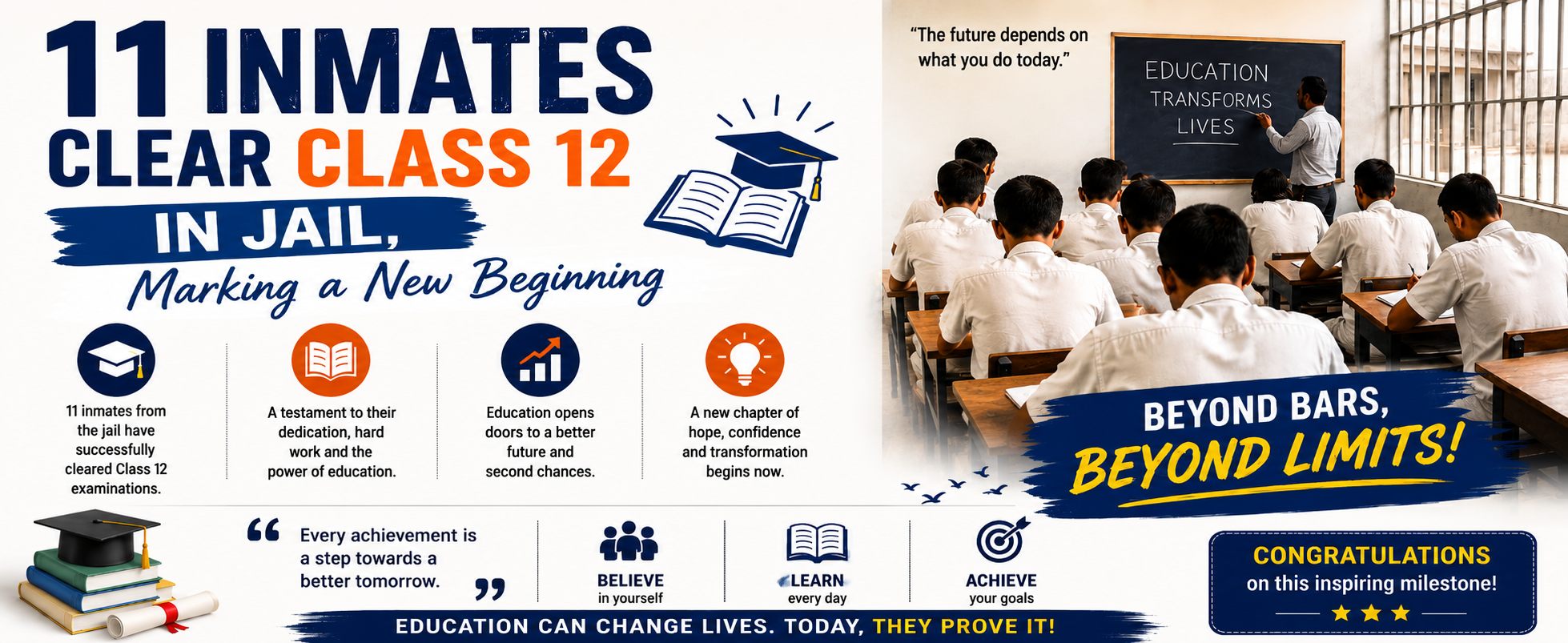
In an inspiring example of transformation through education, 11 inmates at Lajpore Central Jail have successfully cleared the Class 12 examination, achieving a 100% pass result. The achievement highlights the growing emphasis on rehabilitation and reform within the prison system.
The inmates who passed the examination include individuals serving sentences for serious offences such as murder, attempted murder, and cases under the NDPS Act. Despite their circumstances, they demonstrated dedication and discipline, using education as a path toward self-improvement and a better future.
Jail authorities stated that educational initiatives have become a key part of the rehabilitation process. By encouraging inmates to pursue academic goals, the administration aims to shift their focus from past actions to personal growth and positive change. The success of these inmates has also motivated others within the prison to take up studies and work towards rebuilding their lives.
Education as a Tool for Reform
Among the successful candidates is Rohit Ratiram Yadav, who is serving a life sentence in a murder case. Other inmates, including Sarfaraz Iqbal Patel, serving a 20-year sentence under the NDPS Act, and Sahil Suresh Patel, serving a seven-year sentence for attempted murder, also cleared the examination.
According to officials, the inmates prepared for the exams with consistent effort and determination. The jail administration provided academic support, study materials, and guidance to help them complete their education while serving their sentences.
A New Beginning Behind Bars
Authorities at Lajpore Jail believe that such educational programmes play a crucial role in transforming the mindset of inmates. Many prisoners have reportedly expressed regret for their past actions and are now focused on becoming responsible individuals who can contribute positively to society after their release.
This achievement has become a symbol of hope within the prison, demonstrating that change is possible even in the most challenging circumstances. It also reflects the importance of providing opportunities for learning and self-development, regardless of one’s background.
Encouraged by this success, several inmates have shown interest in continuing their education further, including pursuing higher studies and skill-based training programmes. Officials believe that such initiatives not only help in personal development but also improve the chances of reintegration into society after release.

