
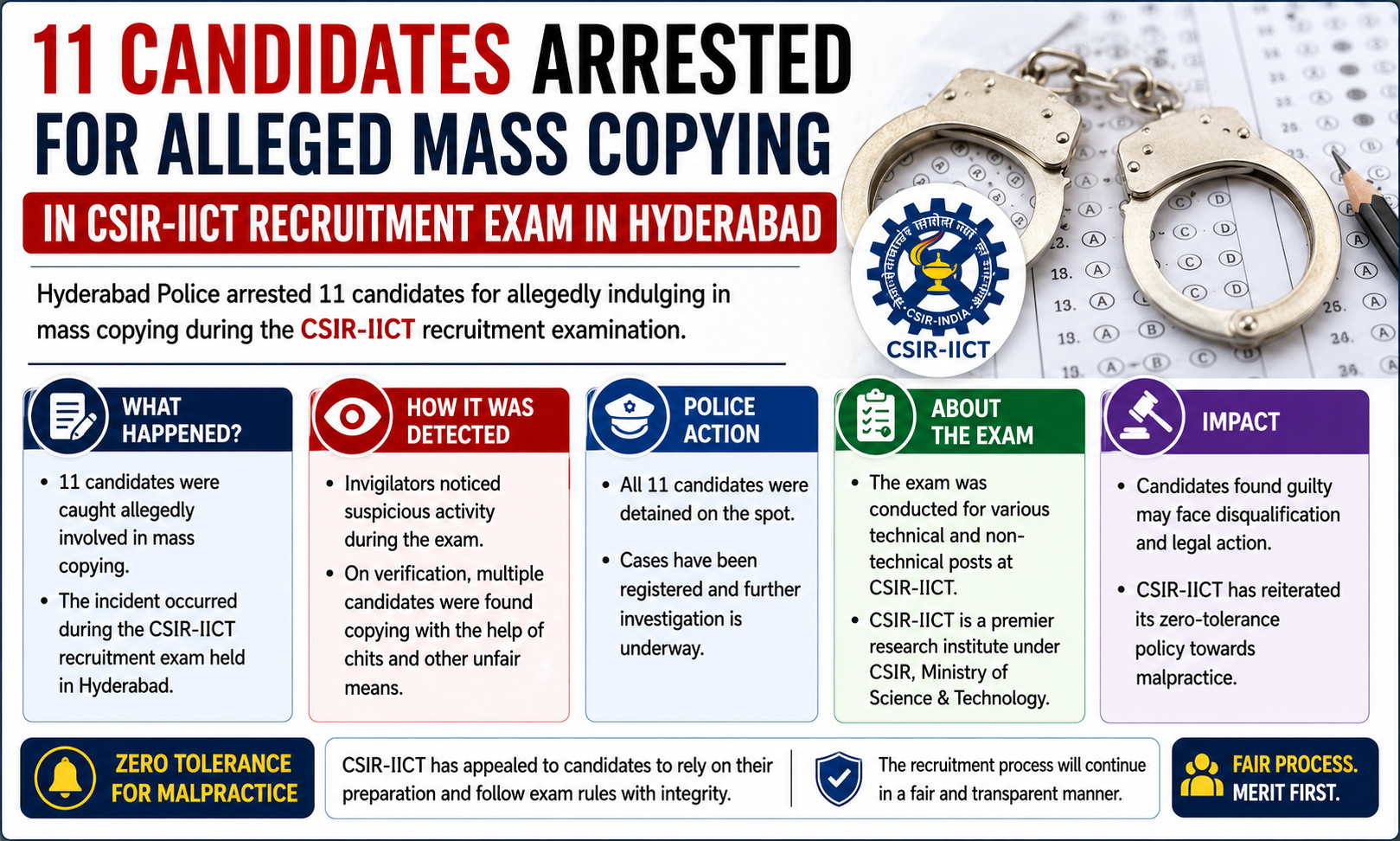
11 Candidates Arrested For Alleged Mass Copying In CSIR-IICT Recruitment Exam In Hyderabad
Hyderabad police arrested 11 candidates for allegedly using microchip-based gadgets and hidden communication devices during the CSIR-IICT recruitment examination. The incident was reported at St. Pious Degree College in Nacharam, where the written test was being conducted for MTS and other support staff posts.
11 Candidates Arrested During CSIR-IICT Recruitment Exam
Nacharam police arrested 11 candidates during the CSIR-Indian Institute of Chemical Technology recruitment examination in Hyderabad after receiving information about alleged mass copying at the exam centre.
The written examination was held on May 17 for candidates who had earlier qualified in the trade test conducted by CSIR-IICT. The recruitment was being conducted for Multi-Tasking Staff and fourth-class posts such as Attender, Clerk and Head Cook.
How Police Detected The Alleged Copying
According to police, they received credible information that some candidates were using unfair means with the help of advanced electronic devices. Acting on the tip-off, a police team reached the exam centre and carried out checks.
During inspection, 11 candidates were allegedly found using microchip-based gadgets and concealed communication devices. Police said the devices appeared to have been fitted in a way that could avoid detection by invigilators.
CSIR-IICT Recruitment Exam Copying Case: Key Details
| Particular | Details |
|---|---|
| Exam Name | CSIR-IICT recruitment written examination |
| Exam Date | May 17, 2026 |
| Recruitment Posts | Multi-Tasking Staff, Attender, Clerk and Head Cook |
| Exam Centre | St. Pious Degree College, Nacharam, Hyderabad |
| Number Of Arrested Candidates | 11 |
| Alleged Method | Use of microchip-based gadgets and hidden communication devices |
| Police Action | Candidates taken into custody from the examination centre |
| Investigation Status | Case registered; wider probe underway |
What Devices Were Allegedly Used?
Police said the candidates were suspected of using modern communication technology to receive answers during the exam. The seized gadgets have been sent for technical analysis to understand how they were operated.
Microchip-Based Gadgets
Small electronic devices were allegedly used to help candidates receive answers during the exam.
Hidden Communication Tools
Police suspect that concealed communication devices were used to connect candidates with outside helpers.
Gadgets Sent For Analysis
The seized devices are being examined to identify their working method and possible outside links.
Was An Outside Network Involved?
Police have registered a case and are investigating whether any outside network, organisers or handlers were involved in helping the candidates. Officials are also looking into whether the malpractice was limited to the arrested candidates or part of a larger organised cheating racket.
The modus operandi is being compared with earlier cases in competitive and recruitment examinations where Bluetooth devices, hidden earpieces and mobile-based communication tools were used to receive answers from outside sources.
Why The Incident Raised Concern
The incident created tension at the examination centre for some time. Other candidates reportedly expressed concern over the use of unfair methods in government recruitment examinations.
Recruitment exams are important because they decide access to public-sector jobs. Any malpractice can affect genuine candidates and damage trust in the examination process.
- Raises questions about exam hall security
- Impacts trust in recruitment exams
- Creates unfair advantage for cheating candidates
- Affects genuine applicants
- Shows need for stronger frisking checks
- Highlights use of advanced electronic devices
- Requires technical investigation of seized gadgets
- May lead to stricter exam centre rules
Investigation Timeline
Exam Security Concerns After The Incident
The case has again brought attention to the challenge of preventing electronic cheating in recruitment exams. As devices become smaller and harder to detect, exam authorities may need stronger screening methods and better monitoring inside exam halls.
| Security Concern | Possible Action Needed |
|---|---|
| Hidden electronic devices | Stronger frisking and metal detection before entry |
| Outside communication links | Signal jammers and better surveillance inside centres |
| Device concealment | Strict checks of clothing, accessories and suspicious items |
| Organised cheating networks | Police coordination and technical tracking of seized gadgets |
| Candidate trust | Transparent action and strong penalties against malpractice |
What Candidates Should Know
Candidates appearing for recruitment exams should follow all exam-day rules carefully. Carrying any unauthorised electronic device, communication tool or suspicious item can lead to disqualification, arrest and legal action.
- Do not carry electronic gadgets
- Follow exam centre instructions
- Carry only permitted documents
- Avoid suspicious accessories
- Report unfair activity if noticed
- Do not trust cheating rackets
- Reach centre before reporting time
- Cooperate during security checks
FAQs On CSIR-IICT Recruitment Exam Copying Case
How many candidates were arrested in the CSIR-IICT recruitment exam case?
Police arrested 11 candidates for allegedly indulging in mass copying during the CSIR-IICT recruitment examination.
Where did the incident take place?
The incident took place at St. Pious Degree College in Nacharam, Hyderabad.
Which posts was the exam conducted for?
The written exam was conducted for Multi-Tasking Staff and fourth-class posts such as Attender, Clerk and Head Cook.
What devices were allegedly used by the candidates?
Police said the candidates were allegedly using microchip-based gadgets and hidden communication devices to receive answers.
Has a case been registered?
Yes, a case has been registered and further investigation is underway.
Are police checking outside network involvement?
Yes, police are investigating whether any outside network, organisers or handlers were involved in the malpractice.
What happened to the seized gadgets?
The seized electronic devices have been sent for technical analysis to understand how they were used.

