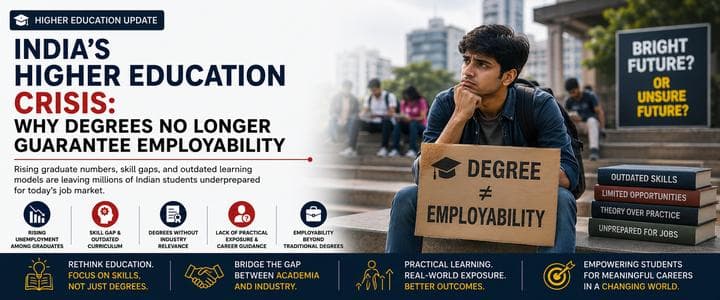
India’s Higher Education Crisis: Why Degrees No Longer Guarantee Employability
India’s higher education system is facing a critical challenge as the value of academic degrees in securing employment diminishes. Despite a growing number of graduates, many find themselves ill-prepared for the demands of the job market. This widening gap between academic curricula and industry expectations is raising concerns among students, parents, and educators about the relevance and quality of higher education in India.
Key Highlights
- Graduate employability rates in India are declining despite increased enrollment.
- Industry-academia disconnect is a major factor affecting job readiness.
- Curriculum often lacks practical skills and soft skills demanded by employers.
- Many graduates struggle to meet expectations in technology, communication, and problem-solving.
- Employers increasingly prefer candidates with internships and hands-on experience.
- Calls for reforms in higher education to align with evolving industry needs are growing.
What Happened?
India’s higher education system has expanded rapidly in recent years, producing millions of graduates annually. However, media reports and industry feedback indicate that a significant portion of these graduates are not employable in their chosen fields. The core issue lies in the outdated curricula and teaching methods that do not equip students with relevant skills for the modern workplace.
>Students often graduate with theoretical knowledge but lack practical exposure, critical thinking, and communication skills. This mismatch results in difficulties during recruitment and onboarding, causing frustration for both employers and job seekers. The problem is compounded by limited collaboration between academic institutions and industry leaders, which restricts curriculum updates and skill development opportunities.
As per media reports, many companies now emphasize internships, vocational training, and certifications beyond traditional degrees to identify suitable candidates. This trend signals a shift in how employability is evaluated in India’s competitive job market.
Why This Update Matters
For students and parents, understanding this employability crisis is crucial when planning higher education and career paths. Simply obtaining a degree no longer guarantees job placement or career growth. Awareness of the skills gap can help students seek additional training, internships, or skill-building programs to improve their prospects.
Educational institutions and policymakers also need to prioritize reforms that bridge the gap between academic learning and industry requirements. This update impacts admission choices, preparation strategies, and long-term career planning for students across India.
Official Status
Currently, official confirmation or detailed government reports addressing this crisis are awaited. Various media outlets and industry experts have highlighted the issue, but comprehensive policy responses or official statistics are expected in due course.
Students and stakeholders should monitor announcements from the Ministry of Education and relevant higher education bodies for updates on reforms and initiatives.
Important Details
| Particular | Details |
|---|---|
| Topic | Employability challenges in India’s higher education |
| Country | India |
| Category | Education News |
| Status | Official confirmation awaited |
| Applicable For | Students, parents, educators, policymakers |
| Official Website | Official confirmation awaited |
| Next Step | Monitor official updates and seek skill development opportunities |
How Students Can Track The Announcement
Students and parents should stay informed about developments related to higher education reforms and employability initiatives. Following official education portals and news sources will help in timely updates.
- Regularly visit official Ministry of Education websites for announcements.
- Follow reputed education news portals for expert analysis and reports.
- Engage with college placement cells and career counseling services.
- Participate in webinars or workshops on skill development and employability.
- Stay connected with industry internship and training opportunities.
Documents Or Details Students May Need
While this update is not about admissions or exams, students should keep the following handy for skill-building and job applications:
- Academic transcripts and degree certificates
- Internship and training certificates
- Resume or CV highlighting skills and projects
- Letters of recommendation or reference
What Students Should Do Next
- Focus on acquiring practical and soft skills alongside academic studies.
- Seek internships, apprenticeships, or project work to gain experience.
- Engage in communication and problem-solving skill development.
- Explore certification courses relevant to their field of interest.
- Stay updated on industry trends and emerging job requirements.
- Consult career counselors to align education with employability goals.
Important Links
| Link Type | Website / Status |
|---|---|
| Official Website | Official confirmation awaited |
FAQs
Why are Indian graduates facing employability challenges?
Many graduates lack practical skills, industry exposure, and soft skills due to outdated curricula and limited collaboration between academia and industry.
Does having a degree guarantee a job in India?
Currently, a degree alone does not guarantee employment; employers increasingly look for additional skills, experience, and certifications.
What can students do to improve their employability?
Students should pursue internships, skill development courses, and practical projects to enhance their job readiness.
Are there any government initiatives addressing this issue?
As per media reports, initiatives are being discussed but official reforms and programs are awaited for implementation.
How can parents support their children in this scenario?
Parents can encourage skill-building activities, career counseling, and practical learning opportunities beyond formal education.
Will the higher education system change soon to fix employability?
Reforms are expected but may take time; meanwhile, students should proactively develop relevant skills and experience.

q.jpg)
-logo.jpg)