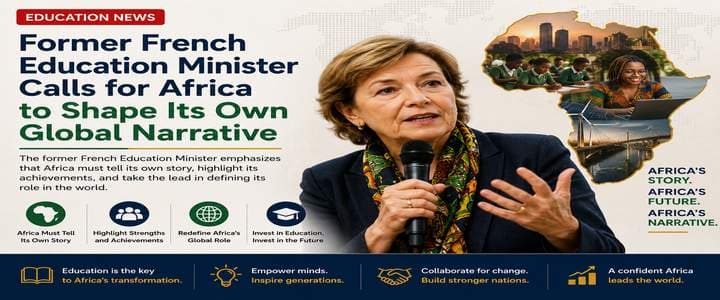
Former French Education Minister Calls for Africa to Shape Its Own Global Narrative
Najat Vallaud-Belkacem, former French Education Minister, has highlighted the importance of Africa asserting its own narrative on the global stage. She stresses that African countries already generate significant knowledge and research but often lack the recognition and influence internationally. This call encourages African educational institutions, governments, and scholars to promote their perspectives and achievements more assertively to reshape global understanding and foster development.
Key Highlights
- Najat Vallaud-Belkacem urges Africa to take control of its knowledge narrative globally.
- She acknowledges Africa's existing knowledge production despite limited international recognition.
- The emphasis is on increasing African voices in global education and research forums.
- Calls for stronger investment in African education systems and research infrastructure.
- Highlights the need for collaboration within African countries to amplify their global impact.
- Encourages students and academics to engage actively in shaping Africa’s educational future.
What Happened?
In recent discussions, Najat Vallaud-Belkacem has pointed out that Africa’s contribution to global knowledge is often underappreciated. Despite producing valuable research and scholarship, African perspectives are frequently overshadowed by dominant narratives from Western countries. She advocates for Africa to assert its own stories, research priorities, and educational goals to gain rightful recognition.
This perspective is particularly relevant for students, educators, and policymakers who are involved in African education. It encourages a shift from passive reception of external knowledge to active participation in global knowledge creation and dissemination. For students, this means embracing African history, culture, and innovation as integral parts of their learning and research.
By fostering a stronger identity and presence in international academic circles, African institutions can attract more collaboration, funding, and opportunities for their students and researchers.
Why This Update Matters
This update is important because it highlights the need for African students and educational stakeholders to recognize their own value and potential in the global education landscape. It encourages a mindset that values indigenous knowledge and innovation alongside global standards.
For students planning higher education or research careers, this means there is growing support and emphasis on African-centered studies and initiatives. It also signals opportunities for scholarships, partnerships, and programs that prioritize African perspectives. Understanding this shift can help students make informed decisions about their academic paths and research focus.
Official Status
As per media reports, these views were shared in public forums and interviews by Najat Vallaud-Belkacem. Official confirmation or detailed policy documents from African governments or international bodies are awaited. Students and educators should monitor announcements from African ministries of education and international education forums for further developments.
Important Details
| Particular | Details |
|---|---|
| Topic | Africa's Global Knowledge Narrative and Education Policy |
| Country | Global (Focus on Africa) |
| Category | Education Policy |
| Status | Official confirmation awaited |
| Applicable For | Students, educators, policymakers in Africa and global education sectors |
| Official Website | Official confirmation awaited |
| Next Step | Follow updates from African education ministries and international education organizations |
How Students Can Follow This Update
Students and educators interested in this topic should keep track of announcements from African educational institutions and international forums discussing education policy and research collaboration.
- Monitor news from African ministries of education and research councils.
- Follow international education conferences focusing on Africa.
- Engage with academic networks promoting African scholarship.
- Explore scholarship and research opportunities emphasizing African perspectives.
- Participate in forums and discussions that highlight African knowledge production.
Documents Or Details Students May Need
- Academic transcripts and certificates for research or scholarship applications.
- Letters of recommendation from African or international educators.
- Research proposals focusing on African topics or perspectives.
- Proof of enrollment or affiliation with African educational institutions.
What Students Should Do Next
- Recognize the value of African knowledge and research in their studies.
- Seek opportunities to contribute to African-centered academic work.
- Stay informed about education policy changes within African countries.
- Engage with local and international academic communities promoting African scholarship.
- Prepare to participate actively in shaping Africa’s educational future.
- Use this perspective to guide their academic and career planning.
Important Links
| Link Type | Website / Status |
|---|---|
| Official Website | Official confirmation awaited |
FAQs
Who is Najat Vallaud-Belkacem?
Najat Vallaud-Belkacem is a former French Education Minister known for her work in education reform and advocacy for inclusive education policies.
What does it mean for Africa to impose its own narrative?
It means Africa should actively promote and share its own perspectives, knowledge, and achievements in education and research on the global platform rather than relying on external narratives.
Why is global recognition important for African knowledge?
Global recognition helps attract collaboration, funding, and opportunities that can strengthen African education systems and empower students and researchers.
How can students contribute to this change?
Students can focus on African-centered research, participate in academic forums, and promote their culture and knowledge through their studies and projects.
Are there official policies supporting this narrative shift?
As per media reports, official policies are still evolving, and confirmation from African governments or education bodies is awaited.
Where can students find more information?
Students should follow updates from African ministries of education, international education organizations, and academic networks focused on African scholarship.