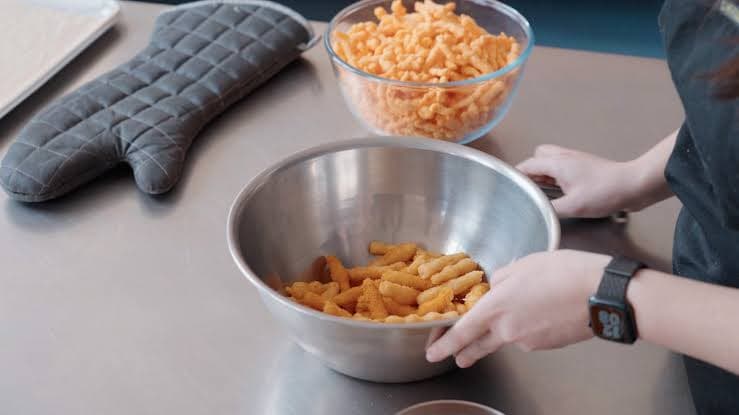
Adelaide University Students Recreate Twisties to Study Ultra-Processed Foods
Students studying food and nutrition in Adelaide have taken a practical approach to understanding ultra-processed foods by attempting to recreate Twisties, a popular Australian savoury snack. The classroom activity gave students an opportunity to explore how processed snack foods are formulated and why reproducing their familiar taste, texture and appearance can be more complicated than preparing a conventional recipe.
The exercise was associated with a Future Foods teaching programme previously offered by the University of South Australia, which is now part of Adelaide University. Students examined ultra-processed foods as part of a broader course exploring modern food production, nutrition, sustainability and emerging food technologies. The activity demonstrated how food science combines ingredients, processing methods and product design to create familiar commercial snacks.
Why Did Students Try to Recreate Twisties?
Twisties are a recognisable example of a packaged savoury snack. Attempting to recreate them in a teaching kitchen provided a practical way for students to investigate the differences between ordinary food preparation and industrial food manufacturing.
Commercial snack products are developed to achieve consistent characteristics, including flavour, colour, crunch, shape and mouthfeel. Reproducing these qualities requires more than combining ingredients that taste similar. The manufacturing process, ingredient proportions and physical structure of the finished product can all influence the result.
The activity also encouraged students to think critically about the term ultra-processed and how it applies to products encountered in everyday life. Rather than learning only through definitions and textbook examples, students could examine food formulation through a hands-on experiment.
What Are Ultra-Processed Foods?
Ultra-processed foods are generally understood as industrially formulated products that may contain ingredients or additives not commonly used in home cooking. Classification depends on the processing framework being applied and the composition of the particular product.
Examples can include packaged savoury snacks, some sweetened breakfast cereals, confectionery, instant products and certain ready-to-eat meals. However, the level of processing varies between products, so it is not accurate to assume that every packaged food belongs to the same category.
Understanding food processing is important for students of nutrition because it helps them assess how products are made, what ingredients they contain and how they fit into broader dietary patterns.
What Students Can Learn From a Food-Recreation Experiment
| Learning Area | What It Demonstrates |
|---|---|
| Ingredient formulation | How ingredient combinations influence flavour, structure and consistency. |
| Food processing | Why preparation methods and production equipment affect the final product. |
| Sensory evaluation | How texture, aroma, appearance and taste contribute to the eating experience. |
| Nutrition literacy | How to examine food composition and processing without relying only on packaging claims. |
| Product development | How food scientists approach the challenge of producing a consistent commercial food. |
How the Activity Connects With Food Science Education
Practical exercises are an important part of food science because they connect scientific concepts with real products. Students can observe how ingredients behave, test different preparation methods and evaluate why a homemade version may differ from a commercially manufactured snack.
Food science and nutrition programmes can cover a wide range of subjects, including food chemistry, food microbiology, preservation, processing, product development and sensory analysis. Studying ultra-processed foods also encourages discussion about sustainability, food production systems, consumer choices and the role of evidence in nutrition advice.
The Twisties recreation exercise illustrated the limitations of attempting to reproduce a highly processed snack in a university kitchen. The teaching activity was not simply about making a snack; it was an opportunity to understand the relationship between ingredients, manufacturing techniques and the characteristics consumers expect from a branded product.
Why Understanding Food Processing Matters
Consumers regularly encounter food products with different levels of processing. Learning how these products are developed can help future nutrition professionals, food technologists and researchers explain food composition more accurately.
Processing alone does not determine the overall nutritional quality of a food. Factors such as nutrient content, portion size, ingredients and a person's wider dietary pattern also matter. Students therefore need to consider the scientific evidence rather than making broad conclusions about a product based only on whether it is packaged or processed.
Frequently Asked Questions
Why did students recreate Twisties?
The exercise helped students explore ultra-processed foods, ingredient formulation and the challenges of reproducing the characteristics of a commercial snack.
Which university was associated with the activity?
The teaching activity was associated with the Future Foods programme at the University of South Australia, which is now part of Adelaide University.
What are ultra-processed foods?
They are generally industrially formulated products that may contain ingredients or additives not commonly used in home cooking. Classification depends on the framework and the product's composition.
What subjects are relevant to this activity?
Relevant areas include food science, nutrition, food chemistry, food processing, sensory evaluation and product development.
Does processing alone determine whether a food is healthy?
No. Nutritional quality depends on several factors, including the ingredients, nutrient composition, portion size and the overall dietary pattern.
The student experiment demonstrates how practical learning can make complex food science concepts easier to understand. By attempting to recreate a familiar snack, students could examine the technical challenges behind commercial food production while developing a more informed understanding of ultra-processed foods and nutrition.