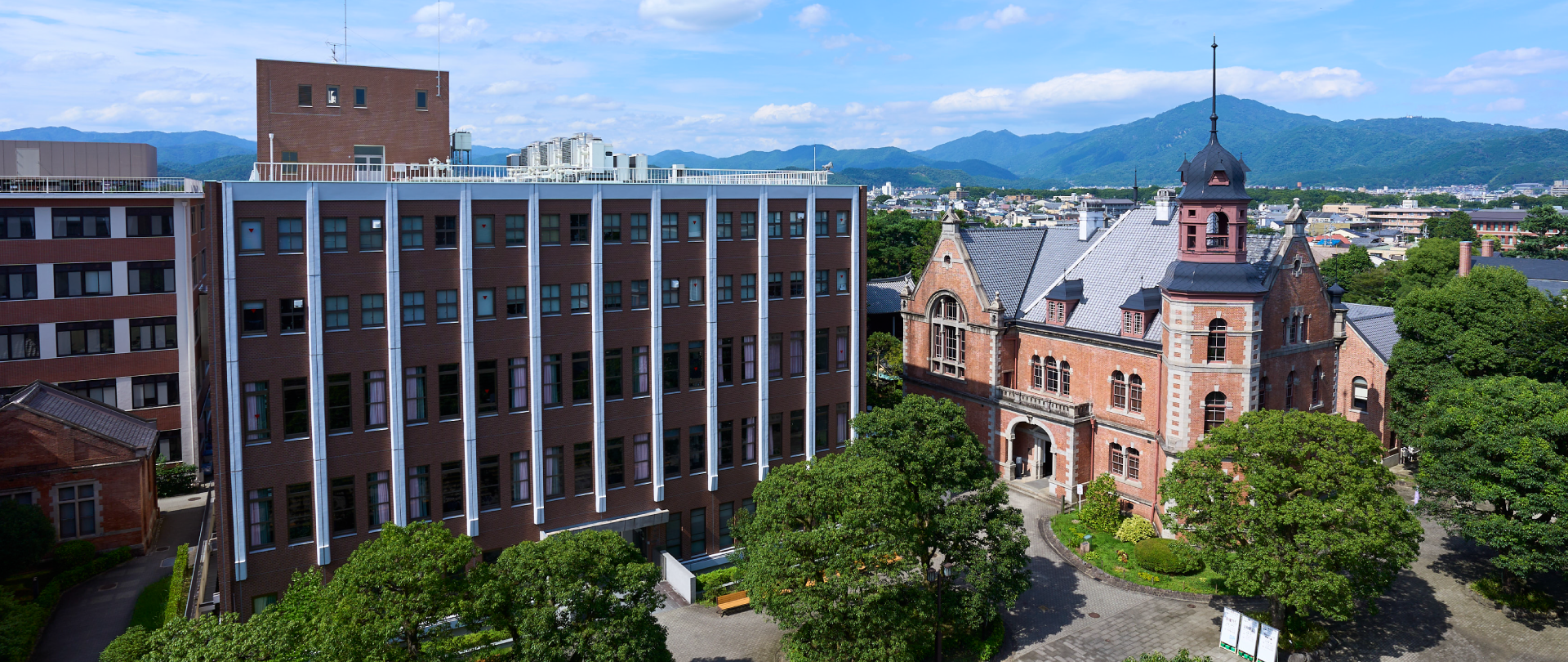
About Shinshu University
Shinshu University is a national, comprehensive university with several campuses in various cities in Nagano prefecture in Japan. Established in 1949, it has grown to become one of Japan's foremost research-focused national universities, with special strengths in engineering, medicine, fiber science, agriculture, environmental science and education. The university has four specialized campuses, Matsumoto, Nagano, Ueda and Ina campuses. The Matsumoto Campus serves as a base for medicine, economics, humanities and science. The Ueda Campus is internationally known for its research in engineering and fiber science. The Ina Campus is oriented towards agriculture and life sciences, and the Nagano Campus is oriented towards education. Each campus has modern classrooms and laboratories, libraries and innovation centers, student support facilities and international student services. Research is at the heart of Shinshu University’s role. Our faculty are involved in world-class research in cutting-edge materials, fiber engineering, renewable energy, biotechnology, environmental sustainability, mountain science, medical innovation, robotics, artificial intelligence, food science and agricultural technology. The university has strong cooperation with industries, government agencies, research institutes and international universities. We provide various support to international students such as orientation programs, Japanese language education, accommodation guidance, scholarships, career counseling, and exchange opportunities. Graduate students benefit from research that is internationally collaborative and supervised by leading academic experts. Shinshu University is especially suitable for students who would like to work in the fields of engineering, medicine, environmental science, biotechnology, agriculture, education, materials science, manufacturing, healthcare, research or academia. The university’s status as a national university, its well-known reputation for research, and the high quality of life in the surrounding area, make it one of the most attractive institutions for higher education in Japan.”