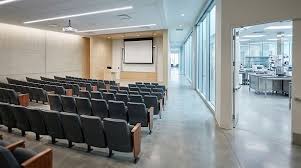
College of Idaho (C of I) Summary
The College offers a broad liberal arts foundation, as well as programs in business, accounting, biology, biomedical science, chemistry, computer science, mathematics, psychology, education, environmental studies, exercise science, history, political economy, communication, the arts and languages. The existing undergraduate curriculum uses the Coyote Core and a career-oriented “Do More in Four” model instead of the previous College materials that included the PEAK structure.
Students may earn Bachelor of Arts and Bachelor of Science degrees, minors, specializations, certificates and cooperative dual-degree programs. Current curriculum options include pre-medicine, pre-dental, pre-veterinary medicine, pre-physician assistant, pre-law, occupational therapy, physical therapy, conservation biology, finance and other specialized pathways.
The academic schedule has been adjusted to include four primary class days weekly. Fridays are built into the schedule to provide additional time for internships, research, co-curricular activities, career development and other experiential learning. Four-credit courses mean many students will be taking four classes per regular term instead of the traditional five-course load.
The College's undergraduate liberal arts mission has been expanded by graduate education. Current graduate offerings include programs in organizational leadership, educational leadership, applied public policy, exercise science, accountancy, data analytics and medical science, as well as a Master of Physician Assistant Studies offered through a partnership with Idaho State University.
The College has a residential campus of more than 50 acres in Caldwell. Facilities include academic buildings and science spaces, the Cruzen-Murray Library, residence halls, Village Apartments, College-owned houses, athletic facilities, student-life spaces, and dining facilities. Traditional and suite-style housing is provided in seven residence halls.
There’s a lot of student involvement for a school of its size. There are more than 50 student organizations involved in academics, cultural life, arts, outdoor activities, student government, Greek life, media and professional interests. The College says 53% of students participate in athletics, including varsity sports.
The College competes athletically in the NAIA primarily in the Cascade Collegiate Conference. Football competes in the Frontier Conference. The Coyotes have a strong tradition of small college athletics with national championships and individual national titles.
The College has a good record of preparing students for graduate and professional school. Current institutional data states that 85% of its graduates are accepted to medical school and since 2014, College of Idaho graduates applying to law school have had a 100% acceptance rate.
The College of Idaho typically provides small classes, interdisciplinary liberal arts study, pre-professional preparation, residential campus life and proximity to the Boise metropolitan area. Its relatively small enrollment allows for close interaction with faculty and its growing graduate portfolio and cooperative programs provide other avenues beyond the traditional bachelor’s degree.
Extra Info
The College of Idaho Quick Facts
Particular | Details |
Institute Name | The College of Idaho |
Common Short Name | C of I / CofI |
Country | United States |
State | Idaho |
City | Caldwell |
Complete Address | 2112 Cleveland Boulevard, Caldwell, ID 83605, United States |
Institute Type | Private nonprofit liberal arts college |
Established | 1891 |
Founder | William Judson Boone |
Academic Calendar | Semester-based with current four-day class-week structure |
Teaching Language | English |
Campus Size | More than 50 acres |
Campus Buildings | Approximately 25 buildings and related properties |
Student Community | More than 1,100 students |
Undergraduate FTE | 1,036 |
Graduate FTE | 49 |
Total FTE | 1,085 |
Student-Faculty Ratio | 10:1 |
Average Class Size | Approximately 18 |
Undergraduate Degrees | BA and BS |
Graduate Degrees | Master's and doctoral programs |
Institutional Accreditation | Northwest Commission on Colleges and Universities |
Athletics | NAIA |
Primary Athletic Conference | Cascade Collegiate Conference |
Football Conference | Frontier Conference |
Team Name | Yotes / Coyotes |
Official Phone | 208-459-5011 |
The College describes itself as Idaho's first private liberal arts college and reports a community of more than 1,100 students. Current institutional data lists 1,085 full-time-equivalent students, including 1,036 undergraduate and 49 graduate FTE students. Academic information gives a student-faculty ratio of approximately 10:1 and an average class size of 18.
Undergraduate Curriculum
The College's current undergraduate curriculum consists of:
- Coyote Core
- Major
- Optional minors
- Specializations
- Certificates
- Dual-degree opportunities
- High-impact learning experiences
- First-year academic experience
- Academic advising
- Career and graduate-school preparation
The Coyote Core includes a first-year seminar and civilization course before progressing into broader interdisciplinary study and applied learning.
Accounting Programs
The College currently offers two undergraduate accounting pathways.
Accounting BA
The BA pathway requires approximately 124 credits and provides preparation in financial and managerial accounting, intermediate accounting, business law and related business subjects.
Accounting BS
The 150-credit BS curriculum is structured to help students meet the educational credit requirement commonly associated with CPA examination eligibility in Idaho. Students study areas including:
- Financial accounting
- Managerial accounting
- Auditing
- Taxation
- Accounting information systems
- Business law
- Data analytics
- Professional accounting practice
Students considering CPA licensure should separately verify the licensing rules in the state where they intend to practice.
Biology and Biomedical Programs
Biological and biomedical study includes:
- Biology BA
- Biology BS
- Biomedical Science BA
- Biochemistry BS
- Applied Chemical & Biochemical Sciences BA
- Chemistry BS
Research opportunities can include faculty-guided work and participation in externally supported research initiatives.
These programs are frequently combined with pre-professional preparation for:
- Medicine
- Dentistry
- Physician assistant studies
- Veterinary medicine
- Pharmacy
- Physical therapy
- Occupational therapy
- Biomedical research
Computer Science and Mathematics
Relevant programs include:
- Computer Science-Mathematics BA
- Computer Science-Mathematics BS
- Mathematics BA
- Physics-Mathematics BA
- Physics-Mathematics BS
The Computer Science-Mathematics curriculum covers computational problem solving and mathematical preparation that can support careers in software, data-related work, technology and graduate study.
Business Programs
Undergraduate business-related programs include:
- Accounting BA
- Accounting BS
- Business Administration BS
- Digital Marketing BA
- Finance BS
- Spanish Language & Business BA
Business curricula can include:
- Accounting
- Finance
- Management
- Marketing
- Strategic decision-making
- Business law
- Data-related coursework
- Internships
- Capstone work
Education Programs
Education pathways prepare students for teacher certification.
Current bachelor's-level options include:
Elementary Teaching
Designed for students preparing to teach elementary grades.
Secondary Teaching
Teaching pathways include areas such as:
- Biology
- English Language Arts
- History
- Mathematics
- Music
Teacher candidates complete academic coursework and required student-teaching or internship components.
Engineering Dual-Degree Program
The College offers an Engineering Dual-Degree pathway that combines liberal arts education at The College of Idaho with engineering education at a partner institution.
Students begin at C of I and complete required foundation coursework before transferring to an engineering partner school.
The pathway is designed for students interested in fields such as:
- Mechanical engineering
- Civil engineering
- Electrical engineering
- Chemical engineering
- Other approved engineering disciplines
The exact engineering degree is awarded according to the partner institution and cooperative agreement.
Undergraduate Minors
Current minor options include areas such as:
- Anthropology & Sociology
- Biology
- Business
- Chemistry
- Computer Science
- Criminology
- Literature & Creative Writing
- Mathematics
- Music
- Political Economy
- Psychology
- Spanish
- Other interdisciplinary and academic fields
Minors are now optional rather than mandatory components of the former PEAK system.
Undergraduate Specializations
Current specializations include career and graduate-school preparation in areas such as:
- Pre-Medicine
- Pre-Physician Assistant Studies
- Pre-Dental
- Pre-Pharmacy
- Pre-Veterinary Medicine
- Occupational Therapy
- Physical Therapy
- Pre-Law
- Counseling & Clinical Psychology
- Social Services & Social Work
- Finance
- Marketing
- Human Development
- Music Performance
- Conservation Biology
- Outdoor Education & Leadership
The College reports an 85% medical-school acceptance rate for its graduates and states that 100% of its graduates who applied to law school have been accepted since 2014. These figures refer to applicants from the College rather than every graduate.
Dual Degrees and Accelerated Programs
The College offers several forms of dual-degree study.
Current pathways include:
- 3+1 Organizational Leadership
- 3+1 Accountancy
- 3+1 Exercise Science
- Data-related accelerated graduate options where currently available
- Engineering cooperative degrees
- Law cooperative pathways
- Medicine-related cooperative pathways
Under selected 3+1 structures, students complete substantial graduate-level coursework while still enrolled as undergraduates, then finish the remaining graduate requirements after the bachelor's portion.
The College also offers graduate certificates in fields including:
- Organizational Leadership
- Accountancy
- Exercise Science
- Data Analytics
Master of Arts in Organizational Leadership
The MAOL is an accelerated online graduate program consisting of 36 credits.
Areas of study include:
- Leadership theory
- Organizational behavior
- Leadership ethics
- Organizational communication
- Negotiation and conflict resolution
- Organizational change
- Inclusive leadership
- Team building
- Leadership capstone work
The standard accelerated program can be completed in approximately 12 months.
Master of Education in Educational Leadership
The M.Ed. in Educational Leadership consists of 32 credits and can be completed in approximately 16 months over five terms.
The curriculum emphasizes:
- Leadership theory
- Educational policy
- Instructional leadership
- School administration
- Organizational management
- Applied leadership practice
Master of Applied Public Policy
The Master of Applied Public Policy consists of 36 credits and can be completed in approximately 18 months.
The program combines areas such as:
- Public policy
- Economics
- Data analysis
- Policy implementation
- Policy evaluation
- Applied research
Doctor of Medical Science
The online Doctor of Medical Science is designed for practicing physician assistants/associates.
Current areas include pathways in:
- Health Professions Education
- Health System Leadership
- Lifestyle Medicine and Advanced Clinical Practice
- Accelerated options for qualifying experienced PA educators or fellows
The program structure depends on prior professional and academic experience.
Master of Physician Assistant Studies
The College participates in a collaborative Master of Physician Assistant Studies program with Idaho State University.
Students should distinguish this partnership from a completely independent C of I-operated PA degree when researching program admission, tuition and clinical requirements.
Course Duration
Program | Typical Duration |
Undergraduate BA/BS | Approximately 4 years |
3+1 Bachelor's + Master's pathways | Approximately 4 years plus required summer/finishing term, depending on program |
MA Organizational Leadership | Approximately 12 months |
M.Ed. Educational Leadership | Approximately 16 months |
Master of Applied Public Policy | Approximately 18 months |
Graduate Certificate | Often approximately 8 months |
Doctor of Medical Science | Approximately 9–12 months depending on pathway |
Cooperative Engineering Degree | Program-dependent |
Physician Assistant Studies | Program-dependent |
The College of Idaho Admission
The College uses a holistic undergraduate admission process.
Review can consider:
- High-school academic record
- Strength of curriculum
- AP or IB coursework
- Writing ability
- Recommendations
- Co-curricular involvement
- Community involvement
- Other achievements
The College is currently test optional, meaning applicants are not required to submit ACT or SAT scores for standard undergraduate admission.
Applicants are also considered for merit scholarships without being required to submit standardized testing.
Undergraduate Admission Process
- Complete The College of Idaho undergraduate application.
- Submit the required high-school academic record.
- Provide supporting application information.
- Submit recommendations where applicable.
- Submit ACT or SAT scores only if the applicant chooses to do so or where required for a specific purpose.
- Complete any additional talent, athletic or honors materials when applicable.
- International applicants must provide evidence of English proficiency.
- Apply separately for financial aid.
- File the FAFSA if seeking federal or need-based assistance.
- Review institutional scholarship eligibility.
- Accept the admission offer.
- Complete the enrollment deposit.
- Submit housing materials.
- Complete orientation and first-year enrollment requirements.
- Register for classes.
Current Application Deadline Note
As of October 1, 2026, The College of Idaho's undergraduate admissions webpage still displays deadlines for the Spring 2026 and Fall 2026 admission cycles.
Those dates have already passed and therefore should not be presented as current upcoming deadlines.
Applicants seeking the next available intake should verify the updated deadline directly with the College once the admissions office publishes the next-cycle schedule.
SAT and ACT Policy
The College is fully test optional for standard admission.
Students may choose whether to include:
- SAT scores
- ACT scores
Merit scholarship consideration is available to applicants regardless of standardized-test submission and is primarily based on high-school GPA for incoming first-year students.
Prospective student-athletes should separately verify current NAIA eligibility requirements because athletic eligibility can involve additional documentation.
International Admission
International students follow the undergraduate admission process while also demonstrating English proficiency.
Evidence can be provided through:
- Study in an English-based curriculum
- English being the language of the applicant's home country where accepted
- TOEFL
- IELTS
- Duolingo English Test
- SAT or ACT evidence where applicable
The College evaluates international applicants holistically based on academic preparation and other application materials.
Accreditation
The College of Idaho is institutionally accredited by the:
Northwest Commission on Colleges and Universities (NWCCU)
Institutional accreditation applies to the College as a whole.
The College's regional accreditation history dates back to the early twentieth century.
Professional and cooperative programs may also operate under program-specific approvals or the accreditation of partner institutions.
Rankings and Recognition
The College's current official quick-facts page highlights the following U.S. News recognitions:
- #4 Regional College in the West
- #7 Best Value Regional College
- #15 in Social Mobility
Because rankings change with each publication cycle, these should be retained with the ranking publisher and reviewed when new editions are released rather than embedded permanently as timeless facts.
The College also reports:
- Eight Rhodes Scholars
- 18 Truman, Fulbright and Goldwater scholars
- Three governors among alumni
- One Pulitzer Prize winner among alumni
Campus and Facilities
The College's facilities operation manages 25 buildings and related rental properties across more than 50 acres.
Campus facilities include:
- Academic classrooms
- Science laboratories
- Cruzen-Murray Library
- Advising and tutoring spaces
- McCain Student Center
- Dining facilities
- Residence halls
- Village Apartments
- College-owned student houses
- Athletic facilities
- Simplot Stadium
- Wolfe Field
- Arts spaces
- Music facilities
- Theatre facilities
- Student organization spaces
- Outdoor and recreation resources
- Campus safety services
- Health and counseling services
Cruzen-Murray Library
The Cruzen-Murray Library provides:
- Books and print collections
- Electronic resources
- Databases
- Research assistance
- Interlibrary loan
- Course reserves
- Study spaces
- Group collaboration areas
- Advising
- Tutoring
- Academic support services
The current library facility opened in 2018 and functions as both a library and an academic-learning hub.
Residence Halls
The College currently operates seven residence halls.
Housing styles include:
- Single rooms
- Double rooms
- Triple rooms
- Quad rooms
- Suite-style rooms
- Apartments
Residence halls include:
- Anderson Hall
- Hayman Hall
- Simplot Hall
- Voorhees Hall
- Finney Hall
- Sawtooth Hall
- Owyhee Hall
Village Apartments offer additional housing, particularly for upper-level students.
Dining
The College uses Bon Appétit for campus food service.
Meal options range from 19 meals per week to commuter-oriented plans and include Coyote Cash balances depending on the selected plan.
Full-time students are generally expected to hold a meal plan, with requirements differing according to residential status and year of study.
Student Life
The College reports 50+ student groups.
Organizations span:
- Academic clubs
- Professional organizations
- Cultural associations
- Student government
- Performing arts
- Media
- Outdoor recreation
- Community service
- Pre-health preparation
- Pre-law preparation
- Coding
- Gaming and esports
- Environmental activities
- Greek life
- Student traditions
Examples include:
- International Student Organization
- Association of Latino American Students
- AFRO Club
- Asian Student Association
- Coding Club
- Business & Accounting Club
- History Society
- Math Club
- Pre-Health Club
- Pre-Law Club
- Philosophy Club
- Physics & Engineering Club
- Student Government
- Outdoor and Alpine clubs
- YoteFlix
- Student newspaper
- Yote Food Pantry
Greek Life
Recognized Greek organizations include:
- Sigma Chi
- Kappa Alpha Theta
- Kappa Kappa Gamma
The campus also has a Panhellenic Association and Greek Council.
Athletics
The College of Idaho competes in the National Association of Intercollegiate Athletics (NAIA).
The College currently advertises 23 varsity athletic teams.
Its primary conference affiliation is the:
Cascade Collegiate Conference
Football competes through the:
Frontier Conference
The athletic teams are known as the:
Yotes / Coyotes
Current athletics information also reflects competition in conference arrangements appropriate to particular sports.
The College reports that 53% of students participate in athletics.
Athletic Success
The College has won national championships and individual national titles across several sports.
Its athletics history includes national-level success in:
- Men's basketball
- Baseball
- Men's cross country
- Women's cross country
- Track and field
- Skiing and snow-related competition
The College reports more than two dozen individual national titles and numerous NAIA team championships in its modern athletic era.
International Student Community
The College reports students representing 65 countries and 23 U.S. states in its current campus profile.
International students have access to:
- Undergraduate admission
- Academic advising
- Campus housing
- Student organizations
- International Student Organization
- Financial-aid guidance where applicable
- English-proficiency pathways
- Career and graduate-school support
Location
The College of Idaho is located at:
2112 Cleveland Boulevard
Caldwell, Idaho 83605
United States
Caldwell is part of Idaho's Treasure Valley and is approximately 30 minutes from Boise under normal driving conditions.
The location provides access to:
- Boise-area employers
- Health-care organizations
- Government
- Technology companies
- Schools
- Nonprofits
- Financial services
- Outdoor recreation
- Arts and cultural activities
The College of Idaho FAQs
1. Where is The College of Idaho located?
The College of Idaho is located at 2112 Cleveland Boulevard in Caldwell, Idaho.
2. Is The College of Idaho public or private?
It is a private nonprofit liberal arts college.
3. When was The College of Idaho founded?
The College was founded in 1891, with its first class held on October 7 of that year.
4. How many students attend The College of Idaho?
The College describes its community as having more than 1,100 students. Current institutional data lists total FTE enrollment at 1,085.
5. What is the student-faculty ratio?
Approximately 10:1.
6. What is the average class size?
The College currently reports an average class size of approximately 18 students.
7. Does The College of Idaho still use the PEAK curriculum?
The former PEAK model is no longer the best description of the current curriculum. The College now presents undergraduate education through the Coyote Core and Do More in Four structure, with majors, optional minors, specializations, certificates and dual degrees.
8. What undergraduate majors does The College of Idaho offer?
Programs include Biology, Biomedical Science, Biochemistry, Chemistry, Accounting, Business Administration, Finance, Computer Science-Mathematics, Psychology, Exercise Science, Education, Environmental Studies, History, Political Economy, International Affairs, Art, Music and other fields.
9. Does The College of Idaho offer BS degrees?
Yes. The current curriculum includes both BA and BS programs.
10. Does The College of Idaho offer graduate degrees?
Yes. Graduate offerings include organizational leadership, educational leadership, public policy, exercise science, accountancy, data analytics and medical science, plus physician-assistant education through its partnership with Idaho State University.
11. Is The College of Idaho test optional?
Yes. Standard undergraduate admission is currently test optional.
12. How much is undergraduate tuition?
For 2026–27, annual full-time undergraduate tuition is $39,320.
13. What are the estimated annual direct costs?
The published 2026–27 direct-cost estimate is approximately $54,350, including tuition, specified fees, average housing and Meal Plan B.
14. What is the estimated total cost of attendance?
Adding the College's published direct and indirect allowances produces an estimated budget of approximately $60,362 for 2026–27 before scholarships and aid.
15. Does The College of Idaho offer scholarships?
Yes. The College reports that 99% of students receive a scholarship.
16. How much are freshman merit scholarships?
Current annual first-year merit awards range from $10,000 to $19,000, depending primarily on high-school GPA.
17. Is there a housing scholarship?
Current first-year students receive a $3,000 on-campus residency grant as part of the aid structure when they meet the housing conditions.
18. Does The College of Idaho have residence halls?
Yes. The College operates seven residence halls as well as apartments and College-owned houses.
19. Do students have to live on campus?
Incoming first-year students are generally subject to a three-year/six-semester residency requirement, unless approved for an exemption.
20. How much does housing cost?
For 2026–27, published residence-hall prices range from approximately $4,332 to $7,857 per academic year, depending on room and residence type, with Village and rental-house rates differing separately.
21. How much are meal plans?
Current annual meal-plan prices range from $6,542 to $7,665 for Plans D through A, with a lower-cost commuter option.
22. Is The College of Idaho good for pre-med students?
The College reports an 85% medical-school acceptance rate among its graduates pursuing medical-school admission.
23. Does The College of Idaho offer pre-law preparation?
Yes. Pre-law is available as a specialization, and the College states that all of its graduates who applied to law school have been accepted since 2014.
24. Is The College of Idaho accredited?
Yes. The College is institutionally accredited by the Northwest Commission on Colleges and Universities.
25. What athletic division is The College of Idaho in?
The College competes in the NAIA.
26. What conference is The College of Idaho in?
Most sports compete in the Cascade Collegiate Conference, while football competes in the Frontier Conference.
27. What are College of Idaho teams called?
They are known as the Yotes or Coyotes.
28. How many varsity sports does the College have?
The College currently advertises 23 varsity athletic teams.
29. Does The College of Idaho have an engineering degree?
The College offers an Engineering Dual-Degree program in cooperation with partner engineering institutions rather than a conventional standalone engineering school.
30. Does The College of Idaho accept international students?
Yes. International students can apply and must demonstrate appropriate academic preparation and English proficiency.
31. Does The College of Idaho have graduate scholarships?
Graduate students can access federal financial-aid options and program-specific financial support where eligible. Graduate funding differs by program.
32. What is the College's current U.S. News ranking?
The College's current institutional quick-facts page highlights #4 among Regional Colleges in the West, #7 for Best Value Regional College and #15 for Social Mobility. Ranking values should be updated whenever the publisher releases a new edition.
33. How large is the campus?
The facilities department manages more than 50 acres containing approximately 25 buildings and related properties.
34. How far is The College of Idaho from Boise?
The College describes Caldwell as approximately 30 minutes from Boise.
35. What are the next undergraduate application deadlines?
The admissions website still displays Spring and Fall 2026 dates as of October 1, 2026. Those dates are already past, so the next-cycle deadlines should be confirmed when the College publishes its updated admissions schedule rather than using the old dates as current deadlines.