
University of Glasgow Develops £20 Ultrasound Device to Produce Fertiliser From Air and Water
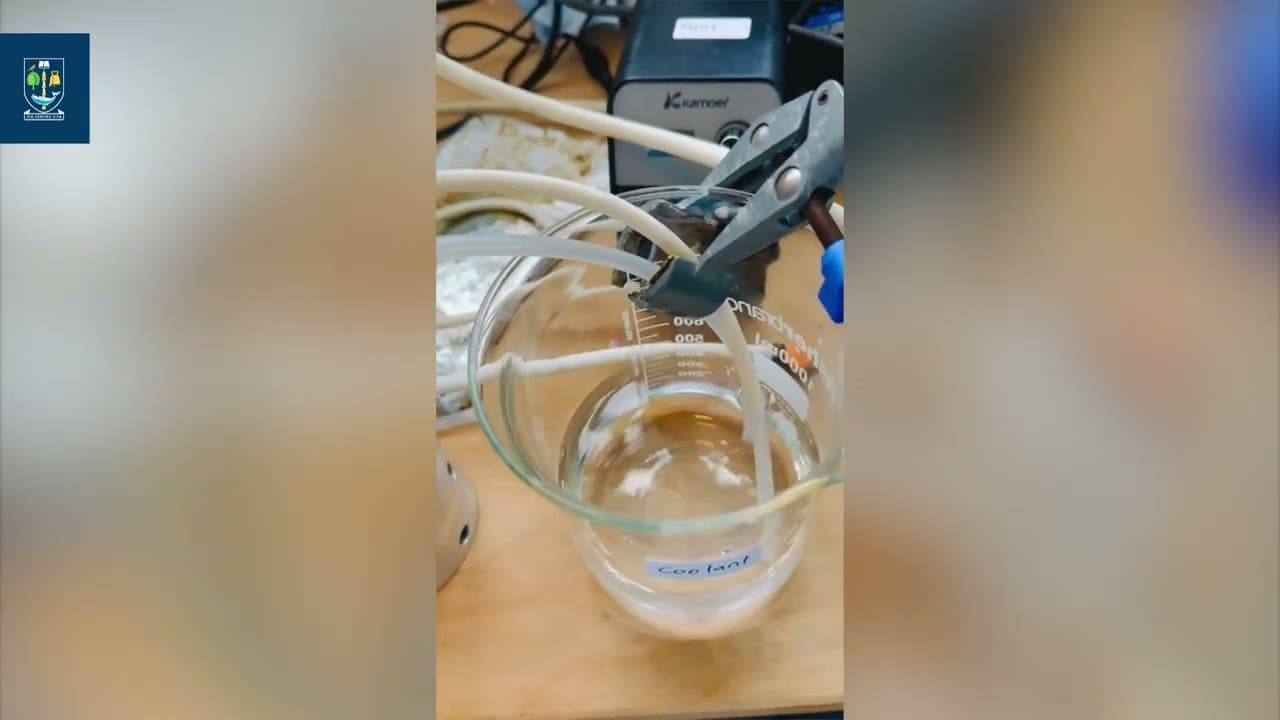
Researchers at the University of Glasgow have developed a low-cost prototype that uses ultrasound, air and water to produce nitrate, an essential nutrient for plant growth. The device was built for approximately £20 using readily available components and could eventually offer farmers in remote areas an alternative way to produce fertiliser locally.
The research explores a decentralised approach to nitrogen fixation, the process of converting atmospheric nitrogen into chemically useful compounds. Conventional industrial fertiliser production relies heavily on energy-intensive processes and large manufacturing facilities. A compact device that produces nitrogen-based nutrients closer to farms could help reduce dependence on centralised supply chains if the technology becomes efficient and practical at scale.
How Does the £20 Ultrasound Fertiliser Device Work?
The prototype uses a process called sonochemistry, in which sound waves drive chemical reactions. Instead of relying on the extreme operating conditions used in conventional industrial nitrogen fixation, the researchers use focused ultrasound to create intense conditions inside microscopic bubbles in water.
- Air is introduced into water: Air is bubbled through deionised water so that nitrogen and oxygen dissolve in the liquid.
- Ultrasound generates bubbles: Focused sound waves create microscopic bubbles that expand and collapse rapidly.
- Extreme conditions trigger reactions: The collapse of these bubbles generates intense local conditions that help nitrogen and oxygen react.
- Nitrate is produced: The resulting chemical reactions form nitrogen-containing compounds, including nitrate, which plants can absorb as a nutrient.
The researchers optimised the ultrasound pulses to improve nitrate production. Their laboratory experiments demonstrated that the approach could generate measurable nitrate concentrations in a small quantity of water.
Key Details of the University of Glasgow Research
| Research detail | Information |
|---|---|
| Institution | University of Glasgow, United Kingdom |
| Prototype cost | Approximately £20 |
| Main inputs | Air, water and ultrasound |
| Product generated | Nitrate-containing solution |
| Research method | Ultrasound-driven nitrogen fixation |
| Research publication | Cell Reports Physical Science, 2025 |
| Current development stage | Experimental prototype requiring further optimisation |
Why Could This Technology Matter for Farmers?
Many farming communities depend on fertilisers manufactured at large industrial plants and transported over long distances. Transport costs, supply disruptions and limited infrastructure can make access more difficult for farmers in remote regions.
A small-scale production system could eventually allow fertiliser to be generated closer to where crops are grown. Potential benefits include:
- Reducing reliance on centralised fertiliser manufacturing and distribution.
- Exploring lower-capital-cost alternatives for areas with limited industrial infrastructure.
- Supporting research into more decentralised agricultural nutrient production.
- Creating opportunities to develop compact systems for local farming needs.
These are potential long-term benefits rather than proven outcomes. The prototype has not yet established that it can supply the quantity of usable nitrate required for practical crop production.
What Are the Limitations of the Prototype?
Despite its low construction cost, the device faces important technical challenges. The researchers have acknowledged that the current process uses proportionately more energy than the conventional Haber-Bosch process, which is widely used to manufacture ammonia for fertilisers.
The team must improve energy efficiency, increase nitrate concentration and develop a system capable of producing useful quantities continuously. Further experiments are also needed to establish how effectively the resulting solution supports plant growth under real agricultural conditions.
Therefore, the £20 figure refers to the cost of the experimental demonstrator, not the confirmed price of a commercially available farming product. The technology is still under development, and its practical benefits will depend on future testing and engineering improvements.
Frequently Asked Questions
What does the University of Glasgow's £20 device produce?
The prototype produces nitrate-containing water using ultrasound, air and water. Nitrate is a form of nitrogen that plants can use as a nutrient.
How much does the prototype cost?
The researchers reported building the experimental demonstrator for approximately £20 using readily available components. This is not a confirmed commercial selling price.
Can farmers use the device commercially now?
Not yet. The system remains experimental, and additional work is needed to improve energy efficiency, production capacity and its effectiveness for crop growth.
Is ultrasound fertiliser production more energy-efficient than conventional manufacturing?
The prototype has demonstrated nitrate production, but the researchers reported that its energy use remains proportionately higher than the Haber-Bosch process. Further optimisation is required.
Where was the research published?
The study, titled “Towards decentralized nitrogen fixation using pulsed ultrasound,” was published in the journal Cell Reports Physical Science in 2025.
Conclusion
The University of Glasgow's low-cost ultrasound prototype presents an experimental approach to producing nitrate from air and water. Its small size and low construction cost make it an interesting development for decentralised fertiliser research, particularly in regions with limited infrastructure. However, energy efficiency, production capacity and demonstrated agricultural performance remain important challenges before the technology can become a practical alternative to conventional fertiliser supply.

