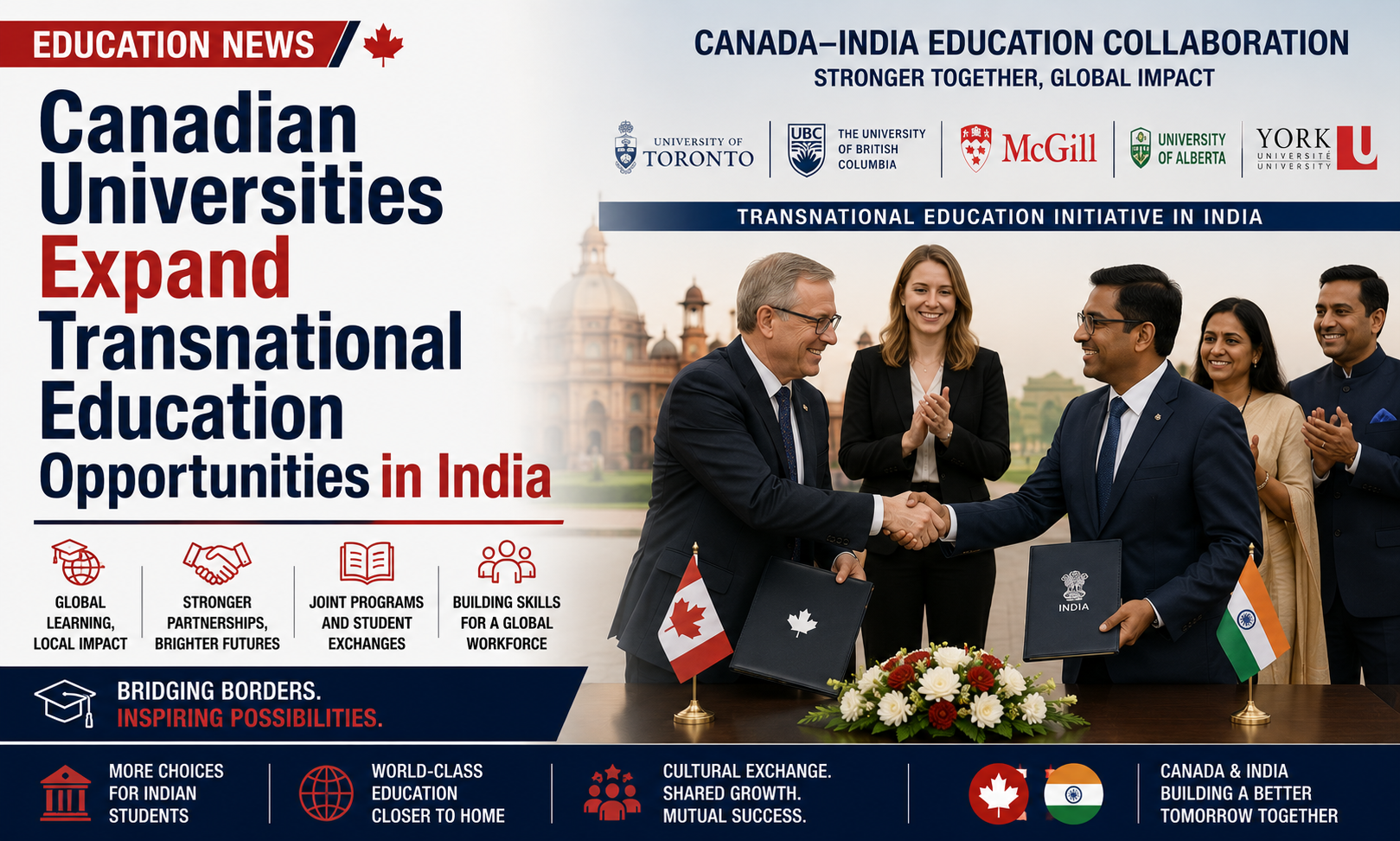
Canadian Universities Expand Transnational Education Opportunities in India
In a significant move to broaden international education access, several Canadian universities have entered into partnerships with Indian higher education institutions. These collaborations aim to facilitate transnational education programs, allowing Indian students to earn Canadian qualifications without leaving their home country. This development is expected to enhance academic mobility, provide cost-effective international degrees, and strengthen educational ties between Canada and India.
Key Highlights
- Multiple Canadian universities have signed MOUs with Indian institutions for joint programs.
- Programs include dual degrees, credit transfer, and collaborative research opportunities.
- Indian students can access Canadian curriculum and credentials locally.
- Transnational education aims to reduce costs and visa-related challenges for students.
- Partnerships focus on fields like engineering, business, computer science, and health sciences.
- These initiatives support India's growing demand for international-quality education.
- Opportunities for faculty exchange and joint academic events are also included.
- Official confirmation and detailed program structures are awaited from involved universities.
What Happened?
As per media reports, a number of Canadian universities have recently formalized agreements with Indian post-secondary institutions to offer transnational education programs. These MOUs outline frameworks for delivering Canadian academic content and awarding degrees or diplomas through Indian partner campuses. The collaborations are designed to provide Indian students with access to international education standards while studying domestically.
>These partnerships typically include dual degree options, where students spend part of their study duration in India and may have the option to transfer credits to Canadian campuses. Additionally, some programs focus on joint research projects and faculty collaborations to enhance academic quality and innovation. The initiative reflects a growing trend of internationalization in higher education, responding to student demand for global exposure without the full cost or complexity of overseas study.
While exact program details, fees, and admission processes are yet to be officially released, the move signals a strategic effort by Canadian universities to tap into the large and diverse Indian education market. It also aligns with India's policy emphasis on expanding international cooperation in education.
Why This Update Matters
This update is important for Indian students aiming for international degrees but facing challenges such as high overseas tuition, visa restrictions, and relocation costs. Transnational education offers a practical alternative by enabling students to earn Canadian credentials while remaining in India. This can significantly broaden access to quality education and improve employability prospects.
For parents and education counselors, these partnerships provide new options for planning higher education pathways that combine global curriculum with local convenience. The update also impacts admission strategies, as students may now consider joint programs and credit transfer options when applying to Canadian universities. Scholarship and financial planning may also evolve as these programs become more widely available.
Official Status
As of now, official confirmation from the involved Canadian and Indian universities is awaited. Detailed program structures, eligibility criteria, fee schedules, and application procedures have not been publicly disclosed. Students and stakeholders are advised to monitor official university websites for verified updates.
Since this development is reported mainly through media sources, prospective applicants should exercise caution and seek direct communication from universities before making decisions. Official announcements are expected in the coming months as MOUs are operationalized.
Important Details
| Particular | Details |
|---|---|
| Topic | Transnational Education Partnerships between Canadian and Indian Universities |
| Category | Education News |
| Status | Expected / Official confirmation awaited |
| Applicable For | Indian students seeking international degrees and collaborative programs |
| Official Website | Official confirmation awaited; monitor university websites |
| Next Step | Wait for official announcements; prepare documents and research partner institutions |
How To Check / Apply / Download
These steps will be useful once official program details are released by Canadian and Indian universities. Students should follow these steps to stay informed and apply correctly.
- Visit the official websites of the Canadian universities involved in the partnership.
- Check the international or transnational education sections for program announcements.
- Review eligibility criteria, course details, and application timelines carefully.
- Prepare necessary academic and identity documents as per guidelines.
- Submit applications through the official portals before deadlines.
- Track application status through official communication channels.
- Attend any online orientation or counseling sessions offered by the universities.
Documents Or Details Students May Need
While specific requirements will depend on the programs, students should generally be ready with the following:
- Academic transcripts and certificates from previous education
- Proof of identity such as passport or government-issued ID
- Standardized test scores if applicable (e.g., English proficiency tests)
- Passport-sized photographs
- Application number or registration ID after applying
- Contact details and references as required by the program
What Students Should Do Next
- Regularly check official university websites for updates on transnational programs.
- Engage with education counselors to understand program benefits and requirements.
- Prepare academic documents and verify their authenticity in advance.
- Research partner Indian institutions to understand local campus facilities and support.
- Stay informed about visa and travel policies if partial study abroad is involved.
- Consider financial planning and scholarship options for international education.
- Join student forums or groups discussing transnational education experiences.
- Be patient and wait for official announcements before making commitments.
Important Links
| Link Type | Website / Status |
|---|---|
| Official Website | Official confirmation awaited; check Canadian and Indian university websites |
| Result / Admit Card / Application Page | To be announced by respective universities |
| Source Discovery | https://universityaffairs.ca/news/universities-setting-sights-on-india-for-transnational-education-opportunities/ (used only for topic discovery) |
FAQs
What is transnational education?
Transnational education refers to educational programs where students study in their home country but receive a degree or diploma from a foreign institution through partnerships or collaborations.
Which Canadian universities are involved in these partnerships?
As per media reports, multiple Canadian universities have signed MOUs with Indian institutions, but official names and details are awaited.
How will these programs benefit Indian students?
Students can access Canadian curricula and credentials locally, reducing costs and visa challenges while gaining international exposure.
Are these programs equivalent to studying on Canadian campuses?
Generally, transnational programs follow the same curriculum and standards, but students may not receive the full on-campus experience unless they transfer or study abroad for part of the program.
When will official program details be available?
Official announcements are expected in the near future; students should monitor university websites for updates.
Can students transfer to Canada after starting these programs in India?
Many transnational education agreements include credit transfer options, allowing students to continue studies at Canadian campuses subject to eligibility.
What fields of study are covered in these partnerships?
Reportedly, programs focus on areas like engineering, business, computer science, and health sciences, but exact offerings will be confirmed by universities.
How can students apply for these programs?
Application procedures will be announced by the universities; students should follow official portals and guidelines once available.


q.jpg)
-logo.jpg)